
Hyacinth macaw (Anodorhynchus hyacinthinus) — biology, range and conservation
The hyacinth macaw is the largest flying parrot, native to central and eastern South America. This article covers its appearance, behaviour, diet, habitat, threats, conservation status and relationships with other species.
The hyacinth macaw (Anodorhynchus hyacinthinus) is a striking blue parrot native to central and eastern South America. Adults are unmistakable: a deep cobalt plumage, bare yellow eye rings and a very large, powerful bill combine to create the largest flying parrot species. Its long tail and body length make it longer than any other parrot species. This profile summarizes the bird’s appearance, ecology, distribution, diet and the conservation actions that surround it. For a general definition of parrots see parrot, and for regional context see South America.
Image gallery
10 Images



Characteristics and anatomy
Hyacinth macaws have uniformly deep blue plumage with subtle variations in shade across the head, wings and tail. A ring of bare yellow skin encircles each eye and a yellow patch marks the base of the lower mandible. The bill is exceptionally strong and curved, adapted to access hard seeds and nuts. The tongue is robust and partly supported by a bony structure that helps manipulate and extract food. These features distinguish the species among other large macaws such as the blue-and-gold; see related macaw species for comparison.
Diet and feeding behaviour
Hyacinth macaws feed primarily on a variety of seeds, nuts and fruits. They are especially associated with native palms and other hard‑shelled seeds. Their powerful beaks crush many tough fruits and seeds, but some items require ecological assistance: the extremely hard acuri nut is inaccessible until it has passed through the digestive tract of large mammals, a relationship that links macaw feeding to grazing animals. They also eat softer fruits and nectar when available and will travel long distances in search of ripe food. Generalized diet resources are discussed at fruits and nectar.
Habitat, range and interdependence
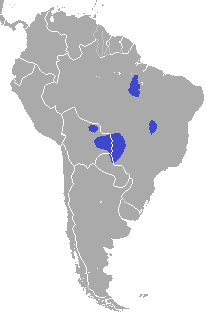
The species occupies a mosaic of habitats including seasonally flooded wetlands, savanna woodlands and the edges of tropical forest across parts of central and eastern South America. It nests in large tree cavities, most famously in the manduvi (Sterculia) and similar trees whose trunk cavities accommodate large macaws. The hyacinth macaw’s breeding ecology is linked to other species: for example, toucans both disperse the seeds of important nesting trees and predate some macaw eggs — a complex ecological interaction discussed in studies of avian seed dispersal and predation. See also material on the role of the toucan in forest ecology.
Threats and conservation status
Wild populations have declined due to a combination of habitat conversion, loss of suitable nesting trees, and historical trapping for the pet trade. These pressures led to international protections: the species is listed as endangered on assessments referenced by organizations such as the IUCN and its Red List, and international trade is regulated under CITES Appendix I. Illegal capture and local demand for feathers and live birds continue to be problems, as does the destruction of native palm stands and gallery forest. For discussions of the pet trade and policy issues see pet trade and habitat loss notes at habitat destruction.
Conservation measures and human interactions
Conservation responses combine habitat protection, enforcement against illegal trade, nest‑box programs, and community engagement. In some regions captive breeding and carefully managed reintroductions complement in situ measures, and conservationists emphasize preserving large trees and corridors used for feeding movements. The species’ charisma helps attract funding and public interest, but effective recovery requires protecting the complex ecological relationships—such as seed dispersal by other birds and the presence of grazing mammals that influence seed availability—for long‑term success.
Notable facts and distinctions
- Largest flying parrot: it is longer than other parrot species and has a very long tail relative to body size.
- Specialized feeding: its bill and tongue anatomy permit access to extremely hard seeds.
- Ecological links: depends on both tree species for nesting and other animals for seed processing and dispersal.
For additional background and further reading, see linked resources on taxonomy, regional ecology and conservation policy: parrot overview, range, macaw relatives, status, IUCN, Red List, cattle‑seed interactions, diet, nectar resources, toucan relationships, trade issues, and habitat threats.
Questions and answers
Q: What is the scientific name of the hyacinth macaw?
A: The scientific name of the hyacinth macaw is Anodorhynchus hyacinthinus.
Q: How long is a hyacinth macaw?
A: A hyacinth macaw is about 100 cm (3.3 ft) in length from the top of its head to the tip of its long pointed tail.
Q: What type of food does a hyacinth macaw eat?
A: Hyacinth macaws eat nuts from native palms, fruits, nectar, and various kinds of seeds. They also feed on acuri nuts that have passed through the digestive system of cattle.
Q: Why are hyacinth macaws endangered?
A: Hyacinth macaws are endangered due to habitat loss, trapping wild birds for the pet trade, and destruction by humans for fancy feathers and other purposes.
Q: How do toucans affect the reproduction rate of hyacinths?
A: Toucans spread the seeds of Manduvi trees which are necessary for reproduction by hyancith macaws; however they also eat 53% of their eggs which reduces their population growth rate.
Q: What international organizations protect this species?
A: The International Union for Conservation of Nature's Red List and Appendix I on Convention on International Trade in Endangered Species (CITES) both protect this species from exploitation or destruction.
Related articles
Author
AlegsaOnline.com Hyacinth macaw (Anodorhynchus hyacinthinus) — biology, range and conservation Leandro Alegsa
URL: https://en.alegsaonline.com/art/46037
Sources
- iucnredlist.org : "Anodorhynchus hyacinthinus"
- wwf.org.br : "Hyacinth Macaw" · web.archive.org
- animals.nationalgeographic.com : "Macaw Psittacidae"
- pbs.org : "The real macaw: endangered tropical jewels"
- birdlife.org : "Hyacinth Macaw Anodorhynchus hyacinthinus"