
Hudson Motor Car Company: history, innovations, models and legacy
American automaker founded in Detroit in 1909; noted for affordable quality cars, safety innovations, the Hornet racing success, and its 1954 merger into American Motors.
Overview
The Hudson Motor Car Company was an influential American automobile firm established in Detroit in 1909. For several decades Hudson built a reputation for producing well‑engineered, competitively priced cars aimed at middle‑class buyers. The company combined practical engineering with marketing that emphasized value and reliability, and by the late 1920s it was among the larger auto producers in the United States.
Image gallery
10 Images






Innovations and characteristics
Hudson became known for introducing practical safety and convenience features ahead of many competitors. Early Hudson models incorporated dashboard warning indicators for critical systems such as oil pressure and generator output, a step toward modern instrument panels. The company also experimented with performance options and engine tuning packages to improve acceleration and driveability. Hudson's engineering choices tended to favor robustness and serviceability, traits appreciated by owners and mechanics alike.
Notable models, design highlights, and motorsport
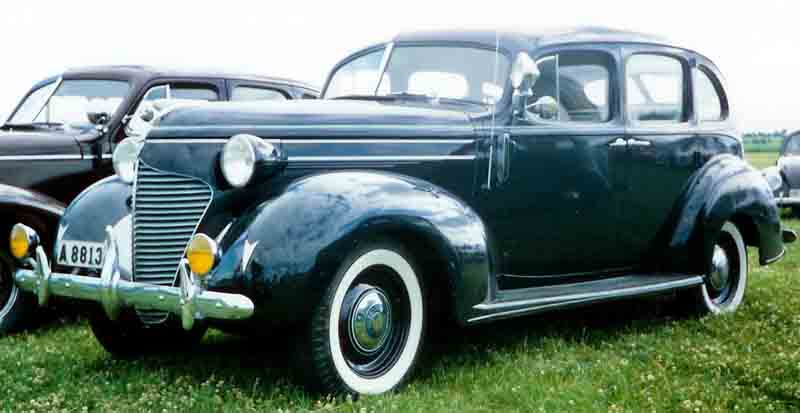
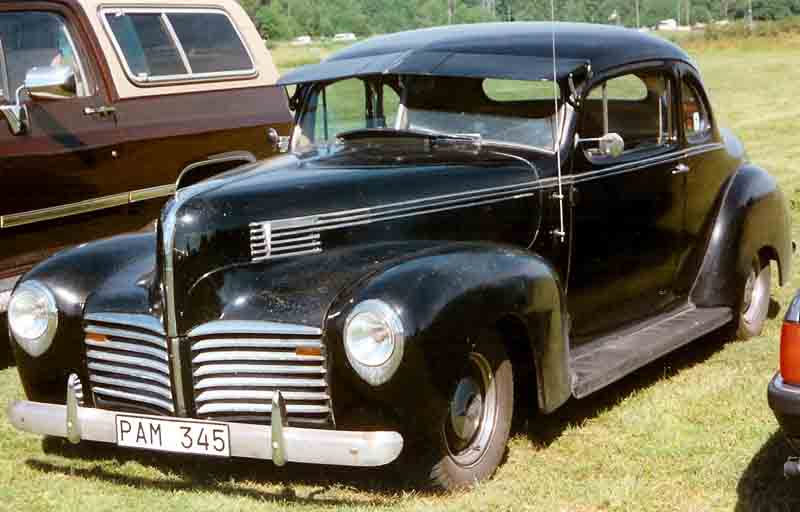
Certain Hudson models achieved lasting fame. The mid‑20th century Hudson Hornet is particularly well known for its success in stock car racing, where its low center of gravity and strong in‑line six‑cylinder engine gave it an edge on short oval tracks. Hudson used multi‑carburetor setups under the trade name Twin H‑Power and offered a mix of sedans, coupes, and light commercial bodies during its run. Enthusiasts still recognize Hudsons for their distinctive styling of the 1930s–1950s and for engineering features that favored handling over raw power.
Production and organization
Hudson's manufacturing reached its peak in the decade before the Great Depression. At its production high point in 1929 the company reported a yearly output of roughly 300,000 cars assembled at plants in the United States and abroad. Hudson operated multiple factories and had a presence in export markets with facilities or assembly operations referenced in places such as Belgium and England. Throughout its independent existence, Hudson managed product lines that balanced economy models with higher‑trim vehicles to cover a broad market.
Merger, successor companies, and later history
Facing increasing competition and rising development costs in the postwar era, Hudson merged with Nash‑Kelvinator in 1954 to create the American Motors Corporation. That merger combined the resources of both firms and sought to preserve the strengths of their product ranges. AMC later became known for compact and specialty cars and for producing civilian Jeep derivatives and other vehicles. Models such as the Rambler and later quirky small cars showed the new company's strategy; AMC itself was eventually acquired by a larger domestic automaker, which continued the Jeep nameplate.
Legacy and distinctions
Hudson's legacy lives on among classic car collectors and historians. The company is remembered for practical safety advances, competitive performance variants, and its role in the consolidation of the U.S. auto industry. Collectors prize surviving Hudsons—especially well‑preserved Hornets and early postwar models—for their engineering and racing pedigree. Hudson also serves as an example of how mid‑century independent automakers adapted through mergers and how brand identities were absorbed into larger corporate structures.
Items of interest
- Early emphasis on reliability and economical ownership — a reason for Hudson's midmarket appeal (manufacturer practices).
- Safety and convenience additions that foreshadowed later instrument panel standards (safety features).
- Historic production note: roughly 300,000 cars at the 1929 peak (production figure).
- Hudson's corporate story culminated in the 1954 merger with Nash‑Kelvinator and entry into AMC history (founding and corporate events).
- Popular culture and automotive lore include the Hornet's racing success and later references such as the compact car era's experiments with small models like the Gremlins (through AMC's lineage).
For readers interested in deeper research, Hudson's story illustrates early 20th‑century automobile industry growth, mid‑century engineering trends, and the consolidation patterns that shaped modern automotive brands.
Related articles
Author
AlegsaOnline.com Hudson Motor Car Company: history, innovations, models and legacy Leandro Alegsa
URL: https://en.alegsaonline.com/art/45545