
Hornbill (Bucerotidae): Tropical Birds, Behavior, and Conservation
Hornbills are distinctive tropical birds with large curved bills and often a casque. Found across Africa, Asia and Melanesia, they are important seed dispersers with unique nesting behaviour and varied conservation status.
Overview
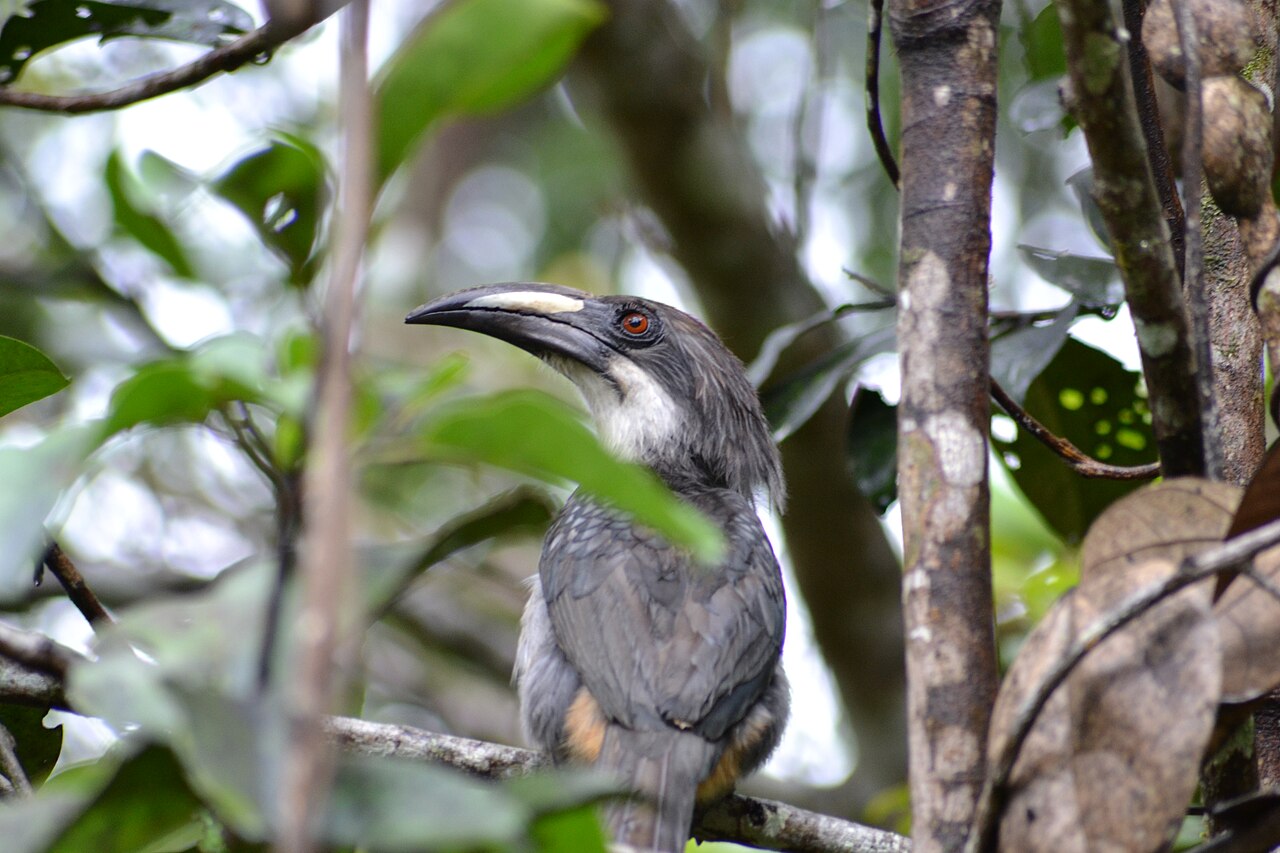
Hornbills are a family of birds collectively known as Bucerotidae. They occur across tropical and subtropical regions of Africa, Asia and Melanesia. Hornbills are best known for their long, down-curved bills and, in many species, a hollow or solid structure on the upper mandible called a casque. Sizes vary from medium to large, and plumage ranges from cryptic tones to bright patches of color depending on the species.
Image gallery
10 Images





Key characteristics
- Bill and casque: The massive bill is used for feeding, preening and sometimes for fighting; a prominent casque may be ornamental, strengthen the bill or amplify calls (casque reference).
- Plumage and size: Species show sexual and age-related differences; many tropical species are black-and-white with colorful facial skin or throat sacs.
- Diet: Hornbills are largely frugivorous but eat insects, small vertebrates and carrion; they play an important role as seed dispersers in forest ecosystems.
- Social structure: Many hornbills form monogamous pairs; some species nest in small family groups or loose colonies.
Nesting and breeding behaviour
One of the most striking behaviours of hornbills is the female’s use of tree cavities for nesting. The female enters a suitable hole in a tree (tree cavity) and, often assisted by her mate, seals the entrance with a mixture of mud, droppings and fruit pulp, leaving only a narrow slit. Through this slit the male passes food to the female and later to the chicks. This sealing strategy protects the vulnerable nest against predators such as snakes and mammals (predator reference) and maintains a stable microclimate until the young are ready to fledge.
Distribution, roles and cultural importance
Hornbills occupy a variety of wooded habitats from dense rainforests to savanna woodlands. Because many species feed on large fruits, they are effective long-distance seed dispersers and influential in maintaining forest structure. Hornbills also figure in local cultures and folklore: in some parts of India, for example, large hornbills are admired for their appearance and behaviour and are associated with forest traditions; the great hornbill is a well-known emblem in regions such as Kerala.
Threats and conservation
While some hornbill species remain common, others face declining populations. Major threats include habitat loss through logging and conversion of forests, hunting for meat and ornamental parts, and capture for the pet and tourist trade. Conservation efforts emphasize habitat protection, nest-site management (including installing artificial nest boxes), community engagement and legal protection. Monitoring programmes and research into breeding ecology help target actions for the most threatened species.
Notable facts and distinctions
- Hornbill species vary widely in size, bill shape and casque development; these differences reflect diet, display and ecological niche.
- Their peculiar nesting method, in which the female is sealed inside a cavity, is unusual among birds and reduces predation risk during the most vulnerable stage of rearing.
- Because of their role in seed dispersal, hornbills are considered keystone species in many tropical forests; their decline can have cascading ecological consequences.
For further general information and taxonomic details see resources on the family Bucerotidae and region-specific accounts for Africa, Asia and Melanesia. Specific studies on casque function, nesting ecology and conservation actions are available through ornithological literature and conservation organisations (casque studies, nesting research, predator interactions).
Related articles
Author
AlegsaOnline.com Hornbill (Bucerotidae): Tropical Birds, Behavior, and Conservation Leandro Alegsa
URL: https://en.alegsaonline.com/art/45125