
Horse fly (Tabanidae): description, behavior, and impact
Horse flies are stout blood-feeding flies (family Tabanidae). Females bite to obtain blood for egg development; males feed on nectar. They affect livestock, act as occasional pollinators, and can mechanically spread pathogens.
Overview — Horse flies are robust flies belonging to the family Tabanidae in the order Diptera; many species are placed in the genus Tabanus. Commonly called horse flies or gadflies, these insects range in size from roughly that of a housefly to as large as a bumblebee. They occur worldwide in temperate and tropical regions and are most active in warm weather.
Image gallery
10 Images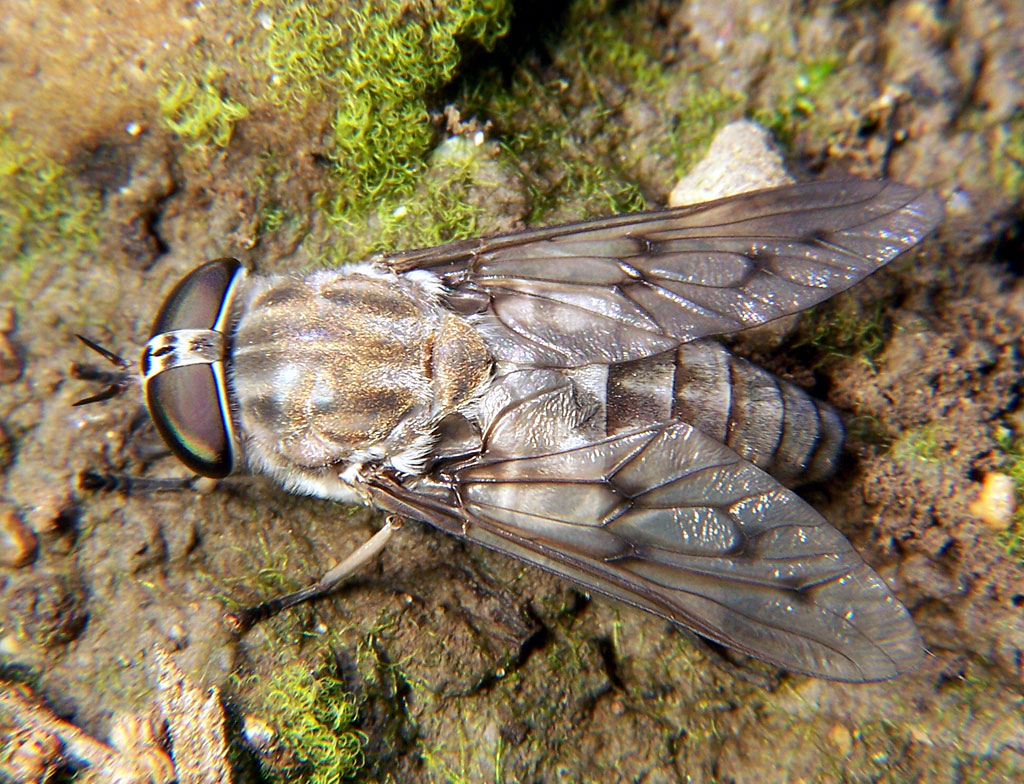




Physical characteristics
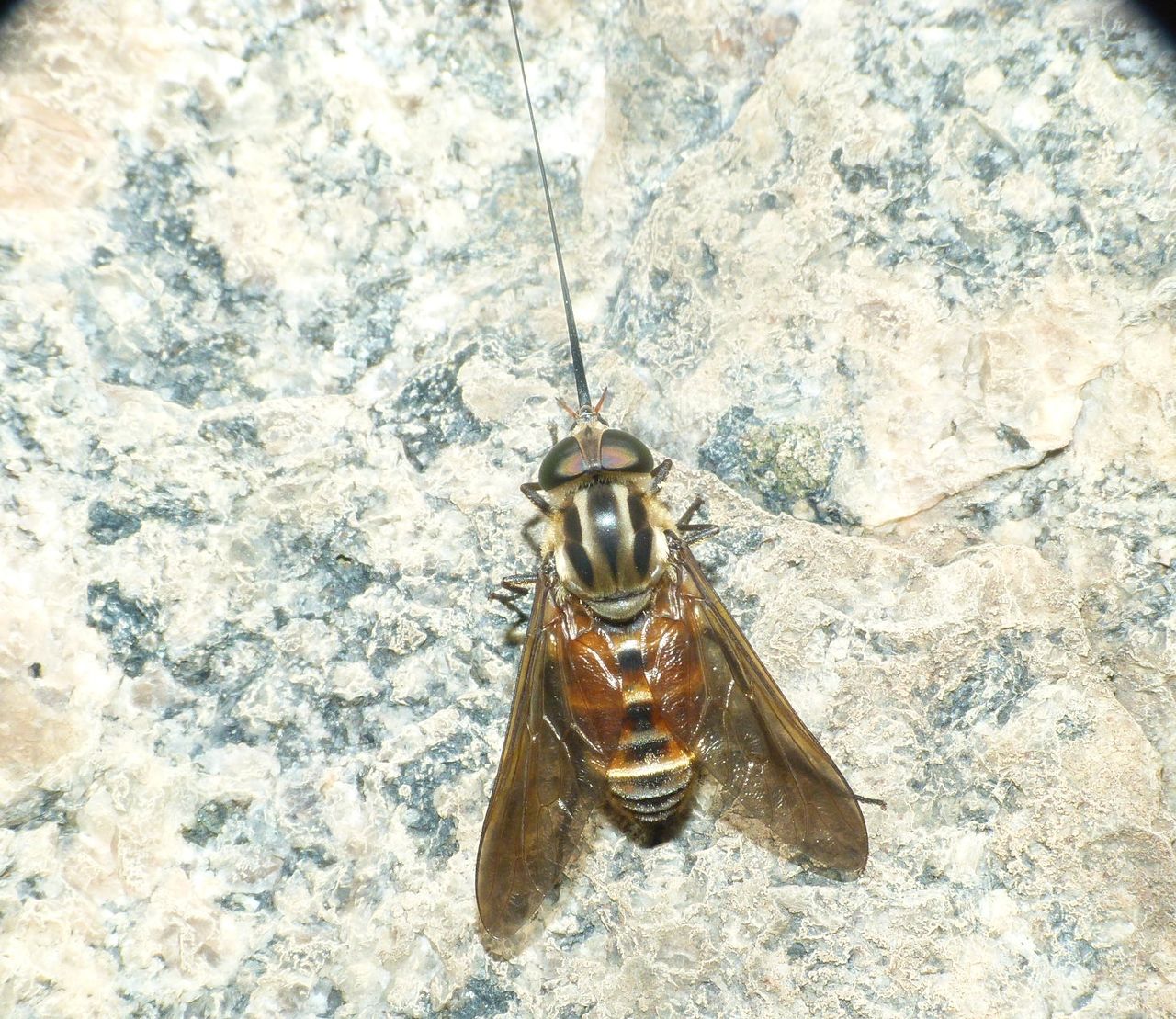
Horse flies are stout-bodied with large compound eyes that are often brightly colored or metallic. In males the eyes meet along the top of the head (holoptic), while in females they are separated (dichoptic). Females have specialized slashing and sponge-like mouthparts that cut skin and lap up blood; male mouthparts are adapted for feeding on nectar and do not bite. Larvae are elongated, usually aquatic or semi-aquatic, and differ markedly from the adults.
Life cycle and behavior
Eggs are typically laid in batches on vegetation near water or damp soil. Larvae develop in moist substrates or aquatic margins where they feed on small invertebrates or decaying material; development can take weeks to years depending on species and environment. Adults are strong fliers; females seek vertebrate hosts for blood meals required to develop eggs, while males visit flowers for nectar and can act as incidental pollinators.
Economic and medical importance
Female bites are painful and can provoke irritation, blood loss, stress, and secondary infections in livestock. By feeding on multiple animals, horse flies can mechanically transfer blood-borne pathogens and parasites, amplifying disease risk to horses, cattle, and other mammals. In people bites are unpleasant and can cause allergic reactions in sensitive individuals.
Control and prevention
- Physical protection: screens, fans, and protective coverings for animals reduce biting.
- Traps and visual baits exploit attraction to dark moving objects or polarized light.
- Chemical options: topical repellents and targeted insecticides can lower numbers, but should be used responsibly to avoid environmental harm.
- Habitat management: reducing breeding sites such as standing water and marshy edges helps limit populations.
Notable distinctions and facts
Horse flies are often contrasted with smaller deer flies (family Tabanidae, genus Chrysops), which are typically more patterned and have banded wings. The older common name "gadfly" reflects the pest’s tendency to harass livestock or may allude to the wedge-like mouthparts. For general information on insects, see insect.
Questions and answers
Q: What is a horse fly?
A: A horse fly is a type of insect and a member of the family Tabanidae.
Q: What is the size range of a horse fly?
A: Horse flies can be as small as a housefly or as large as a bumblebee.
Q: What is the genus of horse flies?
A: Horse flies belong to the genus Tabanus.
Q: What is the difference between the eyes of male and female horse flies?
A: The metallic or iridescent eyes of male horse flies meet dorsally, while those of the female are separate.
Q: Why is a horse fly also known as a gad-fly?
A: A horse fly is also known as a gad-fly because of its roving habits or because its mouthparts resemble a wedge-shaped miner's tool.
Q: How can the bites of female horse flies be harmful to animals?
A: The bites of female horse flies can carry parasites onto the victim (such as a horse), resulting in a distressing sore.
Q: What is the order to which horse flies belong?
A: Horse flies belong to the order Diptera.
Related articles
Author
AlegsaOnline.com Horse fly (Tabanidae): description, behavior, and impact Leandro Alegsa
URL: https://en.alegsaonline.com/art/45158