
Hoover Dam
Concrete arch-gravity dam on the Colorado River between Arizona and Nevada, creating Lake Mead; notable for 20th-century engineering, water management, hydroelectric generation and regional impact.
Overview
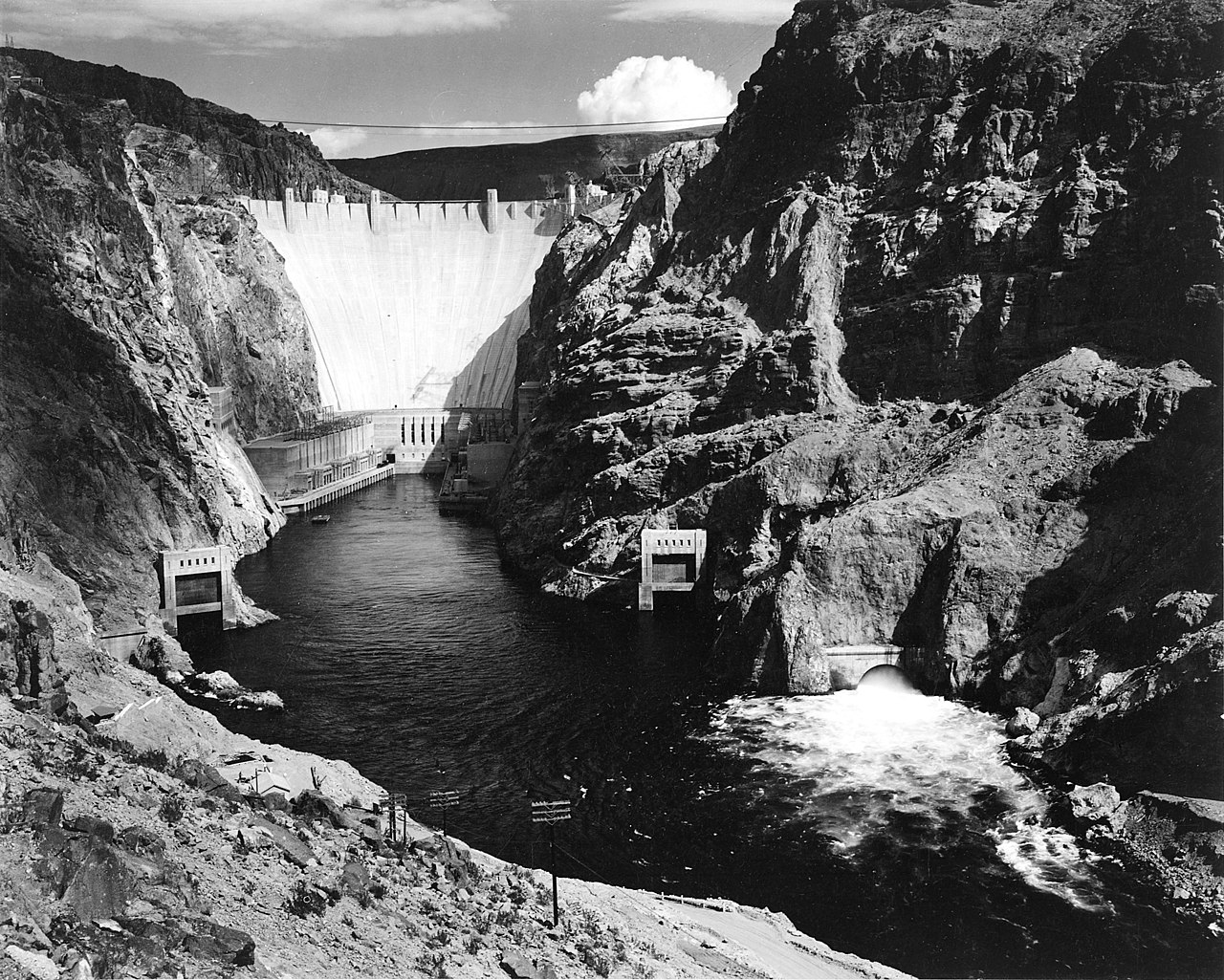
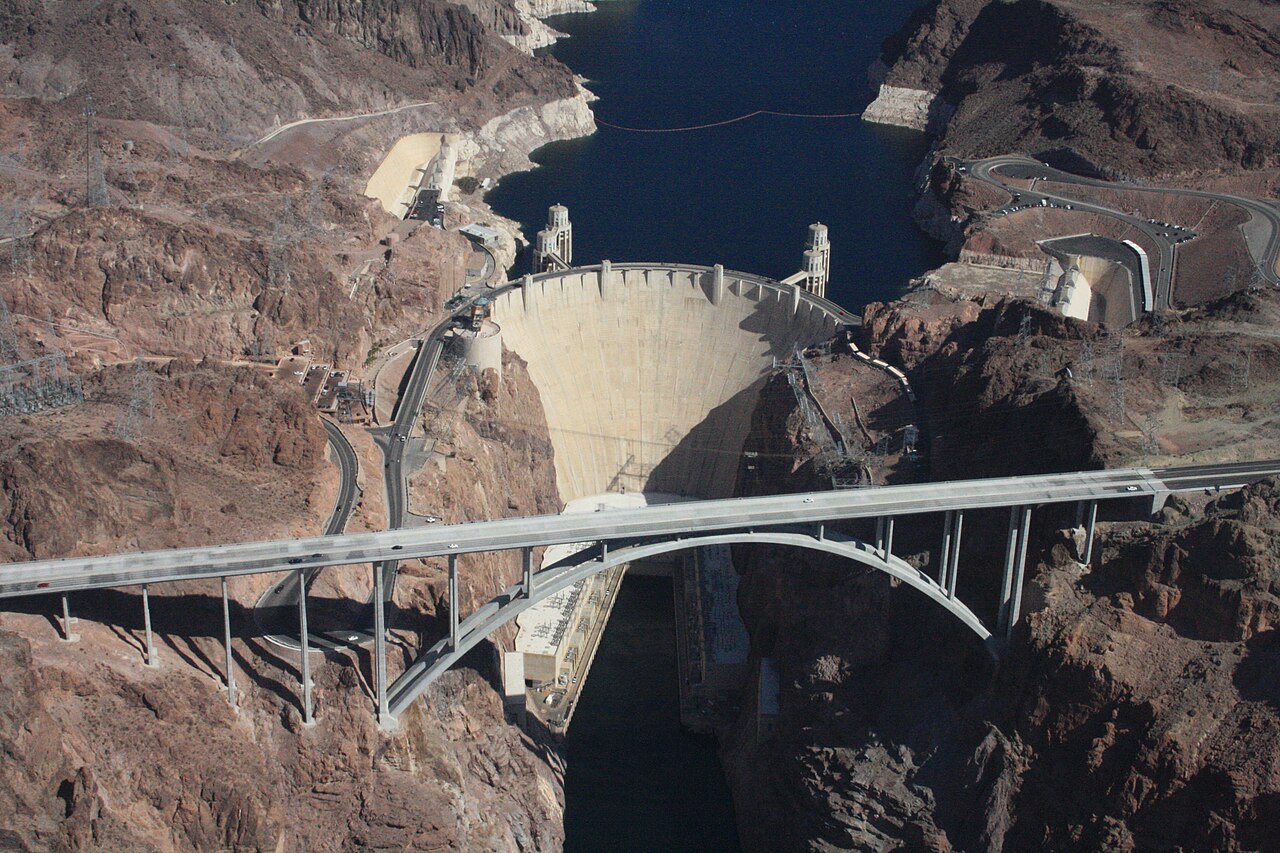
The Hoover Dam is a large concrete arch-gravity dam on the Colorado River, located where the river passes through Black Canyon on the border of Nevada and Arizona. The dam impounds the reservoir known as Lake Mead, one of the largest reservoirs in the United States by volume. Named in honor of President Herbert Hoover, the structure is widely recognized as an engineering landmark and a defining piece of public works from the early 20th century.
Image gallery
10 Images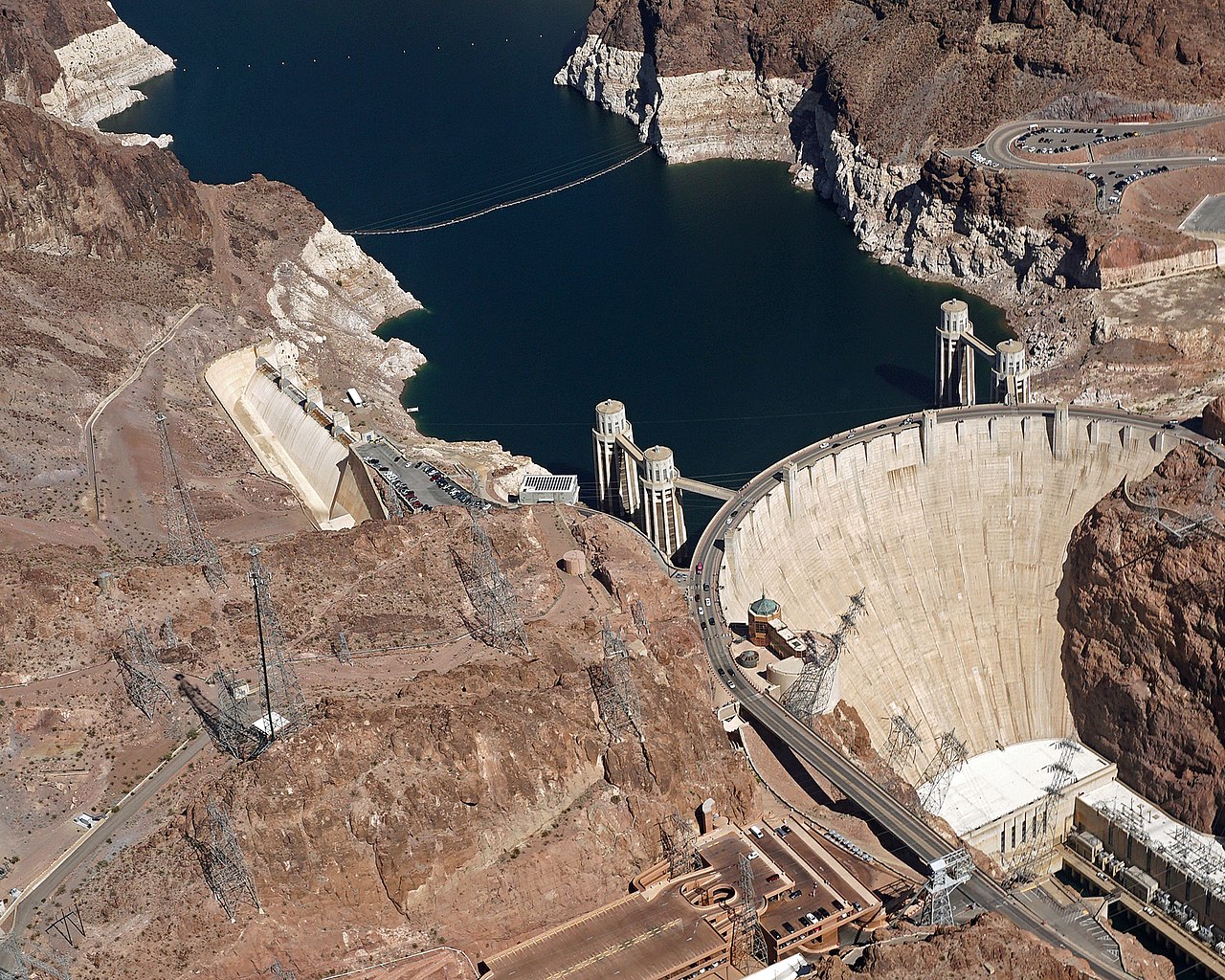



Design and key characteristics
Hoover Dam is an arch-gravity dam: its curved geometry transfers much of the water load into the canyon walls while the dam's mass provides overall stability. The dam rises from the canyon floor and houses large intake towers, spillways and a powerhouse at its base. Massive volumes of concrete were placed and cooled in a controlled process during construction to limit cracking and ensure long-term durability.
History and construction
Conceived as a regional project to control flooding, store water for irrigation and municipal use, and to produce electricity, the dam was planned and built during the early 20th century. Major construction work took place in the early to mid-1930s as part of a federal reclamation effort; the project provided employment and supported the growth of nearby communities, including Boulder City, which was established to house many workers and their families.
Operations, water and power
The reservoir created by the dam stores seasonal runoff from the Colorado River and supplies water to cities, farms and industries across several western states under long-standing allocation agreements. The dam's powerplant generates hydroelectricity that is distributed to multiple utilities, contributing renewable energy and supporting regional development. Management of the Colorado River and Lake Mead remains a complex matter involving federal agencies, state governments and interstate compacts; see more about regional arrangements here.
Tourism and cultural impact
Hoover Dam attracts millions of visitors annually. A visitors center and guided tours present the dam's history, construction methods and current operations. The creation of Lake Mead also established a major recreation area that supports boating, fishing and related tourism activities which have important local economic effects.
Environmental and legal context
The dam transformed the downstream river environment and enabled broad-scale water development, but it also introduced long-term environmental changes to the Colorado River basin. Issues such as water allocation, drought, sedimentation and ecosystem impacts are central to contemporary discussions about the river. The dam and reservoir are managed under federal authorities and continuing agreements that involve multiple states; readers can consult an official source for detailed management information here.
Legacy
- Considered a landmark of 20th-century engineering and an example of large-scale public infrastructure.
- Demonstrated novel construction techniques for its time, including river diversion tunnels and temperature control of concrete.
- Played a major role in shaping the economic and urban development of the American Southwest.
While the Hoover Dam remains an operational asset for water storage and power generation, it also serves as a focal point for debates over resource management, environmental stewardship and regional planning in the Colorado River basin. For historical context and biographical background on the figure for whom the dam is named, see resources about President Herbert Hoover and related historical material here. Additional information about the two states bordering the dam is available for Arizona and for Nevada.
Related articles
Author
AlegsaOnline.com Hoover Dam Leandro Alegsa
URL: https://en.alegsaonline.com/art/45056