
Foot (anatomy, function, and cultural aspects)
Overview of the human foot: anatomy, function, variations in animals, footwear, common problems and cultural practices. Distinguishes structure, uses in locomotion and care.
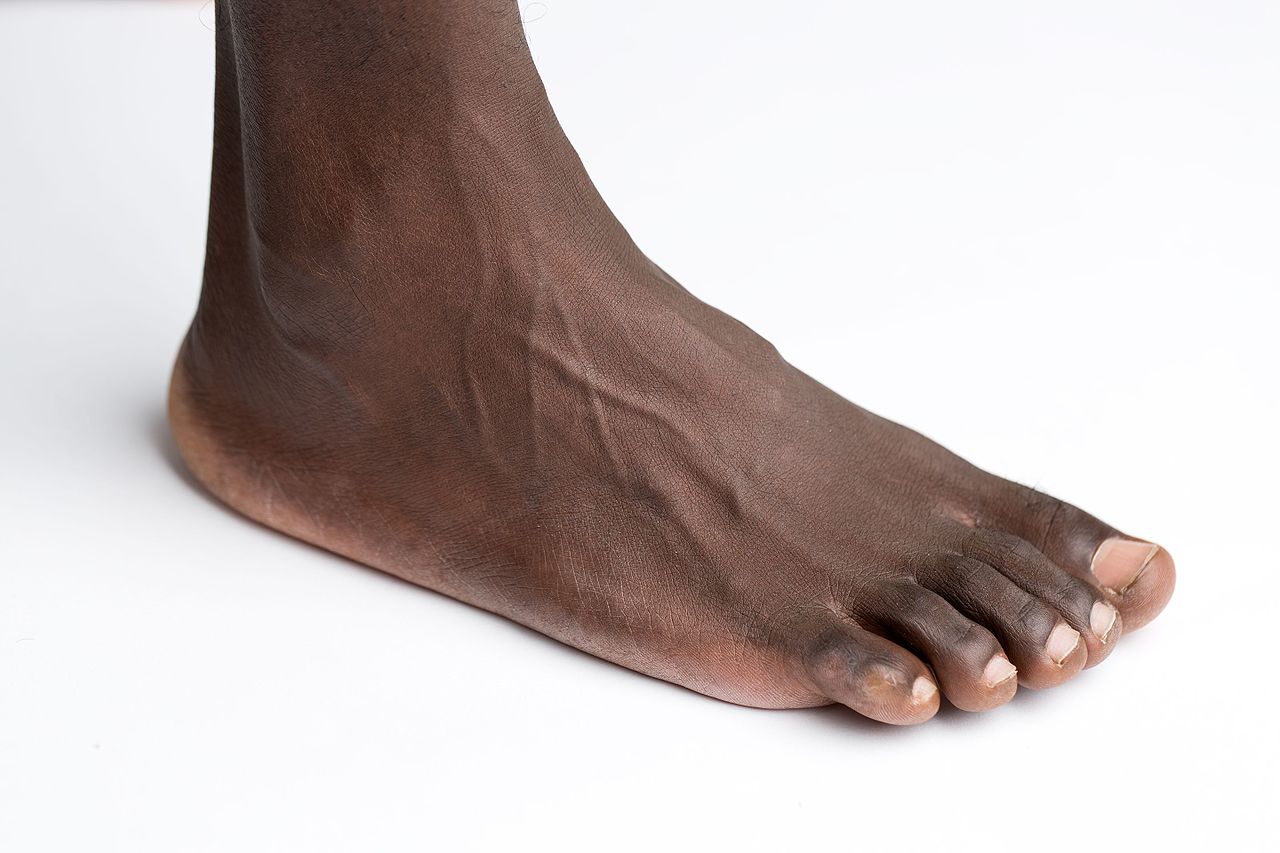
The foot is the terminal portion of the lower limb and a key structure for standing, walking and running. It is both a complex anatomical unit and a common everyday term that can be confused with the foot (unit). In anatomy the foot is a body part attached to the leg and adapted to support weight, absorb shock and provide propulsion. People use their feet to push off, to maintain balance and often to kick in activities ranging from informal play to organized sports, including association football.
Image gallery
10 Images



Structure and main functions
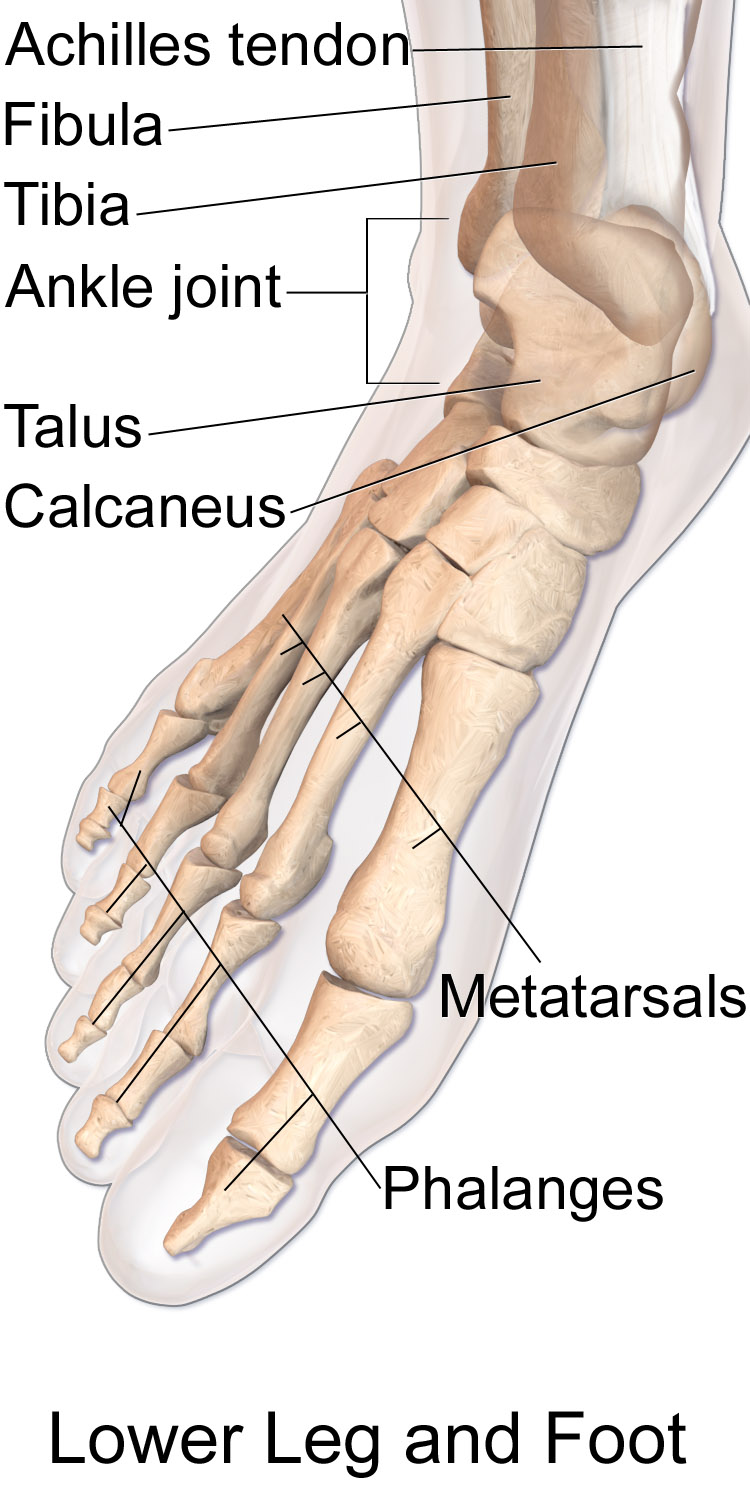
Human feet contain a complex arrangement of bones, joints, muscles, tendons and ligaments that together form arches and a flexible platform. The toes are five digits similar in layout to the fingers, permitting balance and some degree of fine control; this similarity explains why the hand and foot are often compared. The part that makes contact with the ground is called the sole, while the posterior projection that links the foot to the lower leg is the heel. These components combine to support upright posture, adapt to uneven surfaces and contribute to gait mechanics during walking or running.
Variation across animals
Many vertebrates possess structures commonly called feet, but their form varies widely. In primates such as monkeys the feet remain grasping and hand-like, aiding in climbing. Hooved mammals—ungulates—have evolved a hardened tip called a hoof that suits fast movement on open ground. Other mammals, especially carnivores, have padded undersides and claws; these are usually referred to as a paw. The term “foot” can therefore describe quite different anatomies in different groups of animals.
Footwear and cultural practices
Human feet are commonly covered with footwear to protect them from extremes of weather, hard surfaces and dirt. Typical categories include open sandals, enclosed shoes and taller boots, each designed for particular activities or conditions. Choices about wearing footwear vary by culture and setting: some societies remove shoes indoors to keep floors clean and preserve delicate floor coverings, while others habitually wear shoes inside homes. Barefoot walking and running have advocates for natural posture and foot strength, although they are not appropriate for every environment or for people with certain foot problems.
Health, care and common conditions
Feet are subject to a wide range of medical issues. Fungal infections such as Athlete's foot cause itching and scaling; poorly fitting footwear can produce blisters, calluses and deformities; and chronic conditions of the foot can contribute to pain in the legs and lower back. Professionals who specialize in foot health include podiatrists (also called chiropodists), who diagnose structural problems, prescribe orthoses and perform treatments. Preventive care emphasizes proper hygiene, sensible footwear, stretching and gradual progression of activity to reduce injury risk.
Practical distinctions and notable facts
When discussing “feet” it is useful to distinguish anatomical, functional and cultural meanings. Anatomically, the foot is defined by its skeletal and soft-tissue components; functionally, it is a weight-bearing, shock-absorbing mechanism for locomotion; culturally, it is subject to fashions and customs affecting footwear and hygiene. In comparative biology, the word covers a spectrum from grasping primate feet to hardened hooves, and in everyday language it remains entangled with non-anatomical senses such as the unit of length, the foot. For further reading, follow links to general topics on body parts, locomotion and common foot conditions via the referenced anchors above.
Questions and answers
Q: What is a foot?
A: A foot is a body part on the end of a leg. It is used when walking and for balance, and also to kick in both fighting and sports. It has five digits (fingers and toes).
Q: How are feet different from hands?
A: People's hands and feet have the same shape, but their functions are different. Hands are mainly used for grasping objects, while feet are mainly used for walking and balance.
Q: What other animals have feet?
A: Most land vertebrates have feet, as well as many invertebrates. The type of foot varies depending on the species; some animals have hard hooves while others have soft paws.
Q: Why do people wear footwear?
A: People wear footwear to protect themselves from weather and dirt, as well as to keep their feet clean in certain cultures where it is important to do so. Wearing the wrong size or type of footwear can cause blisters or other problems with the feet.
Q: Are there any traditions around wearing shoes in homes?
A: In many countries people usually do not wear their shoes or boots inside a home, while in the United States people often do wear them inside a home. In Japan people also typically don't wear shoes inside homes due to cultural reasons; floors are often made of very soft materials that need to be kept clean.
Q: Is it bad not to wear shoes sometimes?
A: Not always - not wearing shoes can be good for the feet if they are damaged or affected by conditions like Athlete's Foot, which causes dryness and cracking of skin on the feet.
Q: Who helps people with foot problems?
A: Doctors who specialize in treating issues related to people's feet are called podiatrists or chiropodists.
Author
AlegsaOnline.com Foot (anatomy, function, and cultural aspects) Leandro Alegsa
URL: https://en.alegsaonline.com/art/35487