
Hoopoe (Upupa epops): description, behavior, distribution and cultural role
The hoopoe (Upupa epops) is a crested, insectivorous bird of Afro‑Eurasia, known for its fanlike crown, probing bill, distinctive call, and a long history of cultural symbolism and varied conservation status.
Overview
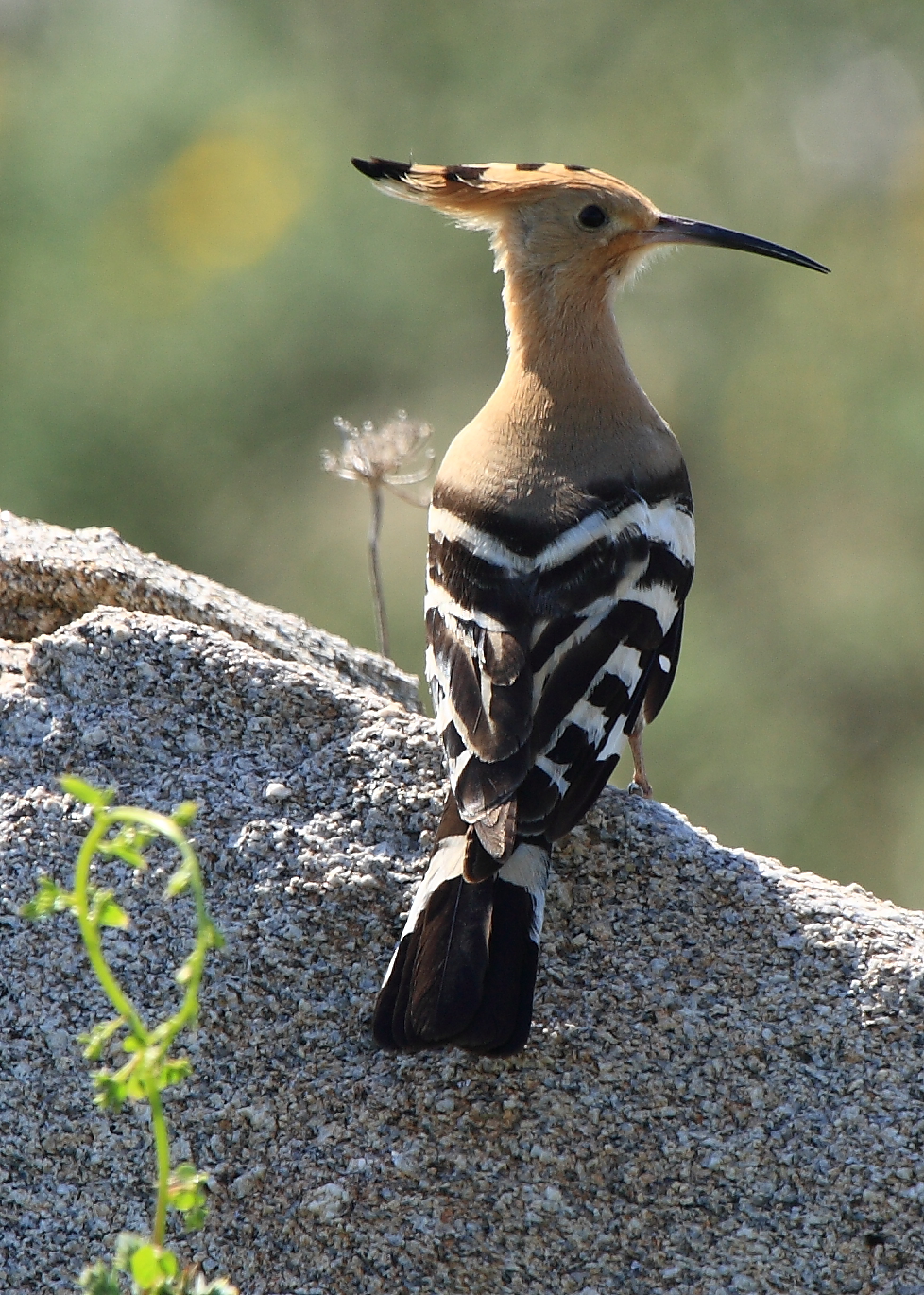
The hoopoe (Upupa epops) is a medium-sized, strikingly patterned bird best recognized by its erectable crest of feathers and long, slender decurved bill. Often described as colorful for its warm buff body, contrasting black-and-white wing pattern, and showy crown, the species occupies a wide range across parts of Africa, Europe and Asia. The familiar vocalization that inspired its scientific name is often rendered in onomatopoeic form; many languages reflect that sound in the bird's common name. For a general species account see species overview.
Image gallery
10 Images


Identification and behavior
Hoopoes forage mainly on the ground, using their bill to probe soil, leaf litter and bark crevices for insects, larvae and other small invertebrates. They are notable for a deliberate walking gait while searching for prey. The crest can be raised into a fan during displays, alarm, or when the bird is excited; otherwise it lies flat. Vocal and visual signals play an important role in territorial and courtship interactions. Typical behaviors include bill-probing, brief flights with undulating wingbeats, and sometimes sunning or dust-bathing.
Characteristics
- Bill: long, curved, adapted for probing.
- Crest: mobile, erectable, used in display.
- Plumage: buff to cinnamon body with bold black-and-white wings and tail.
- Diet: mainly insects and other invertebrates; opportunistic feeder.
- Call: a repetitive hooped or up-up-up note that gives the bird its name.
Distribution, habitat and migration
Hoopoes inhabit a variety of open or lightly wooded landscapes, including orchards, parkland, grassland, savanna and agricultural mosaics. Northern populations commonly migrate to warmer regions in winter, while many southern populations remain resident year-round. Their broad range spans much of Africa and Eurasia; population details and regional accounts are summarized in resources such as Africa overview and Eurasia summary.
Reproduction and lifecycle
Breeding usually involves nest sites in cavities — natural holes, tree hollows, walls, or even crevices in buildings. Clutch sizes and timing vary with latitude and local conditions. Parents feed chicks with captured invertebrates, and nest sanitation includes smearing or using odorous secretions as possible antipredator or antiparasite measures in some populations. Juveniles disperse after fledging and learn foraging techniques from adults.
Cultural significance, taxonomy and conservation
The hoopoe is the sole living representative of the family Upupidae, though closely related extinct insular species have been recorded; for example, the recently extinct giant hoopoe of Saint Helena is historically noted (Saint Helena account). Some island or regional forms — such as a population on Madagascar — have at times been treated as separate taxa by some authorities (Madagascar subspecies discussion), while others retain them as subspecies. Generally, the species is not globally threatened and retains a wide distribution, but local declines have occurred where habitats are lost, pesticide use reduces prey or nest sites are scarce. Humans have admired and mythologized the hoopoe in art, folklore and symbolism across many cultures; it has been adopted as a national emblem in at least one modern state. Conservation attention focuses on habitat protection, reducing pesticide impacts and maintaining nesting opportunities.
Notable distinctions include its combination of a mobile crest, specialized probing bill and an evocative call—traits that make the hoopoe both easy to recognize in the field and prominent in human cultural traditions.
Related articles
Author
AlegsaOnline.com Hoopoe (Upupa epops): description, behavior, distribution and cultural role Leandro Alegsa
URL: https://en.alegsaonline.com/art/45048
Sources
- doi.org : 10.1126/science.1157704
- pubmed.ncbi.nlm.nih.gov : 18583609
- elibrary.unm.edu : "The Bony Stapes in the Upupidae and Phoeniculidae: Evidence for Common Ancestry"
- wikidata.org : Q4006276
- species.wikimedia.org : Upupa
- gd.eppo.int : 1UPUPG
- eu-nomen.eu : 96665
- fauna-eu.org : 07b96906-c730-405e-a183-3b80e12cca1e
- fossilworks.org : 39432
- gbif.org : 2498414
- inaturalist.org : 20968
- irmng.org : 1305589
- itis.gov : 178116
- data.nbn.org.uk : NHMSYS0000530686
- ncbi.nlm.nih.gov : 57438