
Hindu calendar
A family of interrelated lunisolar calendars used across South Asia to regulate religious festivals, agricultural seasons and traditional chronology, with several regional forms and a national standard.
Overview
The Hindu calendar is not a single fixed system but a group of related lunisolar calendars traditionally used across the Indian subcontinent. These systems combine phases of the Moon with the solar year to mark months, seasons and religious days. The general concept of a lunisolar calendar and its use in ritual and agricultural life stretches back to ancient times and to developments in Indian astronomy and mathematics described in early treatises and observations (ancient sources).
Image gallery
2 Images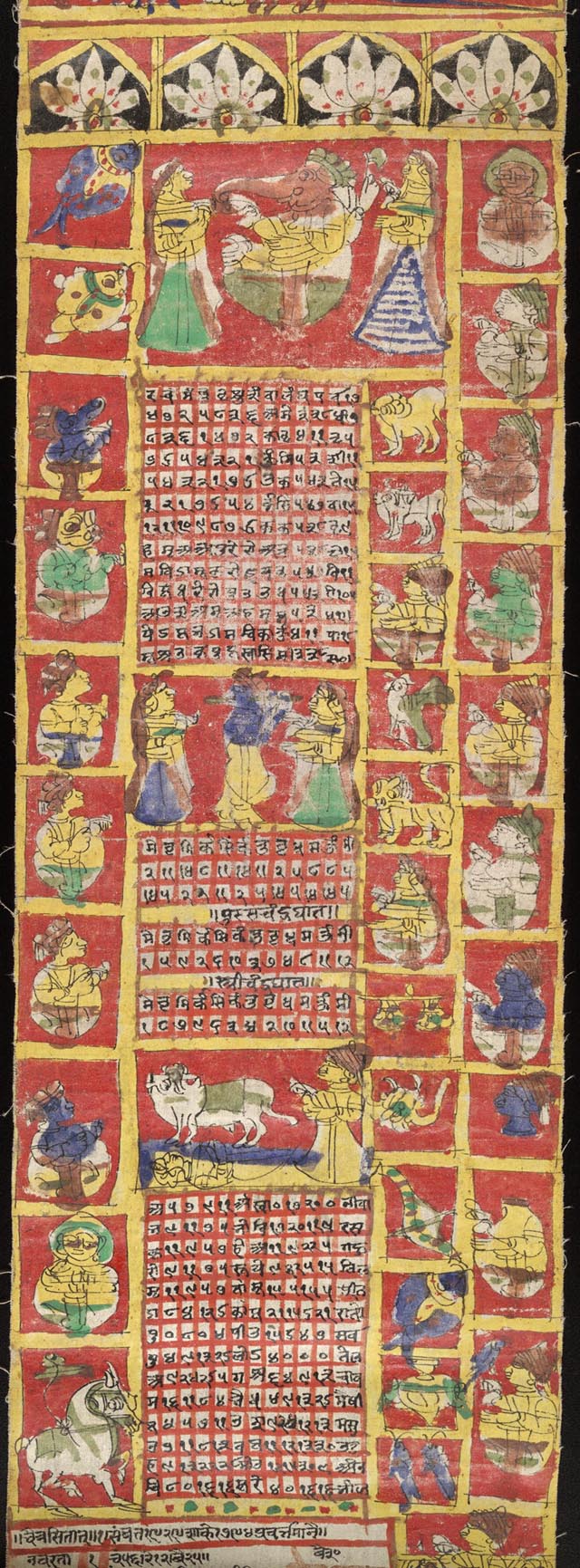

Core elements and terminology
Most Hindu calendars rely on several standard elements that determine dates and festival timing. Important components include:
- Lunar months: months based on the Moon's synodic cycle; these may begin after new moon (amanta) or full moon (purnimanta) in different regions.
- Tithi: the lunar day, a division based on the angular distance between Sun and Moon; many rituals are tied to specific tithis.
- Nakshatra, yoga, karana: auxiliary astronomical measures used in detailed almanacs (panchangas).
- Intercalation (adhika masa): addition of an extra lunar month occasionally to keep lunar months aligned with the solar year.
History and development
The calendar tradition developed over centuries, influenced by Vedic timekeeping and later astronomical works that refined methods to predict eclipses and planetary positions. Classical texts and regional schools produced algorithms for calculating tithis and months; practical almanacs were maintained by scholars and temple authorities. During the 20th century, a standardized civil form known as the Indian national calendar was adopted for official use (Indian national calendar), while many regional systems remained in common cultural practice.
Regional systems and variations
Regional variants differ in month names, the rule for when a month begins, the epoch or era in use (for example, Vikram Samvat or Saka), and how New Year is observed. Prominent regional calendars include those used in the north, Bengal, Maharashtra, Tamil Nadu and Kerala, each reflecting local tradition and seasonal needs. For a summary of these local forms see general treatments of regional calendars.
Uses and significance
Beyond civil timekeeping, Hindu calendars are central to the timing of religious festivals, funerary rites, agricultural planning and astrological practice. Observances such as Diwali, Holi and many temple festivals are scheduled according to lunar tithis or combinations of lunar-solar criteria. Panchangas — printed or digital almanacs — provide daily data used by priests, scholars and laypeople to choose auspicious moments.
Notable distinctions
Key differences distinguish Hindu calendrical practice from purely solar calendars: the use of lunar months with periodic leap months, multiple regional conventions for month boundaries, and a close integration with ritual and astrology. Modern India therefore maintains an official civil calendar alongside diverse traditional calendars that continue to guide cultural and religious life.
Lunisolar systems and historical astronomy explain the mechanics and origins of the Hindu calendar family; additional resources and regional examples can be consulted via general overviews of regional calendars and the Indian national calendar.
Related articles
Author
AlegsaOnline.com Hindu calendar Leandro Alegsa
URL: https://en.alegsaonline.com/art/44283