
Heinrich Rudolf Hertz: Pioneer of Electromagnetic Waves
German physicist Heinrich Rudolf Hertz (1857–1894) produced the first clear experimental demonstration of electromagnetic waves and influenced modern communications; the unit hertz is named for him.
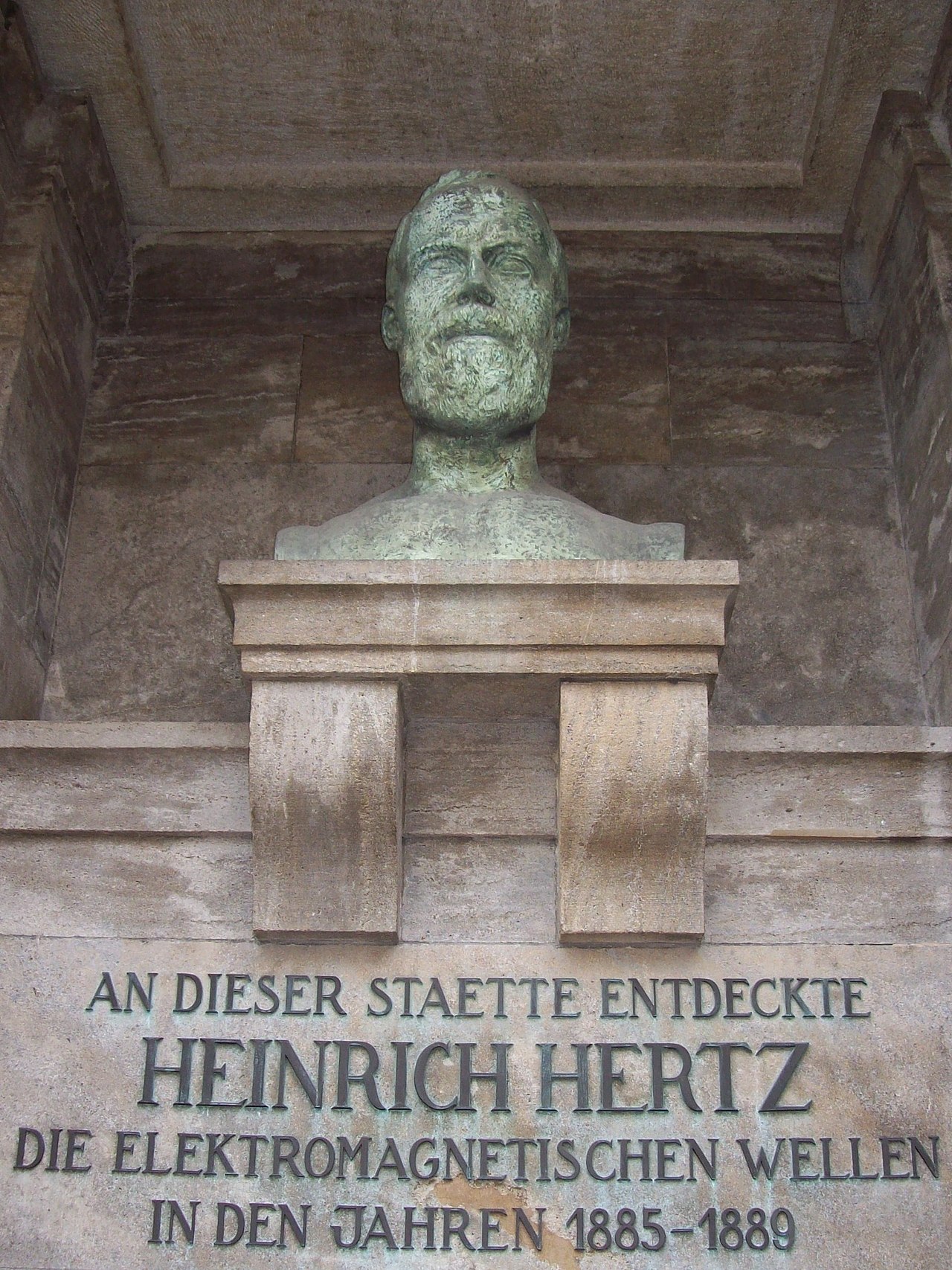
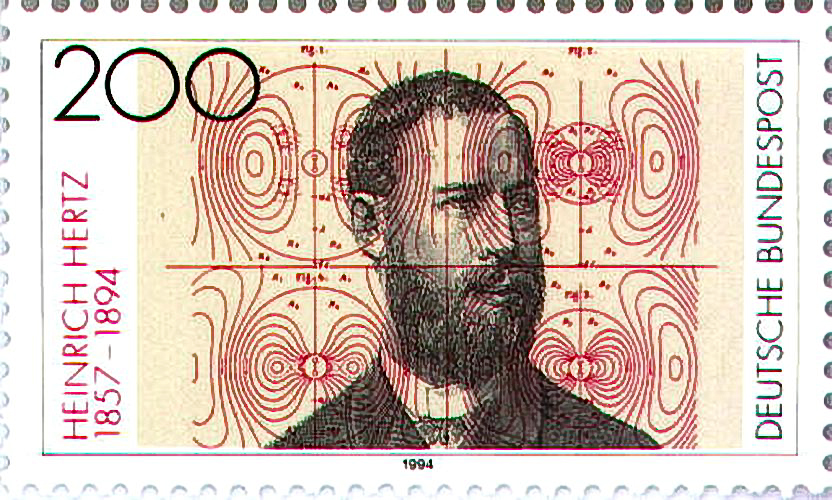
Heinrich Rudolf Hertz (22 February 1857 – 1 January 1894) was a German physicist whose laboratory experiments provided the first unambiguous demonstration of electromagnetic waves predicted by James Clerk Maxwell. Working in the 1880s, Hertz generated and detected radio waves, showed that they obey the same laws as light, and made early observations of what later became known as the photoelectric effect. His work established an experimental foundation for wireless telecommunication and advanced theoretical physics.
Image gallery
10 Images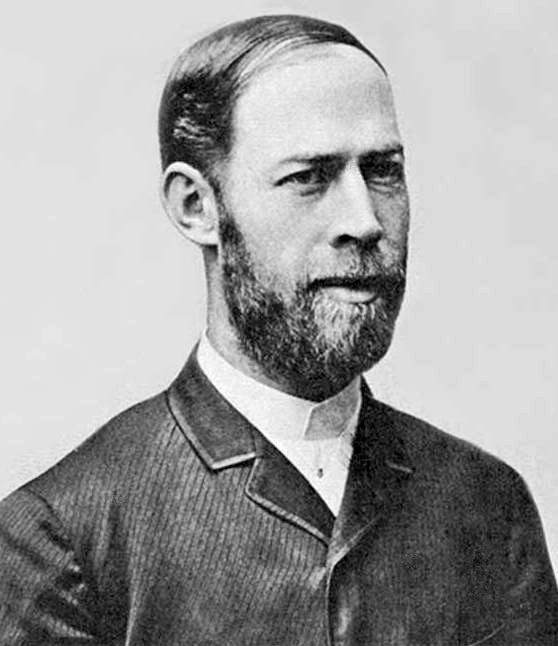






Life and education
Hertz was born in Hamburg and trained initially in engineering before moving into physics. He studied at technical schools and at the University of Munich, and he completed his doctorate at the University of Berlin, where he worked in the circle of prominent physicists of the time. He held academic posts at German universities, including Kiel and Bonn, where he carried out the experiments that made his name. His career was short but remarkably influential; he died at the age of 36 from blood poisoning.
Experiments and major contributions
In 1886–1889 Hertz designed apparatus that produced and detected rapidly oscillating electric sparks. Using a transmitter consisting of a spark gap and a resonant conductor and a receiver made from a loop with a small gap, he observed propagation, reflection, refraction, polarization and interference of the waves he produced. These observations demonstrated that radio waves were governed by the same electromagnetic laws as visible light and confirmed Maxwell’s theoretical work.
Hertz also reported early evidence of the photoelectric effect when he noticed that ultraviolet light made sparks easier to jump across a gap. Although he did not develop a theory of the effect, his observations later proved important to the quantum description of light.
Impact, recognition and legacy
Hertz’s experiments removed lingering doubts about the reality of electromagnetic waves and opened the way for applied developments in wireless telegraphy, radio and radar. In his honor, the SI unit of frequency, the hertz (Hz), was named after him; it denotes one cycle per second and is widely used in physics and engineering. Beyond the unit, his name is associated with many historical summaries and educational treatments that explain the transition from theory to practice in late 19th-century physics.
Further reading and resources
- Comprehensive biography
- Overview of Hertz’s physics
- Radio waves and early wireless
- Maxwell’s theory
- Electromagnetic spectrum and light
- SI unit: hertz
- Frequency and measurement
- Hamburg: birthplace context
- Early engineering training
- University of Munich records
- Doctoral studies
- Work at Bonn
- Work at Kiel
Related articles
Author
AlegsaOnline.com Heinrich Rudolf Hertz: Pioneer of Electromagnetic Waves Leandro Alegsa
URL: https://en.alegsaonline.com/art/43276
Sources
- oxfordreference.com : oxfordreference.com/view/10.1093/acref/9780192800862.001.0001/acref-9780192800862-e-673
- wikidata.org : wikidata.org/wiki/Q41257
- catalogo.bne.es : XX1150427
- catalogue.bnf.fr : cb124810439
- data.bnf.fr : (data)
- d-nb.info : 11855008X
- isni.org : 0000 0001 2134 2542
- id.loc.gov : n83210758
- genealogy.math.ndsu.nodak.edu : 67546
- id.ndl.go.jp : 00443175
- aleph.nkp.cz : jn20000700701
- nla.gov.au : 35908879
- uli.nli.org.il : 000062646
- data.bibliotheken.nl : 071756469
- libris.kb.se : 237442