
Heinrich Wilhelm Olbers
German physician and astronomer (1758–1840) known for Olbers' paradox, discoveries of the asteroids Pallas and Vesta, studies of comets, and contributions to celestial mechanics.
Heinrich Wilhelm Matthäus Olbers was born on October 11 and lived from 1758 to March 2, 1840. He was a German astronomer, physician and physicist whose observational work and theoretical remarks influenced 19th-century astronomy.
Image gallery
4 Images
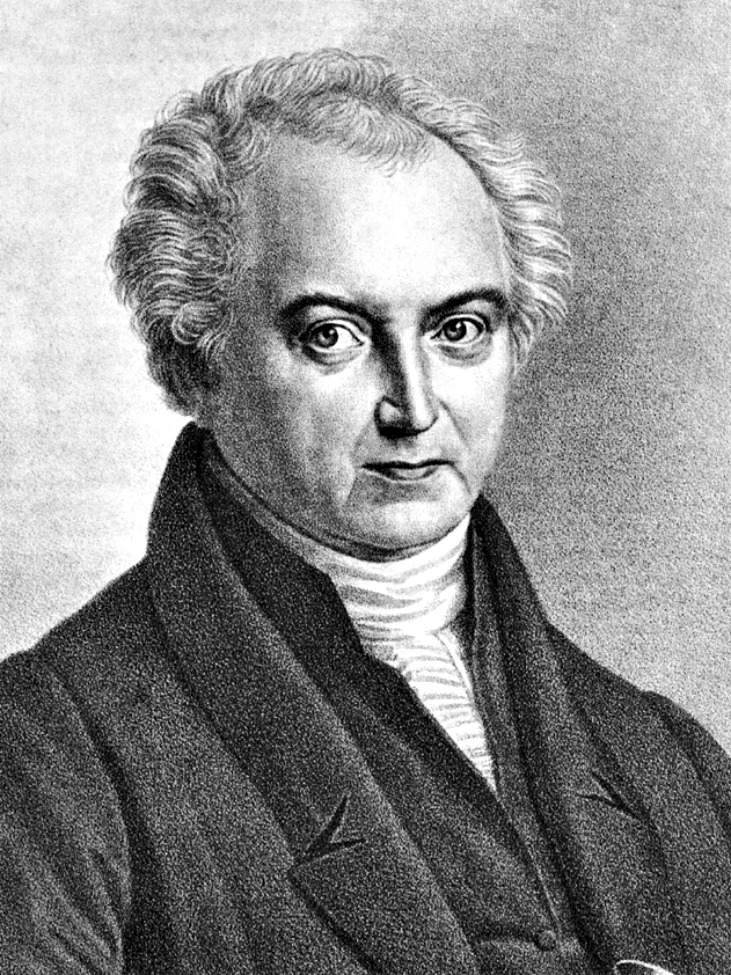


Overview
Trained and practicing as a medical doctor, Olbers pursued astronomy as a serious avocation. Working from Bremen and through lively correspondence with other scientists, he combined careful telescopic observation with analytic calculations. He is best known for a surprising thought experiment about the darkness of the night sky, alongside a string of practical discoveries in the solar system.
Major contributions
- Olbers' paradox: He articulated the apparent contradiction that an infinite, static, uniformly populated universe should make the night sky uniformly bright, a question that later cosmology addressed by invoking finite age and expansion of the universe.
- Asteroid discoveries: Olbers discovered two large minor planets in the early 1800s, now known as Pallas and Vesta, and he proposed that many small bodies might be fragments of a disrupted larger object—an influential early idea about the origin of the asteroid belt.
- Cometary and orbital work: He observed comets and refined methods to compute their orbits, contributing practical techniques for positional astronomy and celestial mechanics.
Olbers' combination of observational skill and mathematical insight typified the transitional era between classical and modern astronomy. His paradox stimulated later thinkers to reconsider assumptions about space, light, and time.
During his lifetime he balanced medical practice with scientific research, participating in learned societies and exchanging results with contemporaries. His name survives in astronomical nomenclature and in pedagogical discussions of cosmology, and his work remains an example of how careful observation and simple questions can prompt deep theoretical advances.
For further reading, modern summaries and historical accounts can be found through general resources and academic reviews; contemporary digital libraries and biographies collect his correspondence and published papers. See also discussions of Olbers' paradox and the early study of asteroids for context.
Related articles
Author
AlegsaOnline.com Heinrich Wilhelm Olbers Leandro Alegsa
URL: https://en.alegsaonline.com/art/43280