
Heinrich Louis d'Arrest
Prussian-born astronomer (1822–1875) who assisted in the first observation of Neptune and made numerous discoveries of comets, nebulae and minor planets; later worked in Copenhagen.
Heinrich Louis d'Arrest (13 July 1822 – 14 June 1875) was a Prussian-born astronomer known for his observational work in the mid-19th century. Born in Berlin, he is sometimes recorded under the German form Heinrich Ludwig d'Arrest. His career combined careful positional astronomy with searches for new solar-system bodies and deep-sky objects. He died in Copenhagen, Denmark.
Image gallery
2 Images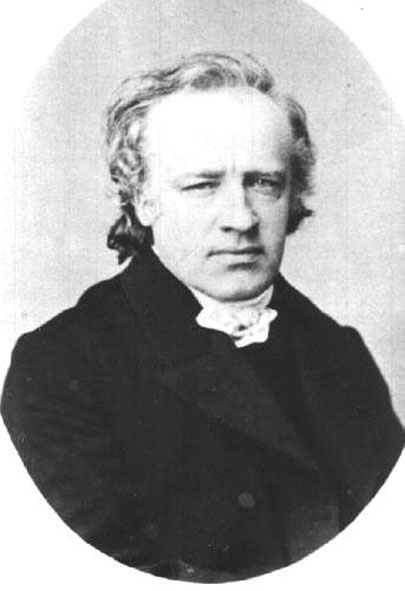

Overview of contributions
D'Arrest is best remembered for his role in the observational confirmation of the planet Neptune in 1846. Working at an observatory under the guidance of senior colleagues and using predictions by Urbain Le Verrier, he helped locate a previously unrecorded moving object near the predicted position. Beyond that episode, his work included discovery and cataloguing of comets, observations of nebulae and star clusters, and precise positional measurements that supported improving star charts and minor-planet tracking.
Career highlights
- Instrumental role in the first telescopic detection of Neptune in September 1846, where prompt comparison with star charts enabled recognition of the new planet.
- Systematic searches for comets and small solar-system bodies; published observations used by contemporary astronomers and chart makers.
- Long-term observational programs at several European observatories, including work later in his life at the Copenhagen facility (observatory).
His observational method emphasized careful bookkeeping and comparison with existing catalogues, practices that were important as astronomy moved toward larger systematic surveys. D'Arrest published lists and notes that aided subsequent astronomers in identifying variable objects and separating transient phenomena from catalogued stars.
Legacy and honors
D'Arrest's name endures in astronomical nomenclature: a lunar crater bears his name, and other minor bodies and catalog entries credit his identifications. He is often cited in histories of Neptune's discovery as an active and alert observer whose practical decisions in the telescope room made the rapid identification possible. Historians note his combination of technical skill and careful record-keeping as representative of mid-19th-century observational astronomy.
For further reading on the circumstances of the Neptune observation and d'Arrest's publications, see specialized histories of 19th-century astronomy and archival papers from the European observatories where he worked.
Related articles
Author
AlegsaOnline.com Heinrich Louis d'Arrest Leandro Alegsa
URL: https://en.alegsaonline.com/art/43272