
Heinrich Rohrer — Swiss physicist and co‑inventor of the scanning tunneling microscope
Heinrich Rohrer (1933–2013) was a Swiss physicist who co‑developed the scanning tunneling microscope, a breakthrough instrument for imaging and manipulating surfaces at the atomic scale. Nobel laureate in 1986.
Heinrich Rohrer (6 June 1933 – 16 May 2013) was a Swiss physicist best known for co‑creating the scanning tunneling microscope (STM). Working in collaboration at an industrial research laboratory, Rohrer and Gerd Binnig produced an instrument that allowed scientists to image and probe surfaces one atom at a time, a practical foundation for modern nanoscience and surface physics.
Image gallery
2 Images
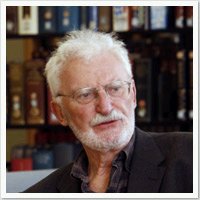
Early life and career
Rohrer was born in Buchs, St. Gallen and grew up in Zürich. He received his scientific training in Switzerland, studying physics at the Swiss Federal Institute of Technology and starting a research career that brought him to an international laboratory setting. During his professional life he worked as a research scientist and research leader in industry, where he pursued experimental studies of surfaces and electronic properties.
Invention and principles of the STM
In collaboration with colleagues, particularly Gerd Binnig, Rohrer helped design and build the STM, an instrument that images surfaces by detecting the quantum mechanical tunneling current between an atomically sharp conductive tip and the sample. By scanning the tip across a surface while keeping tunneling current constant, the STM maps topography with atomic resolution and can also measure local electronic states. The STM was a milestone in experimental technique because it turned quantum tunneling into a practical tool for real‑space observation at the atomic scale.
Impact and applications
The STM rapidly became a cornerstone tool in surface science, material characterization, and nanotechnology. It enabled researchers to visualize individual atoms, study adsorbates and defects, and later inspired other forms of scanning probe microscopy. Beyond imaging, variants of the STM allow manipulation of single atoms and molecules, experiments that underpin much of atomic‑scale engineering and fundamental studies of electronic behavior on surfaces.
Awards, recognition and later life
For the development of the STM, Rohrer and Binnig received the Nobel Prize in Physics in 1986; the other half of that year’s prize was awarded to Ernst Ruska. Rohrer was widely respected for both his experimental skill and his role in bridging academic research with industrial laboratory work. He continued to be active in scientific circles after his retirement. Rohrer died in Wollerau in 2013. Throughout his career he was recognized as a leading scientist in surface physics.
Rohrer’s work remains central to contemporary nanoscale research: the scanning tunneling microscope and its descendants are standard instruments in many laboratories, and the concepts developed by Rohrer and collaborators continue to influence microscopy, spectroscopy, and atom‑by‑atom fabrication. Further biographical and technical references are available through institutional archives and scientific overviews of scanning probe techniques; for basic introductions consult entries on the scanning tunneling microscope.
Related articles
Author
AlegsaOnline.com Heinrich Rohrer — Swiss physicist and co‑inventor of the scanning tunneling microscope Leandro Alegsa
URL: https://en.alegsaonline.com/art/43275
Sources
- nobelprize.org : "The Nobel Prize in Physics 1986, Heinrich Rohrer"
- tagesanzeiger.ch : Schweizer Physik Nobel preistraeger Heinrich-Rohrer ist tot
- commons.wikimedia.org : Heinrich Rohrer
- commons.wikimedia.org : Nobel Prize in Physics