
Hamadryas baboon (Papio hamadryas): appearance, behavior, and significance
A northern African and Arabian baboon species, Papio hamadryas is known for sexual dimorphism, complex social systems and historic cultural importance in ancient Egypt.
The hamadryas baboon (Papio hamadryas) is a distinctive Old World monkey native to northeast Africa and a small part of the Arabian Peninsula. As the northernmost of the baboon species, it occupies arid and rocky landscapes rather than the woodlands and savannas favored by some other baboons. Taxonomically it belongs to the Old World monkey family (Cercopithecidae), and is adapted to life on cliffs, plateaus and dry riverbeds.
Image gallery
9 Images




Physical characteristics
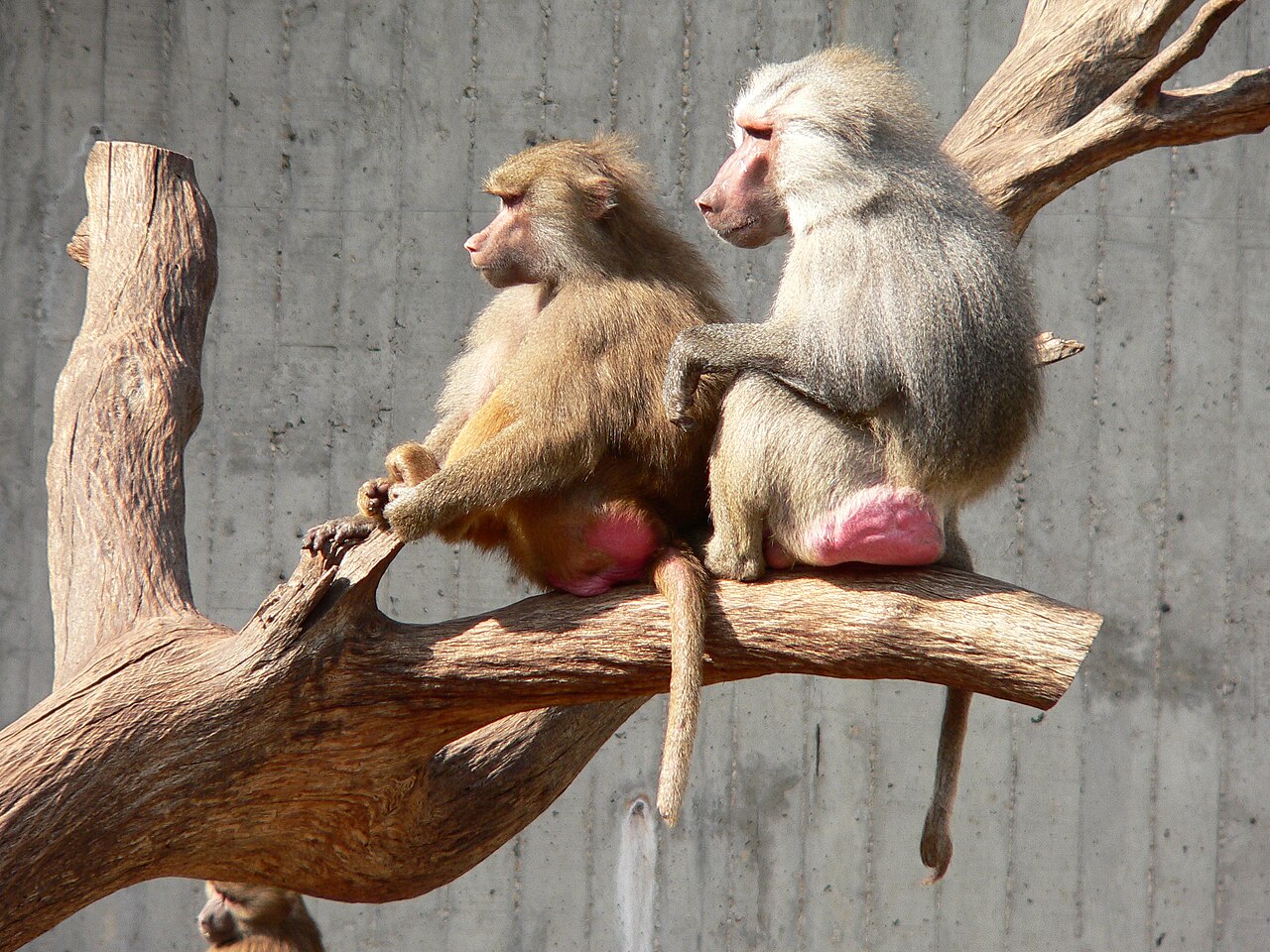
Males and females differ markedly. Adult males develop a large, silver-gray mane and more dramatic facial features, while females and young are smaller and more uniformly brown or gray. Both sexes have long snouts, large canine teeth, and a pronounced rump pad suited to sitting long periods. They are terrestrial quadrupeds but can climb and sleep on rock faces. The species' coloration and build reflect adaptation to open, sunlit habitats.
Social structure and behavior
Hamadryas baboons live in a multi-level social system built from small one-male units (OMUs) into larger clans, bands and troops. A dominant male typically controls a harem of females, herding and guarding them closely. Social life centers on grooming, vocal communication and ritualized displays; males may use threat postures to defend their unit. Females form bonds with each other but retain close ties to their controlling males.
Habitat, diet and ecology
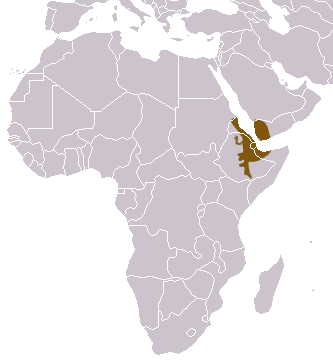
Found primarily in the Horn of Africa and the southwestern tip of the Arabian Peninsula, hamadryas populations occupy areas with fewer large terrestrial predators than populations of other baboons in central and southern Africa. Their diet is omnivorous and opportunistic: roots, fruits, leaves, seeds, insects and occasional small vertebrates. They exploit seasonally available resources and are skilled at foraging in sparse environments.
Conservation, human interactions and cultural role
The hamadryas baboon is widely known from historical records and art. It was considered sacred in ancient Egypt, where depictions linked it to moon and wisdom deities. Today the species faces habitat disturbance, local persecution and competition with livestock in parts of its range, though it remains adaptable. Conservation attention focuses on habitat protection, conflict mitigation and continued monitoring of populations.
- Scientific name: Papio hamadryas
- Range: Northeastern Africa and southwestern Arabian Peninsula
- Social system: Multi-level (OMU → clan → band → troop)
- Habitat: Arid, rocky cliffs and dry river valleys
Related articles
Author
AlegsaOnline.com Hamadryas baboon (Papio hamadryas): appearance, behavior, and significance Leandro Alegsa
URL: https://en.alegsaonline.com/art/41996
Sources
- bucknell.edu : Mammal Species of the World
- iucnredlist.org : "Papio hamadryas"
- doi.org : 10.2305/IUCN.UK.2008.RLTS.T16019A5354647.en
- biodiversitylibrary.org : Systema naturæ. Regnum animale