
Haemocyanin — the copper-based oxygen carrier of many invertebrates
Haemocyanin is a large, copper-containing oxygen-transport protein found chiefly in molluscs and many arthropods. It circulates dissolved in haemolymph and turns blue when oxygenated.
Overview
Haemocyanin (also spelled hemocyanin) is an oxygen-transport protein present in the circulatory fluids of numerous invertebrates. Instead of iron, its active site contains copper atoms that bind oxygen. Unlike the iron‑based pigments of vertebrates, haemocyanin molecules typically float free in the body fluid rather than being enclosed in blood cells.
Image gallery
7 Images



Structure and chemical properties
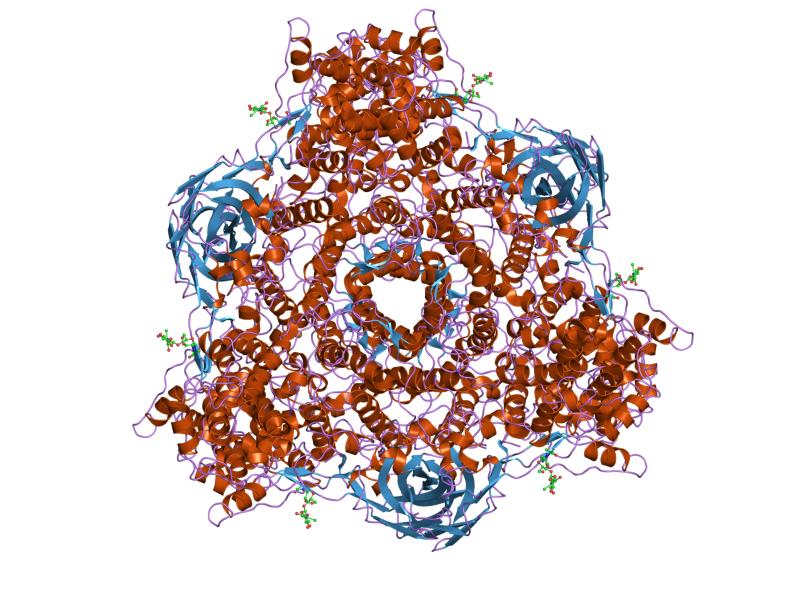
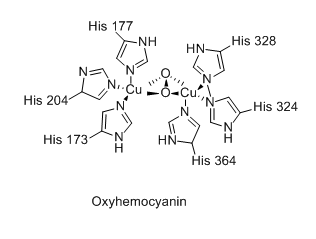
At the functional core of haemocyanin are paired copper ions: two copper atoms work together to reversibly bind one O2 molecule, and this binding causes a characteristic blue color when oxygenated. Haemocyanins occur in a variety of molecular architectures, from hexameric units to enormous multi-subunit assemblies reaching very high molecular weights. Many of these subunits are related in sequence to other copper‑binding proteins, and in some species the molecules exhibit cooperative oxygen binding and allosteric regulation.
Distribution and evolutionary notes
Haemocyanin is known primarily from the phyla Mollusca and Arthropoda. Within Arthropoda it is widespread in crustaceans and some chelicerates; in insects it is comparatively rare because most insects rely on a tracheal respiratory system that delivers air directly to tissues via tubes called trachea. In animals that use haemocyanin the pigment is dissolved in the circulating fluid called haemolymph, rather than being contained inside specialized cells.
Physiology and function
Functionally, haemocyanin accomplishes the same general task as vertebrate hemoglobin: it supplements gas exchange by transporting oxygen from respiratory surfaces toward oxygen‑consuming tissues. Because haemocyanin is free in the haemolymph and often present at high concentrations, its oxygen‑carrying capacity and response to changes in temperature, pH and ion concentration differ from the cellular, iron‑based systems of vertebrates. Vertebrate oxygen transport occurs largely in red blood cells, an organizational difference with important physiological consequences.
Characteristics, uses and examples
- Color change: oxygenated haemocyanin is typically blue due to the copper(II)–oxygen complex; the deoxygenated form is pale or colorless.
- Molecular diversity: size and quaternary structure vary widely among species, from small complexes to mega‑assemblies in some molluscs.
- Biotechnological role: certain large haemocyanins (for example, those from keyhole limpets) are used as carrier proteins in immunology and vaccine research because of their strong antigenicity and stability.
- Enzymatic links: related copper centers mean that, in some taxa, haemocyanin can display enzyme‑like activities or give rise to phenoloxidase activity after modification.
Notable distinctions and facts
Haemocyanin and hemoglobin are evolutionarily and chemically distinct solutions to the same problem of oxygen transport. Haemocyanin's reliance on copper rather than iron gives it different spectral and chemical properties. Its prevalence in cold, low‑oxygen, or marine environments and its appearance in taxa without red blood cells highlight the diversity of respiratory adaptations among animals. For further technical detail and comparative studies see general protein and respiratory physiology sources (protein, oxygen chemistry, copper coordination).
Related articles
Author
AlegsaOnline.com Haemocyanin — the copper-based oxygen carrier of many invertebrates Leandro Alegsa
URL: https://en.alegsaonline.com/art/41731
Sources
- jbc.org : jbc.org/content/275/50/39339