
Heat exchanger
A heat exchanger transfers thermal energy between fluids or between a fluid and a surface. Designs, operation, history, and common applications are described with key distinctions and typical types.
Overview
A heat exchanger is a device that moves heat from one fluid to another, or between a fluid and a solid surface, while keeping the streams physically separate in most designs. The goal is efficient thermal energy transfer with minimal pressure loss and controlled temperature change. For basic principles and broader context see heat transfer principles.
Image gallery
9 Images




Designs and main parts
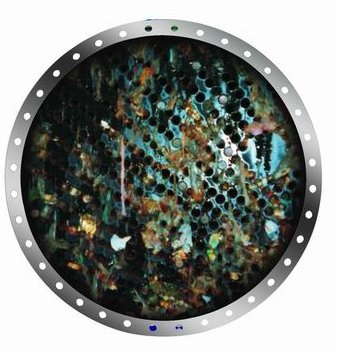
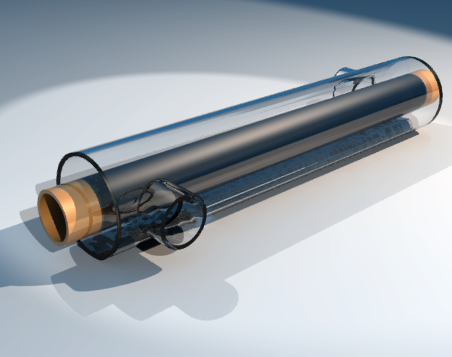
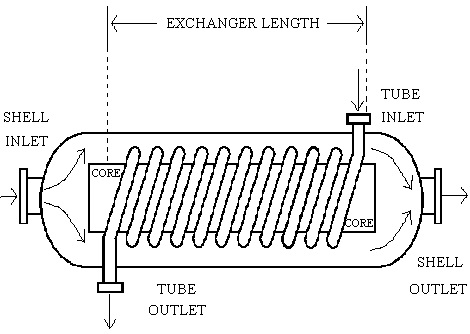
Common components include tubes, plates, shells, fins and housings. Engineers choose geometry, materials and flow arrangements to balance cost, size and thermal performance. Typical types include:
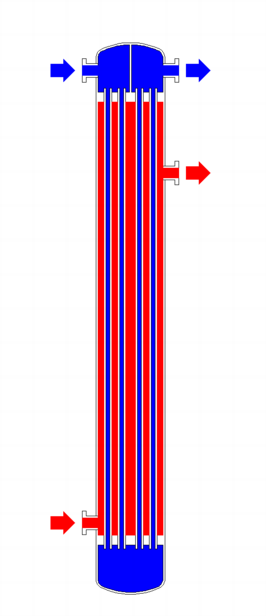
- Shell-and-tube—many industrial applications, robust and scalable.
- Plate—compact, high heat-transfer surface area, common in HVAC and food processing.
- Air-cooled (finned)—uses ambient air as one fluid, used where water is scarce.
- Regenerators and recuperators—store and reuse heat in cyclic or continuous flow systems.
Operation and performance factors
Performance depends on flow arrangement (counterflow, parallel flow, crossflow), temperature difference, surface area, material conductivity and fouling. Counterflow configurations generally achieve higher mean temperature differences than parallel flow. Designers use methods such as effectiveness-NTU or log-mean temperature difference to predict behavior. For practical design guidance consult design guidelines.
History and development
Heat exchangers evolved with industrialization—early forms appeared in steam engines and distillation equipment; modern variants developed alongside advances in metallurgy, welding and computational design. Innovations focus on improving compactness, corrosion resistance and reduced maintenance.
Applications and importance
They are crucial in power generation, refrigeration and air conditioning, chemical processing, automotive cooling, and renewable energy systems. Examples include condensers in steam plants, radiators in vehicles, intercoolers for compressors and heat recovery units in buildings. Selection affects energy efficiency and operating costs; operators often monitor for fouling and leaks.
Distinctions and notable facts
Unlike a simple heat sink that removes heat from a single solid component, a heat exchanger usually couples two flowing streams. Material choice—stainless steel, copper, aluminum, titanium—reflects tradeoffs among thermal conductivity, corrosion resistance and price. For technical overviews and reference material see technical overview.
Related articles
Author
AlegsaOnline.com Heat exchanger Leandro Alegsa
URL: https://en.alegsaonline.com/art/43100