
Green Day: overview, history, music and legacy
Green Day is an American rock band from the East Bay punk scene, known for melodic punk, breakthrough album Dookie, the rock opera American Idiot, global sales, major awards and lasting influence.
Green Day is an American rock band that emerged from the East Bay punk community in Northern California in the late 1980s. The group is widely known for concise, energetic songs that blend punk urgency with strong pop melody, and for a career that moved from DIY venues to major‑label success and international stadium tours. Their early identity was rooted in local punk culture and independent releases; their later work has included ambitious concept pieces and theatrical adaptations.
Image gallery
10 Images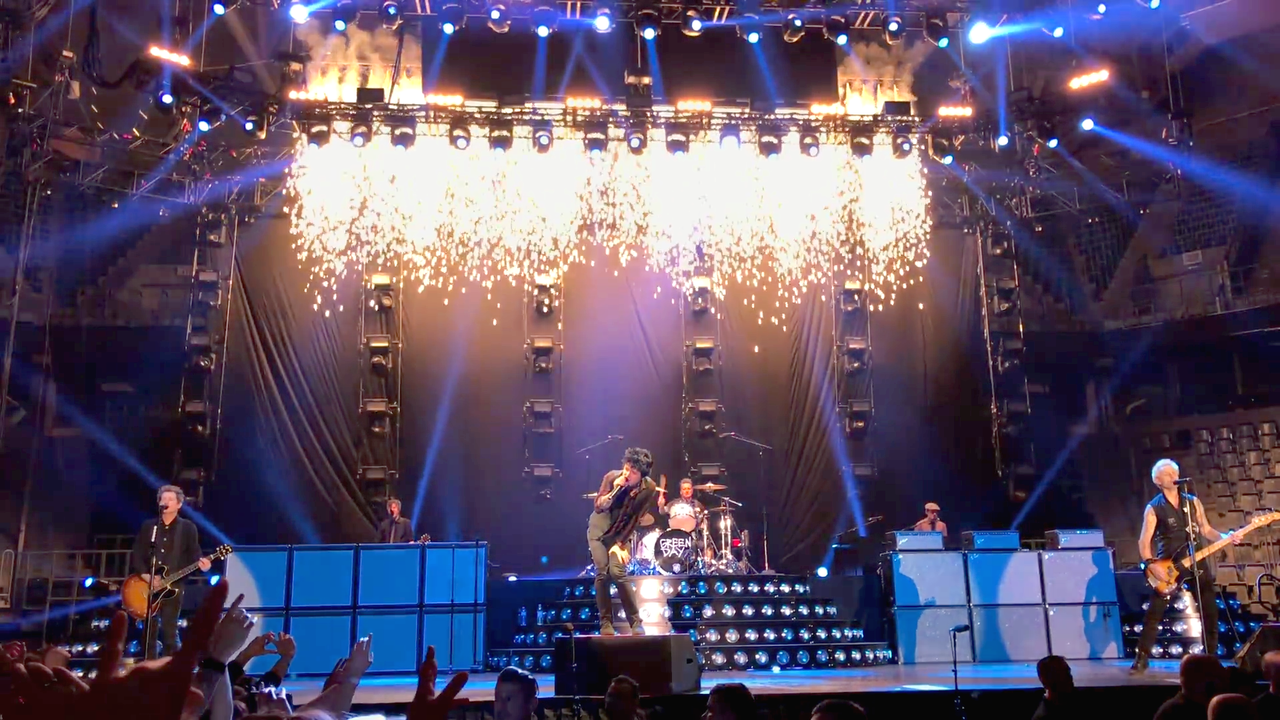


Origins and early years
The band began among friends active in the East Bay scene and performed frequently at community venues that supported punk and alternative music. Those formative years produced a series of independent recordings and extensive touring on the underground circuit, building a dedicated fanbase that preceded their mainstream breakthrough. The transition from an independent scene to wide commercial exposure is an important part of their story, illustrating how DIY networks can launch long‑running careers.
Members and roles
- Billie Joe Armstrong — lead vocalist, principal songwriter and guitarist.
- Mike Dirnt — bass player and backing vocalist.
- Tré Cool — drummer and percussionist who joined after the band’s earliest lineups.
- Jason White — longtime touring guitarist and occasional contributor.
- Jason Freese — keyboardist and multi‑instrumentalist on tour.
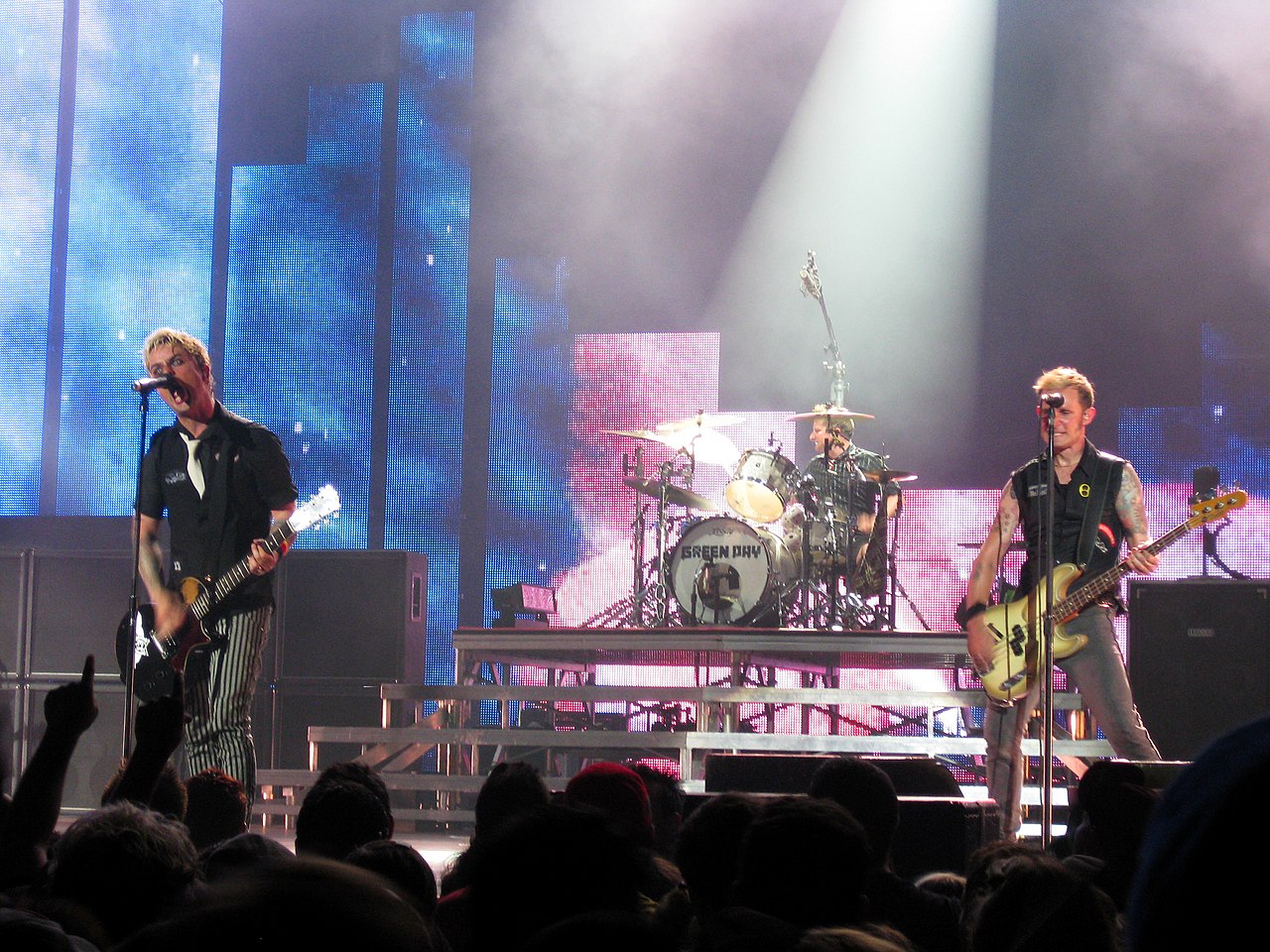
Lineups and touring personnel have varied over decades; the trio of Armstrong, Dirnt and Tré Cool remains the core public identity of the group.
Musical style and themes
Green Day’s music draws on punk rock speed and attitude while emphasizing tuneful choruses and accessible arrangements. Lyrically their work ranges from youthfully defiant anthems to more reflective, politically charged material and narrative storytelling. Over time they experimented with denser production, orchestration and concept formats, while still retaining elements of the short, direct songs that characterized their early output.
Major releases and milestones
- Dookie — the breakthrough mid‑1990s album that introduced the band to a global audience and remains a defining record of 1990s alternative punk.
- Follow‑up records expanded their sound: Insomniac, Nimrod and Warning explored darker tones, stylistic shifts and broader instrumentation.
- American Idiot — a 2000s era rock‑opera style album that returned the band to major commercial prominence and inspired a stage musical adaptation.
Across studio albums, compilations and singles the band has reached tens of millions of listeners worldwide and produced songs that continue to appear on radio playlists and streaming platforms. Their catalog includes short, high‑energy tracks as well as multi‑part narrative pieces.
Awards, recognition and legacy
Green Day has received multiple industry awards and widespread recognition for both commercial success and influence on contemporary rock. They have won major awards for their albums and singles, and have been honored by institutions that document popular music history. Beyond trophies, their long career has influenced how post‑punk and pop‑punk bands approach melody, arrangement and the scaling of live performance from clubs to arenas.
Live performance and touring
Known for energetic live shows, the band has headlined festivals and global tours, often presenting both compact punk sets and expanded, theatrical productions tied to concept albums. Touring lineups include additional musicians for keyboards and multi‑instrumental support when performances require larger arrangements than a three‑piece can produce onstage.
Further reading and resources
For authoritative timelines, discographies, interviews and scene histories consult band pages, venue archives and music press resources. The following links provide starting points for deeper research and fan reference.
- Official band profile
- Genre and scene context
- Comprehensive discography
- Formation year and early chronology
- Billie Joe Armstrong resources
- Guitar and songwriting notes
- Mike Dirnt profile
- Bass and live performance notes
- Tré Cool profile
- Drumming and percussion analysis
- Percussion credits and interviews
- Jason White information
- Jason Freese information
- Keyboard and tour arrangements
- Punk scene histories
- Cultural context and commentary
- Venue archives (924 Gilman Street)
- Local press and regional coverage
- Sales summaries and reporting
- Dookie: album overview
- Insomniac: album notes
- Nimrod: album notes
- American Idiot and related projects
- Notable singles and chart history
Their long career continues to be documented by music historians, journalists and fans; for the most current tour dates, official statements and release information consult the band's official channels and reputable music industry outlets.
Questions and answers
Q: Who are the members of Green Day?
A: The members of Green Day are Billie Joe Armstrong (vocals, guitar), Mike Dirnt (bass guitar, vocals), Tré Cool (drums, percussion), Jason White (guitar/vocals) and Jason Freese (keyboard). Jason Freese only participates in concert tours.
Q: Where did Green Day form?
A: Green Day formed in 1987 at 924 Gilman Street in Berkeley, California.
Q: What album made them famous?
A: Their album Dookie (1994) became a success and sold more than ten million copies in the United States alone and 20 million copies worldwide.
Q: How many albums have they released after Dookie?
A: After Dookie, Green Day has released three more albums; Insomniac, Nimrod and Warning.
Q: How successful were these albums compared to Dookie?
A: These albums were still successful but none of them sold as well as their third album, Dookie.
Q: What was the success of their 2004 rock opera American Idiot?
A: American Idiot sold six million copies in the United States.
Q: How many records has Green Day sold worldwide and how many awards have they won?
A:Green Day has sold over 85 million records worldwide with 32 million of those being from the United States alone. They have also won four Grammy Awards; Best Alternative Album for Dookie, Best Rock Album for American Idiot, Record of the Year for the song "Boulevard of Broken Dreams" and Best Rock Album for 21st Century Breakdown. They have also been inducted into the Rock & Roll Hall Of Fame.
Related articles
Author
AlegsaOnline.com Green Day: overview, history, music and legacy Leandro Alegsa
URL: https://en.alegsaonline.com/art/40667
Sources
- disinfo.com : Green Day: American Idiot and the New Punk Explosion
- mtv.com : "How Green Day's Dookie Fertilized A Punk-Rock Revival"
- rockonthenet.com : Rock On The Net: Green Day
- riaa.com : RIAA Bestsellers
- purevolume.com : "Green Day"
- thebiographychannel.co.uk : Biography Channel - Green Day
- geocities.com : Young, Loud, and Snotty
- metacritic.com : Green Day: Warning (2000): Reviews
- rollingstone.com : "Green Day — How the brats grew up, bashed Bush and conquered the world"
- usatoday.com : "USA Today - People's Choice Award Winners"
- grammy.com : Green Day's Grammy Awards
- greendayauthority.com : "www.GreenDayAuthority.com"
- nme.com : NME
- nme.com : "THE TOP 100 GREATEST ALBUMS OF THE DECADE"