
Great white pelican (Pelecanus onocrotalus) — overview, biology, and conservation
Comprehensive overview of the great white pelican: identification, range, feeding and breeding behavior, and contemporary conservation challenges affecting this large wetland bird.
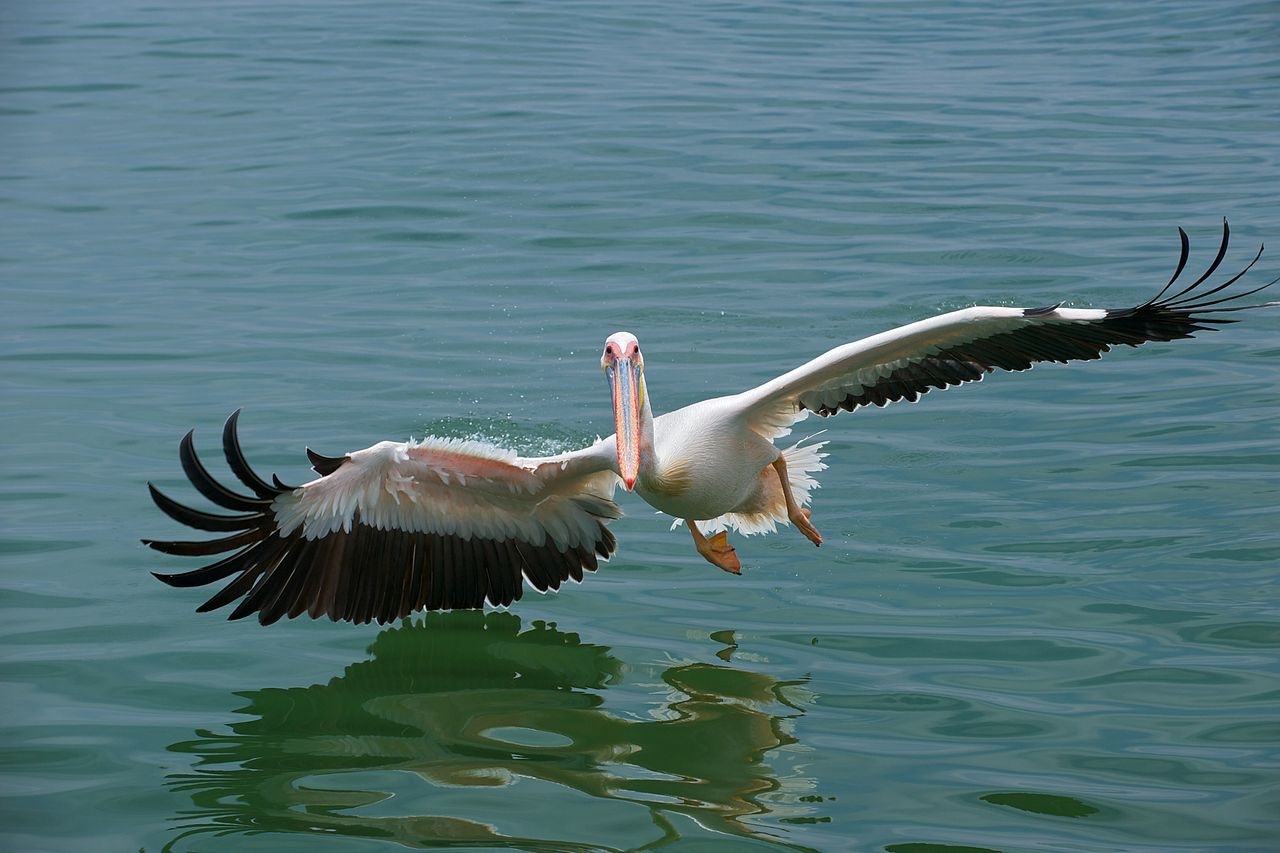
The great white pelican (Pelecanus onocrotalus) is a large waterbird noted for its long bill and expandable gular pouch. It is often called the Eastern or Old World white pelican and is one of the largest pelicans worldwide; only a few species exceed it in bulk and wingspan, see comparative size and the Dalmatian pelican for a size reference. Adults typically show pale plumage with black flight feathers visible in flight, a broad wingspan, and a distinctive throat pouch used for scooping fish.
Image gallery
10 Images




Distribution and habitat
Great white pelicans breed across a broad region that spans southeastern Europe, south Asia, and large parts of Africa. Important breeding and wintering areas include wetlands, inland lakes, deltas and estuaries where shallow water concentrates fish. For regional context see southeastern Europe (regional link), south Asia (regional link) and Africa (regional link). Populations may be resident, nomadic or migratory depending on local water levels and food availability.
Behavior, diet and foraging
These pelicans are social feeders and commonly forage in groups. They use coordinated drives to herd fish into shallows and then scoop them up with the bill and pouch. Their diet is dominated by fish but can include crustaceans and amphibians in some locations. Cooperative fishing and communal roosting are important social behaviors that also influence local ecology and fisheries interactions.
Breeding and life cycle
Great white pelicans nest in colonies, often on islands or in reedbeds that offer some protection from terrestrial predators. Nests are simple scrapes or mounds; both parents help incubate and feed chicks. Colony sites may hold thousands of birds in good years. Estimates of global breeding pairs have been used to track status and trends; many records indicate a strong proportion of pairs are in Africa, though distribution changes with habitat conditions and water availability (population studies).
Conservation, threats and human interactions
Although the species has a wide range and is often common in suitable wetlands, local declines have been reported where wetlands are drained, polluted, or disturbed. Major threats include loss and modification of wetland habitat, disturbance during breeding, contamination, and the effects of climate variability. Human use of wetlands and broader climatic shifts are linked to changing populations (wetland use, climate change). Conservation measures typically focus on protecting key breeding and feeding sites, regulating fisheries interactions, and monitoring colonies.
- Key identification features: pale body, black wing tips, large bill and pouch.
- Social behavior: colonial nesting and cooperative fishing.
- Conservation focus: wetland protection and disturbance reduction.
For taxonomy and family-level context see the pelican family summary (pelican family). Additional region-specific data and conservation actions are summarized in resources for researchers and wildlife managers (Europe, Asia, Africa). Ongoing monitoring and habitat protection remain central to ensuring stable populations of this striking wetland species.
Related articles
Author
AlegsaOnline.com Great white pelican (Pelecanus onocrotalus) — overview, biology, and conservation Leandro Alegsa
URL: https://en.alegsaonline.com/art/40568
Sources
- iucnredlist.org : "Eudyptula minor"
- web.uct.ac.za : "Great white pelican Pelecanus onocrotalus"
- birdlife.org : "Species Factsheet: Pelecanus onocrotalus"