
Greater Bird-of-Paradise (Paradisaea apoda): New Guinea canopy display specialist
Profile of the Greater Bird-of-Paradise (Paradisaea apoda), a New Guinea canopy specialist known for the male's ornate plumes and courtship displays, with coverage of taxonomy, habitat, behavior, and historical feather trade.
The greater bird-of-paradise (Paradisaea apoda) is a member of the bird-of-paradise family, placed in the genus Paradisaea. It is known for the elaborate plumage and courtship displays of the male, which contrast with the more subdued appearance of the female.
Image gallery
6 Images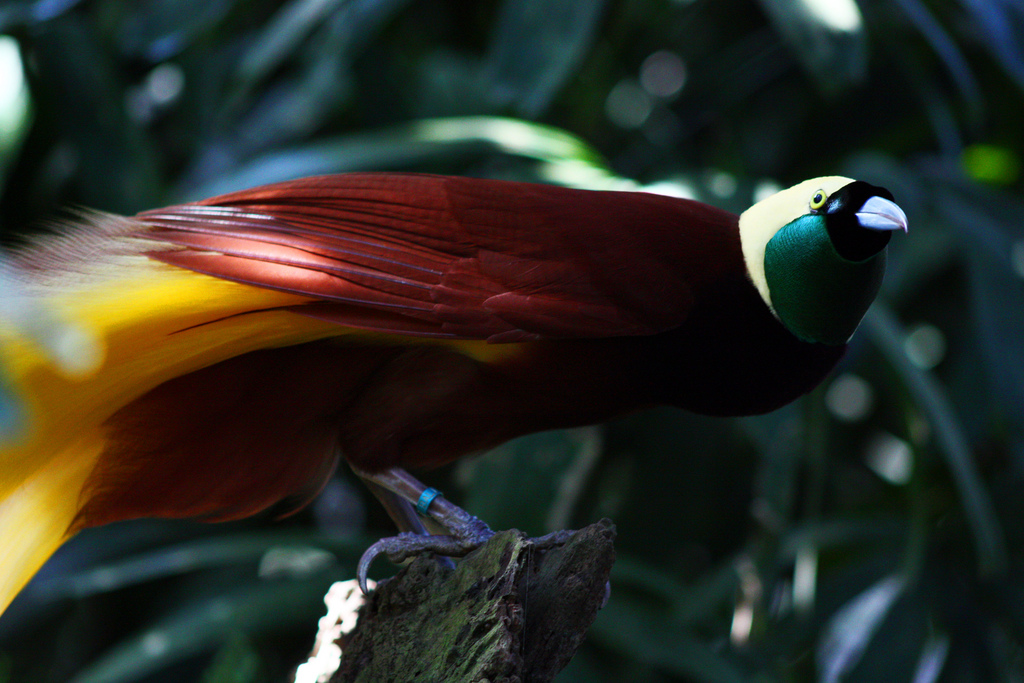


Taxonomy and name
When Carl Linnaeus formally described the animal, he gave it the binomial name Paradisaea apoda, the specific epithet meaning "without feet" or "legless." Early specimens that reached collectors in Europe often had feet and wings removed during preparation for the feather trade. Because these trade-skins lacked visible legs, a widespread myth developed that the birds were creatures from paradise that never landed.
Distribution and habitat
The greater bird-of-paradise occurs in lowland and hill forests of New Guinea and nearby islands. It generally inhabits forest canopy and edges where males establish display perches.
Description and behavior
Males are notable for long decorative plumes and vibrant coloration used in elaborate courtship displays, which they perform from exposed branches. Females are less conspicuous in color and are responsible for nest-building and raising young. Like many birds-of-paradise, they use a variety of vocalizations and postures during mating displays.
Human interactions
The spectacular feathers of these birds were highly sought after in the past, leading to extensive collection and export of prepared skins. This demand contributed both to the removal of wings and feet from trade-skins and to the legends surrounding their origin. Over time, international attitudes and regulations concerning wildlife trade have reduced large-scale commercial collection, though local hunting and habitat change continue to affect many populations.
- Common name: greater bird-of-paradise (Paradisaea apoda)
- Genus: Paradisaea
- Noted historical trade and myths associated with specimens sent to Europe
Questions and answers
Q: What is the scientific name of the greater bird-of-paradise?
A: The scientific name of the greater bird-of-paradise is Paradisaea apoda.
Q: What did Carolus Linnaeus name the greater bird-of-paradise?
A: Carolus Linnaeus named the greater bird-of-paradise as Paradisaea apoda, which means "legless bird-of-paradise."
Q: What happened to the early trade-skins of the greater bird-of-paradise that reached Europe?
A: Apparently, the early trade-skins of the greater bird-of-paradise that reached Europe were prepared by natives without wings or feet.
Q: What led to the belief that the greater bird-of-paradise was a beautiful visitor from paradise kept aloft by its plumes and never touched the earth until death?
A: The early trade-skins of the greater bird-of-paradise that reached Europe without wings or feet led to the belief that these birds were beautiful visitors from paradise kept aloft by their plumes and never touched the earth until death.
Q: What is the relevant point to consider about the greater bird-of-paradise in this text?
A: The relevant point about the greater bird-of-paradise in this text is that they were killed and traded for their feathers.
Q: What is the genus name of the greater bird-of-paradise?
A: The genus name of the greater bird-of-paradise is Paradisaea.
Q: What is the common name of Paradisaea apoda?
A: The common name of Paradisaea apoda is the greater bird-of-paradise.
Related articles
Author
AlegsaOnline.com Greater Bird-of-Paradise (Paradisaea apoda): New Guinea canopy display specialist Leandro Alegsa
URL: https://en.alegsaonline.com/art/40577
Sources
- iucnredlist.org : "Paradisaea apoda"