
Dalmatian pelican (Pelecanus crispus)
Large wetland bird of Eurasia noted for its curly nape feathers, silvery plumage and huge bill pouch; occupies lakes and marshes from southeastern Europe to China and Pakistan.
Overview: The Dalmatian pelican (Pelecanus crispus) is a large waterbird in the pelican family. It is well known for its bulky body, long bill and expansive throat pouch. Often found in shallow freshwater and coastal wetlands, this species is a conspicuous element of marsh, lagoon and lake communities across parts of Eurasia.
Image gallery
10 Images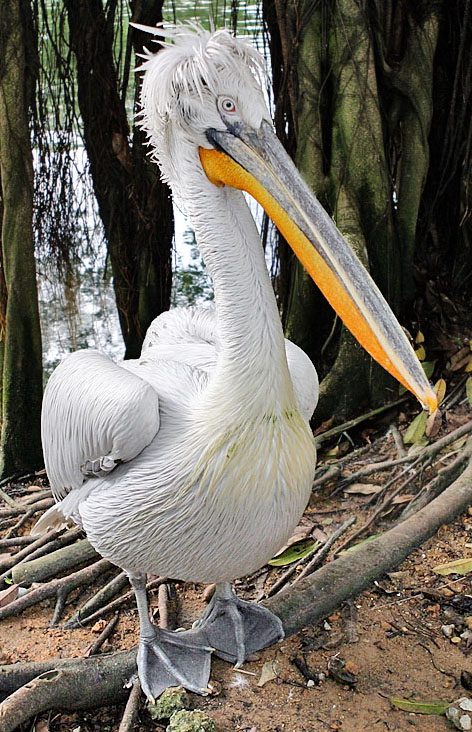




Appearance and anatomy
Adults are among the largest of living flying birds. They show a robust build, a long neck and a broad wingspan; many sources give body length and wingspan in wide ranges reflecting individual and regional variation. Their plumage is generally silvery-white to grey, with shaggy feathers on the head and a characteristic curled or crested appearance at the nape—hence the species name crispus. In the breeding season the bare facial skin and bill pouch often become more brightly coloured.
Distribution and habitat
Dalmatian pelicans breed and winter across a broad band of Eurasia. They occur from southeastern Europe eastward through parts of the Middle East to Pakistan and China. Their preferred habitats are shallow lakes, marshes, river deltas and coastal lagoons where open water and abundant fish support feeding and colonial nesting. Some populations migrate seasonally; others remain resident where conditions remain favourable year-round.
Feeding, breeding and behaviour
Dalmatian pelicans feed mainly on fish. They capture prey by scooping with the bill and expandable gular pouch while swimming; they are not typical plunge-divers. Feeding may be solitary or coordinated in small groups to herd fish into shallow water. Breeding is colonial: birds build nests of vegetation on islands, reedbeds or floating platforms and typically lay a small clutch of eggs. Colonies may be sensitive to disturbance and water-level changes.
Conservation and human interactions
Across its range the species has faced threats from wetland drainage, pollution, persecution and collisions with power lines. Conservation responses include protection of key wetlands, management of water levels, creation of artificial nesting sites and local reintroduction or reinforcement projects. Monitoring and habitat restoration remain important where populations have declined.
Notable facts and distinctions
- The Dalmatian pelican is widely regarded as one of the largest and heaviest flying birds, often cited as the heaviest on average among pelicans.
- Its curly nape feathers and large yellow‑orange pouch in breeding adults distinguish it from similar species.
- Because they nest colonially and require extensive shallow waters for feeding, Dalmatian pelicans are useful indicators of wetland health in their range.
For further reading on regional populations, conservation efforts and identification details consult specialist field guides and local wetland conservation organisations: many public resources and research summaries are available online and through conservation networks.
Related articles
Author
AlegsaOnline.com Dalmatian pelican (Pelecanus crispus) Leandro Alegsa
URL: https://en.alegsaonline.com/art/25233