
Greater rhea (Rhea americana): overview, biology and human interactions
The greater rhea is a large, flightless South American bird (Rhea americana). This article covers its appearance, behavior, habitat, taxonomy, conservation issues and differences from other rheas.
Overview
The greater rhea (Rhea americana) is a large, flightless bird native to eastern and central South America. Often called the common or grey rhea, it inhabits open landscapes such as grasslands, pampas and savannas and is notable for its long legs and neck, small head, and loose, shaggy plumage. The species was given its scientific name by Carl Linnaeus in the 18th century; the genus name refers to the mythological figure Rhea and the species name denotes its American range.
Image gallery
10 Images


Physical characteristics
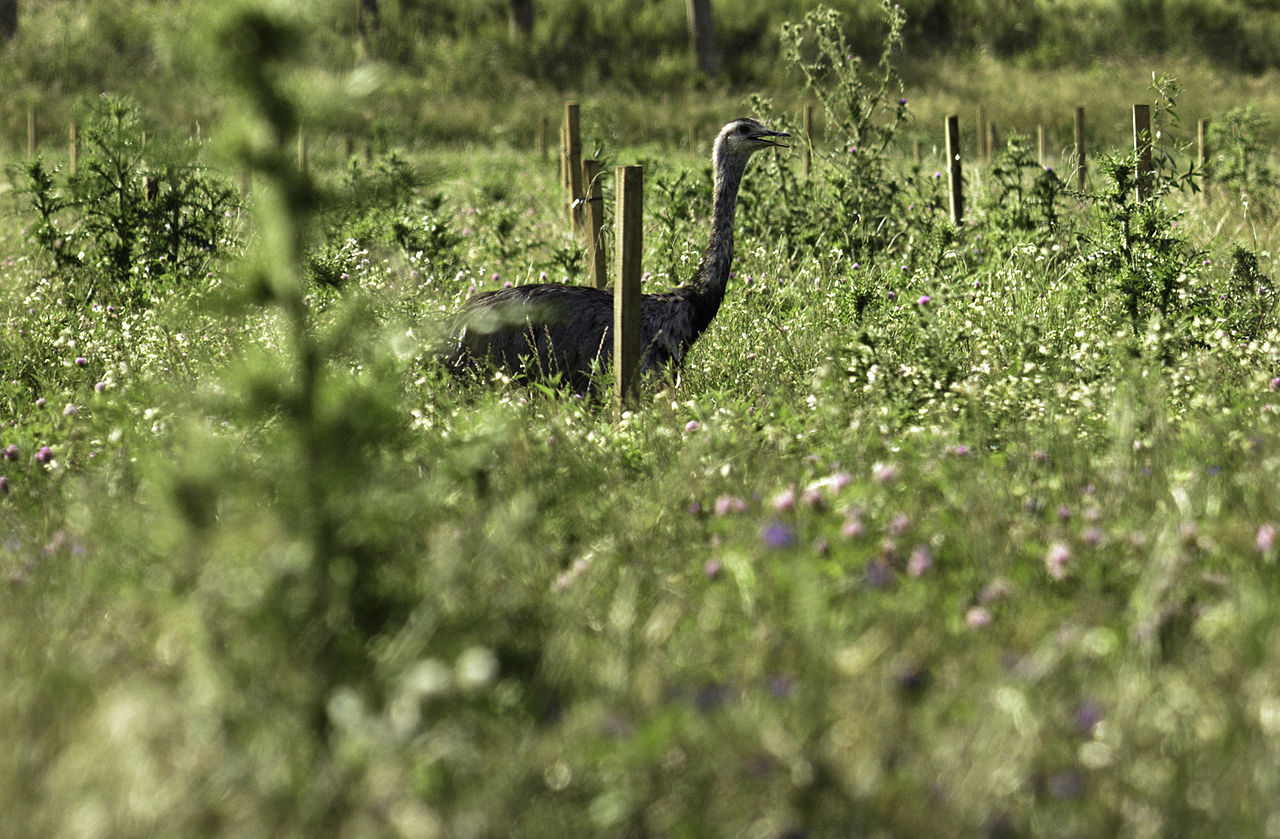
Adult greater rheas stand well over a metre tall, with overall lengths commonly near 0.9–1.5 m and a wingspan that can approach 1.5 m. They are flightless: their wings are relatively small but are used for balance during running and for display. Plumage is generally greyish or brownish, more finely textured than that of ostriches. Females and males are similar in appearance, though males are often bulkier during the breeding season.
Behavior, diet and reproduction
Greater rheas are omnivorous. Their diet includes grasses, seeds, fruit, and a variety of invertebrates and small vertebrates. They forage in groups outside the breeding season and use their long legs to traverse open areas efficiently. During the breeding season, males establish territories and build a shallow nest on the ground. Several females may lay eggs in a single nest; the male primarily incubates the clutch and cares for the young after hatching, a notable example of paternal care among large birds.
Distribution, habitat and status
The species occurs across parts of Argentina, Bolivia, Brazil, Paraguay and Uruguay, favoring lowland plains and agricultural mosaics where visibility and open ground are prevalent. In some parts of its range populations have declined because of habitat conversion, hunting and egg collecting. Conservation measures and legal protections vary by country, and the bird is both culturally significant and economically important in some rural communities.
Human uses and cultural significance
Rheas have been kept and managed for meat, eggs and leather in small-scale farms. Feathers have been used traditionally for decoration. Their large eggs are conspicuous and sometimes used for food or craft. Where present, rheas can interact with livestock production; they benefit from open pasture but may be affected by fencing and intensive agriculture.
Taxonomy and distinctions
Rhea americana is one of two or three species in the genus Rhea, depending on taxonomic treatment. It is larger and paler on average than the species commonly called the lesser or Darwin's rhea, which occupies cooler or higher-elevation areas farther south and west. Scientific descriptions date back to Linnaeus (1758), and the common and scientific names reflect this long history of study.
Further reading and resources
- Range and maps
- Species account and identification
- Original taxonomic reference
- Argentina distribution notes
- Bolivia records and observations
- Brazil population information
- Paraguay status and habitat
- Uruguay conservation notes
- Etymology of the scientific name
- Flightlessness and wing function
For field identification, conservation guidelines and the latest taxonomic treatment consult regional bird guides, conservation authorities or specialist reviews linked above.
Questions and answers
Q: What is the scientific name of the greater rhea?
A: The scientific name of the greater rhea is Rhea americana.
Q: Where is the greater rhea found?
A: The greater rhea is found in South America, specifically in Argentina, Bolivia, Brazil, Paraguay, and Uruguay.
Q: What is the height and weight of the greater rhea?
A: The greater rhea has a length of 3-5 feet and weighs between 50-55 pounds, making it the largest bird in South America.
Q: Is the greater rhea capable of flight?
A: No, the greater rhea is a flightless bird.
Q: What are some other common names for the greater rhea?
A: Some other common names for the greater rhea include grey rhea, common rhea, and American rhea.
Q: Why is the greater rhea named after Rhea and the Latin word for "America"?
A: The greater rhea takes its scientific name from the Greek goddess Rhea and the Latin word for "America".
Q: Who was the first person to describe the greater rhea?
A: The greater rhea was first described by Carl Linnaeus in 1758.
Related articles
Author
AlegsaOnline.com Greater rhea (Rhea americana): overview, biology and human interactions Leandro Alegsa
URL: https://en.alegsaonline.com/art/40600
Sources
- iucnredlist.org : "Rhea americana"
- books.google.com : Manual of Neotropical Birds: Spheniscidae (penguins) to Laridae (gulls and allies)
- animals.nationalgeographic.com : "Greater Rhea"