
Great Chicago Fire (October 1871)
A major urban conflagration that devastated parts of Chicago in October 1871, destroying large sections of the city, killing hundreds, and prompting major changes in building practices and urban planning.
Overview
The Great Chicago Fire began on the evening of Sunday, October 8, 1871, and burned through parts of the city until rain helped end the blaze on October 10. The inferno consumed roughly 3.3 square miles (about 8.5 square kilometers) of central Chicago, destroyed tens of thousands of buildings, caused property losses estimated at around $192,000,000, and left an estimated 100,000 residents homeless. Contemporary accounts put the death toll at approximately 300 people. The disaster stands as one of the most destructive urban fires in 19th‑century American history.
Image gallery
10 Images
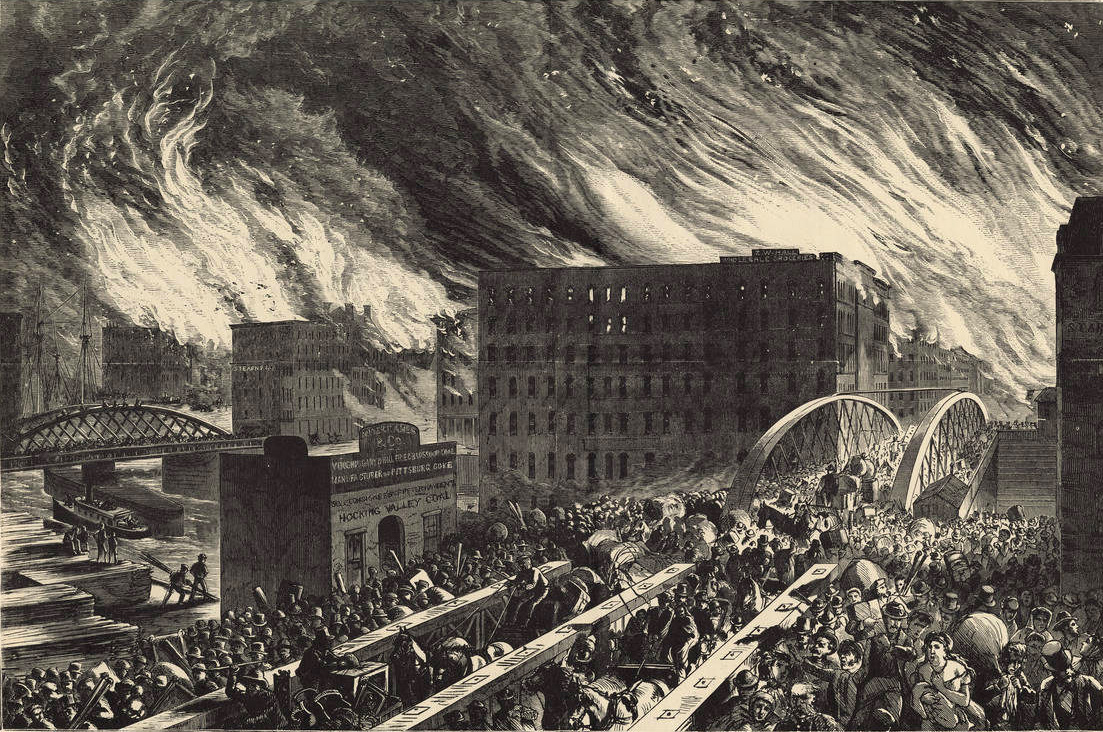

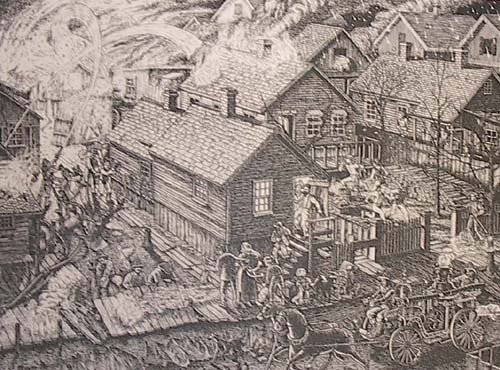


How the fire spread
The conflagration did not begin as a single, clearly identified blaze; early reports describe multiple small fires that coalesced and raced through a city largely built of wood, with closely spaced frame houses, wooden sidewalks, and many open hearths. A prolonged dry spell and strong winds contributed to rapid spread. Firefighters, already strained by a smaller blaze the previous night and limited by the era's equipment and water pressure, were unable to contain the advancing flames until weather conditions changed.
Cause and popular legend
The exact origin of the fire remains uncertain. A widely repeated story blames a lantern accident in a barn owned by Mrs. Catherine O'Leary on De Koven Street, where legend says a cow knocked over a lantern and started the blaze. That anecdote became a powerful and enduring image, but later investigations and historical scholarship have cast doubt on its accuracy and emphasize that no definitive cause was established. The episode illustrates how rumor and sensational reporting can shape public memory of a disaster.
Key facts
- Location: Chicago, Illinois, United States.
- Dates: October 8–10, 1871.
- Area destroyed: about 3.3 square miles (8.5 km2).
- Estimated deaths: ~300; displaced: ~100,000; property loss: roughly $192 million (contemporary estimate).
- Surviving landmark: the stone Couch family tomb, built in 1858, remained in the burned district.
Aftermath, rebuilding, and legacy
In the fire's aftermath, relief efforts arrived from across the nation and abroad. The scale of destruction required massive cleanup and an accelerated program of rebuilding. Chicago's rapid reconstruction favored more fire‑resistant materials such as brick, stone, and iron; municipal building regulations and firefighting organization were also strengthened. The disaster indirectly influenced the city's architectural direction, prompting innovations that later helped make Chicago a center of modern commercial architecture.
The Great Chicago Fire entered civic memory through monuments, literature, and symbolism: a red star on the city flag commemorates the event. The popular barn‑and‑cow story remains part of folklore, even as historians emphasize the absence of conclusive proof about the blaze's precise origin. For more detailed historical accounts and primary documents, see contemporary reports and curated collections of the period.
For further reading on the fire and its effects, consult curated archives and municipal histories that explore the event's social, economic, and architectural consequences. Many accessible resources summarize survivor accounts, relief efforts, and the legal and planning changes that followed. To explore contemporary retellings and primary materials, search local historical collections linked through municipal and library portals.
Legend and folklore and objects associated with the event continue to attract attention from historians, writers, and educators interested in how disasters reshape cities and collective memory.
Related articles
Author
AlegsaOnline.com Great Chicago Fire (October 1871) Leandro Alegsa
URL: https://en.alegsaonline.com/art/40478
Sources
- encyclopedia.chicagohistory.org : "Progress of the Chicago Fire of 1871"
- library.eb.com.ezproxy.northbrook.info : library.eb.com.ezproxy.northbrook.info/levels/referencecenter/article/443657
- thechicagofire.com : Did the Cow Do It?
- hiddentruths.northwestern.edu : Couch Family Tomb
- greatchicagofire.org : The Great Chicago Fire and the Web of Memory.
- chipublib.org : "Municipal Flag of Chicago"