
Gran Valira — principal river of Andorra
The Gran Valira is the largest river in Andorra, flowing through Andorra la Vella and joining the Segre in Spain. It shapes the main valleys, supplies water, and links Andorra to the Ebro basin.
The Gran Valira is the principal river of the Principality of Andorra. It collects runoff from a large portion of the Pyrenean slopes within the microstate, runs through the capital urban area and several mountain towns, and then leaves the country to join larger rivers in Spain. Its valley is the most heavily populated and developed corridor in Andorra.
Image gallery
4 Images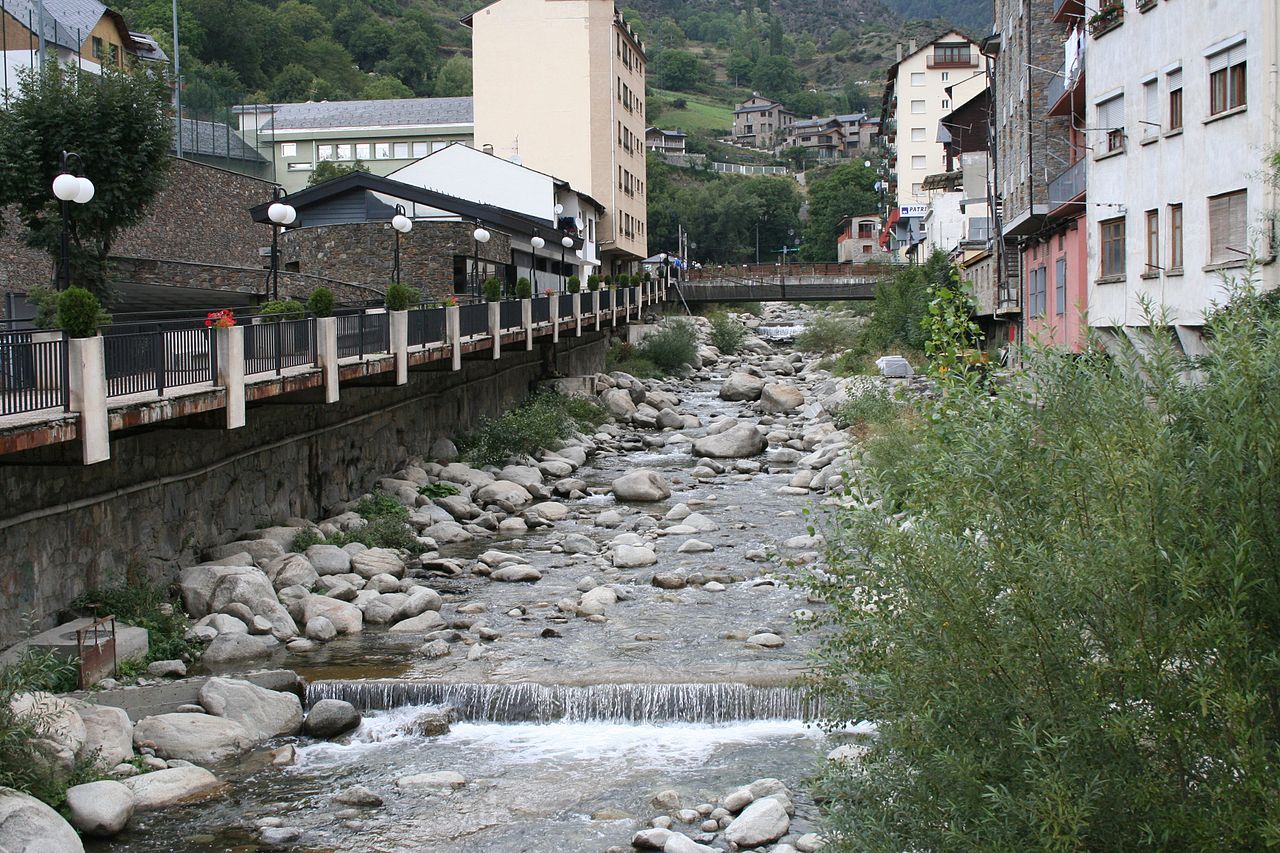


Course and sources
The modern Gran Valira is formed by the joining of several headwater streams and named tributaries that drain different parts of the Andorran massif. It flows through Andorra la Vella and nearby parishes before crossing the international boundary. South of the frontier the Gran Valira becomes a tributary of the Segre (Segre), which in turn feeds the larger Ebro system (Ebro). The confluence with the Segre occurs in the Catalan lowlands near La Seu d'Urgell, providing a hydrological link between Andorra and the Ebro basin.
Physical characteristics and tributaries
The river follows a steep, typically mountain profile in its upper reaches and broadens where valleys open near settlements. Several smaller streams and seasonal torrents feed the Gran Valira; these contribute to its flow variability through the year. Within urban zones, the river has been constrained by embankments, bridges and promenades, while upstream sections remain more natural and channelled by steep valley walls.
Key functional roles of the river include:
- Providing local water resources for households and businesses.
- Supporting small-scale hydropower and historical milling sites in tributary valleys.
- Shaping transport routes and settlement patterns along its valley.
Because of seasonal snowmelt and intense rainfall events, the Gran Valira can exhibit significant fluctuations in flow. Urban planning and flood control measures have therefore been important in the river corridor to protect built-up areas and roads.
Beyond practical uses, the river valley is important for recreation and cultural identity: riverside walks, local festivals and historical sites cluster near its banks, and the river has long been a focal point for the communities of the principality. As the main drainage axis of Andorra, the Gran Valira is both a physical and a social landmark connecting the high Pyrenees with the wider Iberian river network.
Questions and answers
Q: What is the Gran Valira?
A: The Gran Valira is the biggest river in Andorra.
Q: Where does the Gran Valira flow through?
A: The Gran Valira flows through the capital, Andorra la Vella.
Q: Where does the Gran Valira exit Andorra?
A: The Gran Valira exits Andorra in the south near the Spain-Andorra road border crossing.
Q: What is the Segre?
A: The Segre is a tributary to the Ebro.
Q: Is the Gran Valira a tributary to the Segre?
A: Yes, the Gran Valira is a tributary to the Segre.
Q: Where does the Gran Valira flow into the Segre?
A: The Gran Valira flows into the Segre in La Seu d'Urgell, Spain.
Q: What country is La Seu d'Urgell located in?
A: La Seu d'Urgell is located in Spain.
Related articles
Author
AlegsaOnline.com Gran Valira — principal river of Andorra Leandro Alegsa
URL: https://en.alegsaonline.com/art/40148
Sources
- commons.wikimedia.org : Valira River
- enciclopedia.cat : "la Valira"
- lacsdespyrenees.com : "Estanys de Tristaina"