
Gouache: opaque water-based paint — properties, history and uses
Gouache is an opaque, water-based paint made from pigment, binder and inert white; used for illustration, design and fine art. This article explains its composition, techniques, history and care.
Overview
Gouache (also spelled guache) is a water-based paint known for its flat, matte, and opaque finish. It is closely related to watercolour in that both use water-soluble binders and can be diluted or re-wetted, but gouache is formulated to hide underlying layers rather than let light pass through. Artists use gouache for illustration, poster work, animation backgrounds, preparatory sketches and fine-art paintings where a bold, even surface is desired.
Image gallery
10 Images



Composition and properties
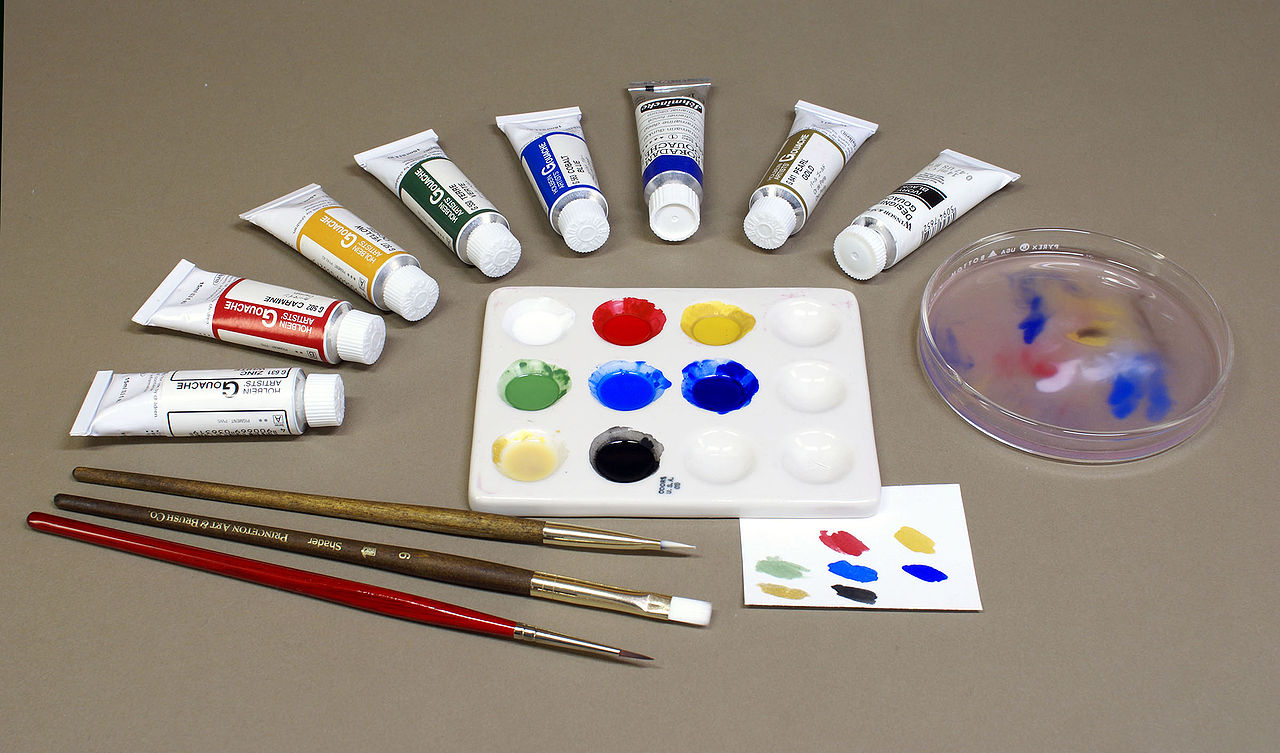
Traditionally, gouache consists of three basic components: pigment, a binding medium (commonly gum arabic) and an opaque extender such as an inert white filler like chalk or similar agents (chalk or white extenders). The extender increases opacity and reduces gloss. Compared with transparent watercolours, gouache dries to an even, velvety matte surface. It is quick-drying, can be layered opaquely, and is reworkable — dried layers can often be reactivated with water, which is useful but also means finished work remains water-sensitive unless sealed.
Common techniques and supports
Gouache adapts to many methods: thin washes similar to watercolour, solid flat fields of colour, drybrush textures, and scumbling for soft transitions. Artists often work on heavy paper, illustration board, or primed surfaces to prevent buckling and ensure a strong tooth. Typical techniques include lifting (removing pigment with a damp brush), glazing with thin layers, and combining gouache with ink, graphite, or pastel. Because of its opacity, gouache is a favourite for areas requiring crisp edges and corrections.
History and notable artists
Opaque water-based paints have appeared in many cultures; the modern trade form of gouache developed alongside commercial poster production and printmaking in Europe. It became a standard medium for illustrators and designers during the 19th and 20th centuries and has been used by landscape and marine painters for quick studies done en plein air. Some historical artists are known for employing gouache among other media; its ease of use and rapid drying made it attractive to many working painters and illustrators alike (see notable examples).
Uses, compatibility and conservation
Gouache is widely used for illustration, children’s books, posters, comics, animation layout painting and fine-art compositions. It accepts many media on top once dry: inks, pastel and some oil-based materials can be applied after careful preparation. However, because standard gouache reactivates in water, framed works may require protection behind glass and, if necessary, a varnish or fixative designed for water-based paints. Conservators select treatments carefully to avoid changing the matte character of the paint.
Distinctions and practical advice
Compared with transparent watercolours (watercolour), gouache is opaque and provides more uniform coverage; compared with acrylics, gouache remains water-sensitive and retains a matte finish unless sealed. Beginners often appreciate gouache for its forgiving nature—errors can be painted over—while experienced artists value its ability to combine graphic clarity with painterly effects. For best results, use heavier papers or boards, test combinations on scraps, and store finished works away from high humidity.
- Composition: pigments, binder, extender
- Common supports: heavy paper, illustration board, primed panels
- Applications: illustration, poster art, animation, plein air studies (historical users)
Related articles
Author
AlegsaOnline.com Gouache: opaque water-based paint — properties, history and uses Leandro Alegsa
URL: https://en.alegsaonline.com/art/39895