
Giovanni da Verrazzano: Florentine Navigator Who Charted the Atlantic Coast
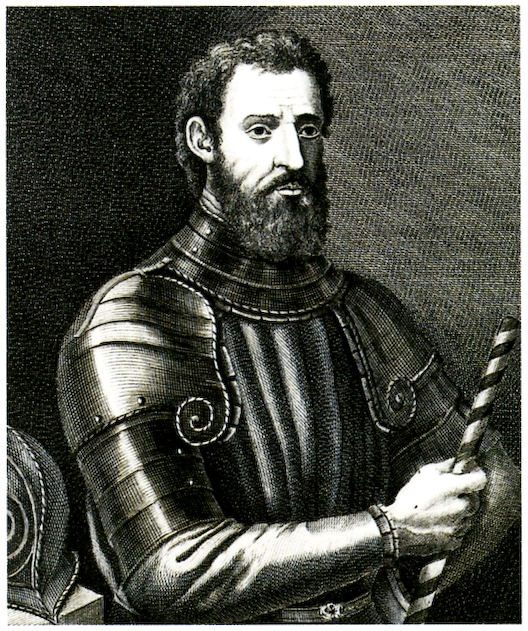
Giovanni da Verrazzano (1485–1528) was a Florentine navigator in French service. In 1524 he explored much of the eastern coast of North America, including New York Harbor, and influenced early maps and place names.
Overview
Giovanni da Verrazzano (1485–1528) was a Florentine explorer who sailed for the French crown and is credited with one of the earliest systematic European surveys of the eastern seaboard of North America. Before his voyage, the last sustained European contact with the Atlantic coast of the continent had been the Norse settlements centuries earlier, an episode sometimes described as Norse colonization. Verrazzano’s 1524 expedition filled important gaps in contemporary European knowledge of the coastline from what are now the southeastern states to Newfoundland.
Image gallery
9 Images





Voyage of 1524
Sailing under a commission from the French king, Verrazzano left in early 1524 to search for a western route toward Asia and to chart unknown shores. The expedition reached the American coast in the spring: he made landfall near the area now associated with Cape Fear on or around 1 March 1524, then continued northward. At one point he mistook an inland sound for the Pacific and reported a narrow isthmus, an observation that influenced mapmakers for decades. His mission had been explicitly connected to the search for a Northwest Passage, the hoped-for waterway to the riches of Asia.
Principal discoveries and records
Verrazzano noted many bays, inlets and islands while keeping a running account of coastlines, currents and encounters. He is often credited with the first European descriptions of several important features of the mid-Atlantic coast. His notes and sketches reached European mapmakers and were used—sometimes imperfectly—in early atlases.
- New York Harbor — his account describes the wide passage and islands at the mouth of the river system.
- Narragansett Bay — he recorded large bays and sheltered waters here.
- Newfoundland — his voyage extended northward to the island and nearby coasts.
- North Carolina and adjacent coasts — including the shallow inland waters that he mistook for a western sea.
- Southern portions of the Atlantic coast and such features as Cape Fear and the islands off New England.
Maps, misunderstandings and consequences
Some of Verrazzano’s observations were inaccurately interpreted by European cartographers. Most notable was his description of the Pamlico and similar sounds as passages toward the west: this produced a persistent cartographic error in which parts of the continent appeared split by a narrow channel. Correcting those misconceptions took many decades as more precise surveys were made. Verrazzano’s narrative nevertheless provided valuable bearings, place names, and coastal detail that guided other navigators and mapmakers.
Later voyages, fate and legacy
Verrazzano returned to France after the 1524 voyage and is reported to have undertaken further seafaring ventures to the Americas. Accounts of his death differ: one tradition holds that he was killed and eaten by indigenous people on an island in the Lesser Antilles (often associated with Guadeloupe), while another claims he was arrested and executed on charges of piracy in Spain. Because contemporary records are fragmentary, the exact circumstances remain disputed.
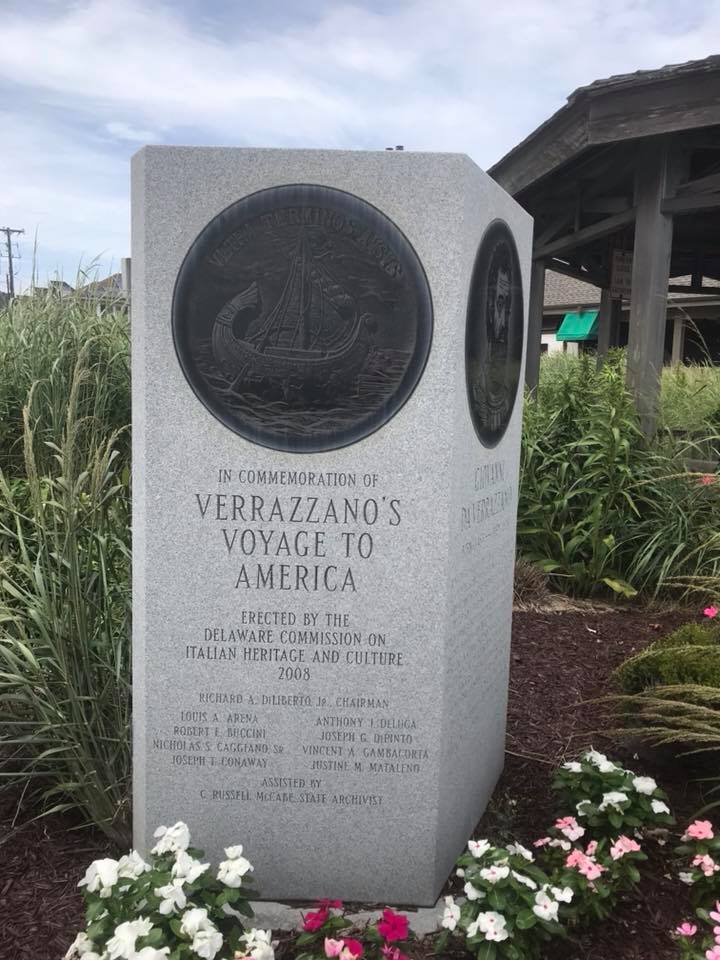
His name is preserved in several place names and memorials. The large suspension span that links the two boroughs of New York City across the Narrows carries his name as the Verrazano-Narrows Bridge. Modern historians, cartographers and maritime scholars continue to study his logs and the influence of his reports on early sixteenth-century navigation and mapping. For further reading, consult primary source collections and annotated translations of his letters as well as specialized works on early French exploration of North America and the search for the Northwest Passage.
See also contemporary summaries and archival materials linked through major libraries and research centers: archival descriptions and editions of Verrazzano’s account are available in catalogues and collections that record the era of early Atlantic exploration (biographical notes, historical context). For place-specific histories consult regional studies of New York, Rhode Island, and the maritime provinces of Newfoundland.
Related articles
Author
AlegsaOnline.com Giovanni da Verrazzano: Florentine Navigator Who Charted the Atlantic Coast Leandro Alegsa
URL: https://en.alegsaonline.com/art/38930
Sources
- britannica.com : "Giovanni da Verrazzano | Italian navigator"
- treccani.it : "Verrazzano, Giovanni da in "Enciclopedia dei ragazzi""
- books.google.com : The Life and Voyages of Verrazzano
- nytimes.com : "Verrazano It Is, in Bridge's Name; Governor Signs Disputed Designation Into Law"
- wikidata.org : wikidata.org/wiki/Q147676
- catalogo.bne.es : XX1479703
- catalogue.bnf.fr : cb123318857
- data.bnf.fr : (data)
- d-nb.info : 118804251
- isni.org : 0000 0000 8155 3491
- id.loc.gov : n50013937
- aleph.nkp.cz : jx20120216036
- data.bibliotheken.nl : 091293251
- snaccooperative.org : w6x64njt
- idref.fr : 032251998