
Ghee: clarified butter used in South Asian cooking and ritual
Ghee is a form of clarified butter originating in South Asia. Cooked until water evaporates and milk solids brown, it’s prized for flavor, shelf stability, high smoke point, and cultural uses.
Overview
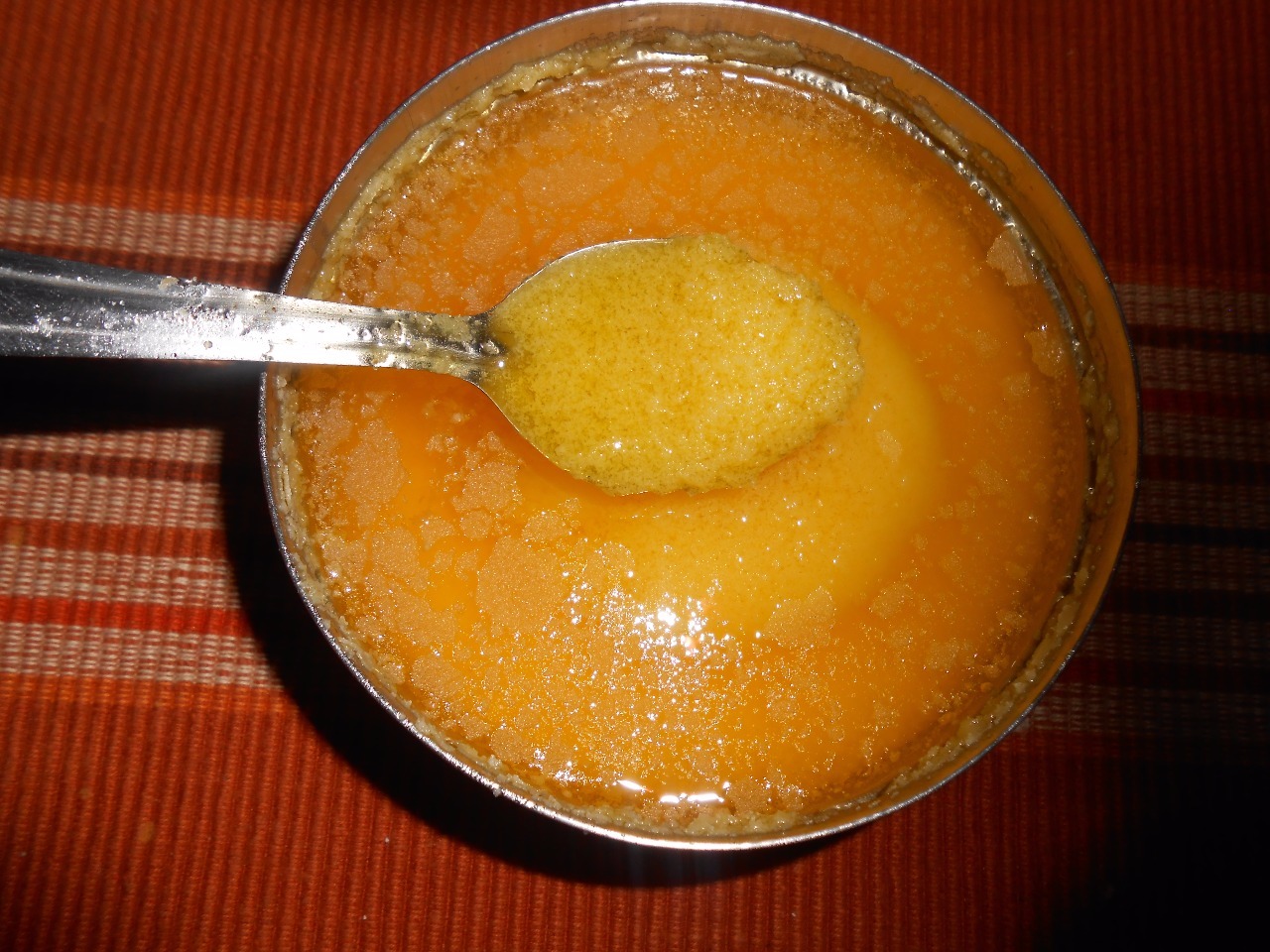
Ghee is a dairy product made by gently heating butter to remove water and separate the milk solids, leaving a clear, golden fat. It is a traditional cooking fat in many parts of South Asia and adjoining regions and is valued for its rich, slightly nutty aroma and long shelf life. Ghee appears in everyday kitchens as well as in ceremonial and medicinal contexts.
Image gallery
6 Images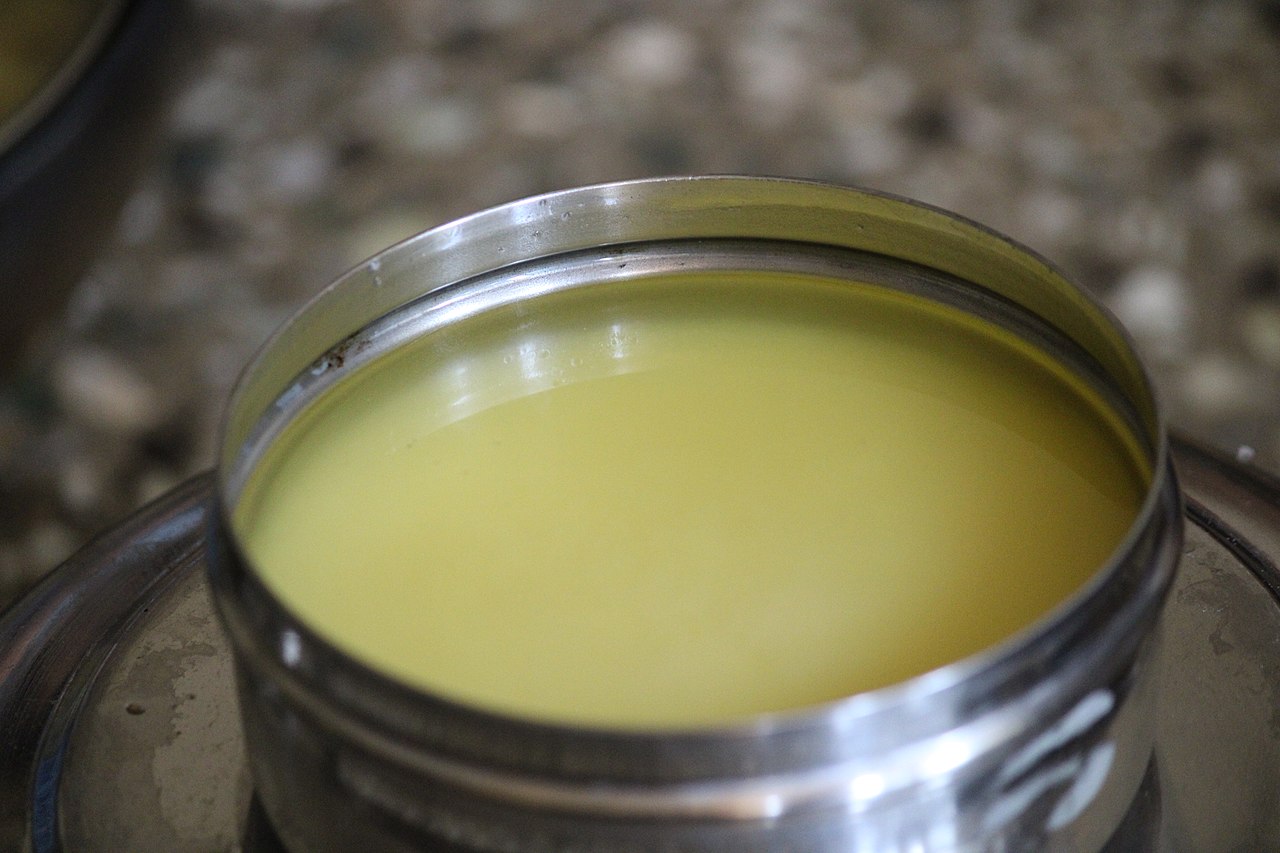



Production and characteristics
To make ghee, butter is simmered until the water content evaporates and the milk solids sink and often brown on the bottom of the pan. Those solids are strained off and the remaining liquid fat is collected. Because most moisture and protein have been removed, properly prepared ghee resists spoilage and can be stored at room temperature for extended periods. Compared with fresh butter, ghee has a more concentrated flavor and a higher smoke point, which makes it suitable for frying and high-temperature cooking.
Uses and cultural importance
Ghee is widely used as a cooking medium and flavoring. It is commonly used in the cuisines of India, Nepal, and Pakistan as well as in diasporic South Asian communities. Typical uses include sautéing, deep-frying, finishing cooked dishes, and preparing traditional sweets. Ghee also has a role in religious rituals and festivals, where it may be offered in lamps or used in ceremonial foods.
Practical notes and distinctions
- Clarified butter vs ghee: both remove water and separate solids, but ghee is often cooked longer so the solids brown slightly, producing a distinct flavor. See the basic process: boiling or simmering butter until water has evaporated.
- Storage: when made and handled properly, ghee can be kept unrefrigerated; keep it dry and away from contaminants.
- Dietary considerations: most of the lactose and casein are removed with the solids, so some people who are lactose intolerant may tolerate ghee better than milk, though sensitivities vary.
Ghee continues to be both a culinary staple and a cultural symbol. Its production ranges from home kitchens to industrial facilities, and regional variations and recipes reflect local tastes and traditions.
Related articles
Author
AlegsaOnline.com Ghee: clarified butter used in South Asian cooking and ritual Leandro Alegsa
URL: https://en.alegsaonline.com/art/38632