
German Unity Day
German Unity Day (Tag der Deutschen Einheit) is Germany's national holiday on 3 October, marking the formal reunification of East and West Germany in 1990 and observed with ceremonies, education and cultural events.
German Unity Day is the official national day of Germany, observed each year on 3 October. The date commemorates the completion of the political and legal process that brought the German Democratic Republic (East Germany) into the Federal Republic of Germany (West Germany) in 1990, an event commonly referred to as German reunification. It is a public holiday across the country and a focus for ceremonies, civic reflection and cultural programmes.
Image gallery
2 Images
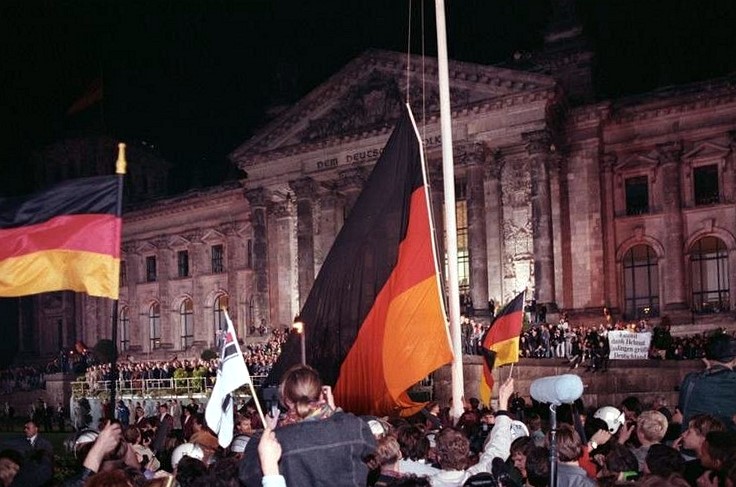
History and choice of date
The fall of the Berlin Wall on 9 November 1989 was a decisive moment that set the path to reunification, and that date retains strong popular resonance. However, 9 November also coincides with several earlier and very different events in German history: the proclamation of the republic in 1918, the failed coup attempt associated with the 1923 Beer Hall Putsch (1923), and the anti-Jewish pogroms of 1938. The pogroms, commonly called Kristallnacht, were mass attacks against Jews and marked a violent escalation of Nazi persecution. Because of these heavy associations, political leaders and many citizens judged 9 November inappropriate as a celebratory national holiday and selected 3 October as a neutral date connected directly with the legal act of reunification.
How the day is observed
Official observances typically include a federal ceremony hosted by a chosen state capital, speeches by the Federal President and other officials, and local festivals across municipalities. Since reunification the national celebration has frequently rotated among the states, allowing different regional capitals to host concerts, exhibitions and civic forums that reflect on both the history of division and the ongoing process of integration. Public institutions, schools and museums stage educational programmes; broadcasters show documentaries and debates; and citizens attend concerts, civic gatherings and commemorative events.
Legal and civic aspects
German Unity Day is recognised in federal law as a public holiday and is observed throughout the country. Its establishment follows the completed accession and treaty procedures of 1990 and it serves both as a ceremonial marker of reunification and as an occasion for public discussion about constitutional, social and economic developments since 1990. Commemorations often include references to the evolving place of reunification in the nation’s constitutional order and to the designation of Berlin as the capital of the united state.
Significance, memory and debates
The day functions on several levels: commemoration of a historic political change, a civic celebration of democracy and unity, and a prompt for reflection on the social and economic challenges that accompanied reunification. Debates that surface on German Unity Day commonly concern regional disparities, the integration of institutions and memories of life in East and West. Commemorative practice has therefore combined celebratory elements with educational projects and critical historical reflection.
For further context and primary sources consult governmental and historical resources that document the events of 1989–1990, the legal steps that led to unification and the evolving public commemorations that mark this annual holiday. Relevant links: national day, Germany, reunification, Berlin Wall, 1923 coup, pogroms, Jews, Kristallnacht.
Related articles
Author
AlegsaOnline.com German Unity Day Leandro Alegsa
URL: https://en.alegsaonline.com/art/38472