
Hanuman Jayanti: Festival of Devotion, Strength, and Service
Hanuman Jayanti is the Hindu celebration of the birth of Hanuman, the monkey-faced devotee of Rama. Observed across India with regional variations, it honors courage, devotion and the ideals of selfless service.
Overview
Hanuman Jayanti marks the birth of Hanuman, a central figure in the Ramayana admired for his strength, loyalty and devotion to Rama. The festival is celebrated widely across India and by Hindu communities worldwide. Although many communities observe it on the full moon day of the month of Chaitra (Chaitra Purnima, typically in March–April), the exact date and local customs vary by region and tradition.
Image gallery
4 Images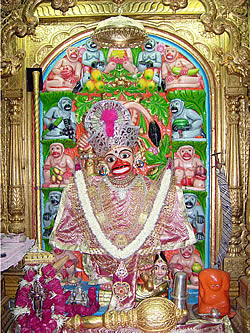


Rituals and observances
Devotees honor Hanuman through temple worship, recitation of sacred texts and devotional songs. Common practices include:
- Early morning puja (worship) and offering of flowers, sweets and fruits.
- Recitation of the Hanuman Chalisa and passages from the Ramayana.
- Applying sindoor (vermillion) and oil to Hanuman images or to the forehead in imitation of the deity’s traditional marks.
- Processions, public readings, kirtan (devotional singing) and community feasts in some localities.
Historical and literary background
Hanuman appears in ancient Indian epics and devotional literature as an ideal servant and warrior: brave in battle, unwavering in loyalty, and devoted to the cause of dharma (righteousness). His stories—especially those in the Ramayana—describe feats of strength, courage and cunning, such as leaping across the sea to reach Lanka. Over centuries his image has been shaped by scripture, regional storytelling and devotional movements emphasizing personal devotion (bhakti).
Significance and cultural impact
The festival emphasizes values associated with Hanuman: strength used in service, self-discipline, humility and steadfast devotion. Hanuman Jayanti fosters communal worship and cultural expression—temple arts, dramatic retellings of the Ramayana, and public service activities often accompany celebrations. For many devotees, Hanuman’s example serves as an inspiration for courage in adversity and fidelity to ethical duty.
Regional variations and notable facts
Celebratory forms and timing differ across regions. Some states observe Hanuman’s birthday on alternate lunar days or according to local calendars; rituals and popular epithets (such as Maruti or Anjaneya) vary with language and local tradition. Hanuman is also invoked in martial and athletic traditions for physical strength and endurance, and his imagery appears widely in temples, homes and popular culture.
For more on the festival, its rituals and regional practices, see a general overview at Hanuman Jayanti.
Questions and answers
Q: What is Hanuman Jayanthi?
A: Hanuman Jayanthi is a festival in India that celebrates the birthday of Hanuman, the Vanara god who looks like a monkey.
Q: When is Hanuman Jayanti celebrated?
A: Hanuman Jayanti is celebrated on the 15th day of Chitra Pournami.
Q: Why is Hanuman Jayanthi an important festival of the Hindus?
A: Hanuman Jayanthi is an important festival of the Hindus because Hanuman is the symbol of strength, energy and devotion. He is worshipped as a deity with supreme powers and conquer evil spirits.
Q: Who is Hanuman?
A: Hanuman is the Vanara god who looks like a monkey and is worshipped as a deity with supreme powers and conquer evil spirits.
Q: What does Hanuman symbolize?
A: Hanuman symbolizes strength, energy and devotion.
Q: How do people celebrate Hanuman Jayanthi?
A: People celebrate Hanuman Jayanthi by visiting Hanuman temples, offering prayers, and performing puja. They also organize processions and distribute prasad.
Q: What is puja?
A: Puja is a Hindu ritual in which an offering is made to a deity or god. It usually involves chanting, offering flowers, and performing aarti.
Related articles
Author
AlegsaOnline.com Hanuman Jayanti: Festival of Devotion, Strength, and Service Leandro Alegsa
URL: https://en.alegsaonline.com/art/42317