
Anaxagoras — early Ionian philosopher and the idea of nous
Anaxagoras (5th century BC) was an Ionian Greek philosopher who introduced the concept of nous (mind) and argued for material explanations of celestial bodies; his work influenced classical Greek thought.
Anaxagoras (Greek: Ἀναξαγόρας) was an influential pre-Socratic thinker active in the fifth century BCE. Ancient writers place him among the generation of Ionian philosophers who moved Greek natural inquiry away from myth and toward rational explanation. Modern summaries often note two distinctive contributions of his: the invocation of a cosmic nous (mind or intellect) as an ordering principle, and bold naturalistic claims about the sun, moon and other celestial bodies.
Image gallery
4 Images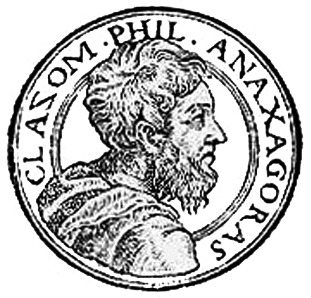
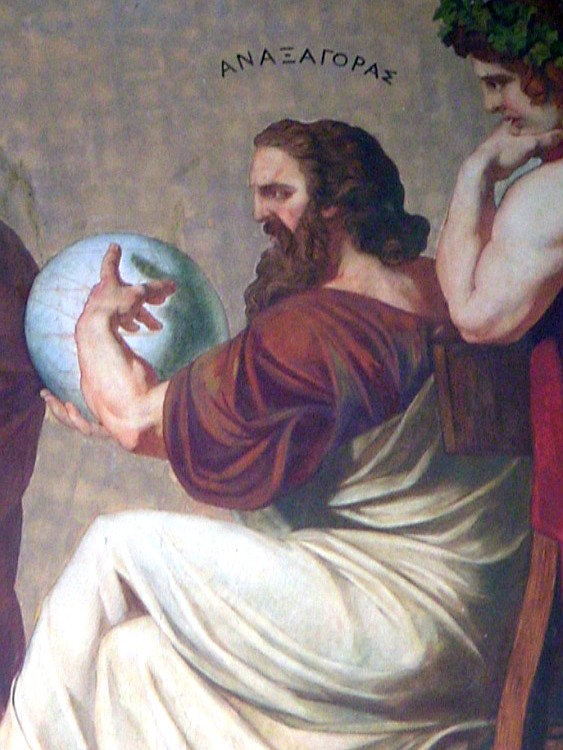

Life and historical context
Anaxagoras is usually described as an Ionian from Clazomenae, a city in Asia Minor that lay within the cultural sphere of the early Greek cities of Ionia (Ionian, Asia Minor). He spent part of his career in Athens, where intellectual life was thriving. Later ancient sources report that his naturalistic statements about the gods and the heavens caused offense and led to a prosecution for impiety; he was said to have been compelled to leave Athens and to have died in exile. Because of these events he is often associated with the same turbulent cultural moment that involved figures such as Pericles and Socrates (Athens, Socrates).
Philosophical ideas and method
Anaxagoras practiced a form of natural philosophy that sought mechanical and material explanations for change. He rejected purely mythological accounts and argued that observable processes could be explained through the interaction and separation of mixed constituents. One of his famous claims is that 'everything contains a portion of everything else' — a way of saying that observable things are made from many kinds of ingredients rather than a single element.
- Nous: He introduced a concept of a distinct intelligent principle (nous) that initiates and organizes motion without itself being mixed with material constituents.
- Plurality of constituents: Rather than a single basic element, he proposed numerous qualitatively distinct 'seeds' or ingredients present in mixtures.
- Empirical remarks: He made specific claims about celestial bodies and natural phenomena based on observation and inference rather than myth.
Cosmology: sun, moon and nature
Anaxagoras is famous for his remarks about the sun and moon. He is reported to have described the sun as a fiery, incandescent body rather than a deity, and the moon as a solid body with surface features similar to earth. These assertions were notable because they treated heavenly bodies as material objects subject to investigation, not as gods. Ancient commentators summarized his view by attributing to him remarks such as the sun being a vast, hot mass and the moon reflecting or sharing material qualities with the earth (sun, comparisons).
Legacy and reception
Anaxagoras occupies an important transitional place in Greek thought. Later philosophers and historians debated and developed his ideas: Plato and Aristotle discuss him, sometimes critically, and later tradition preserved fragments and reports of his work. Some modern accounts describe him as a freethinker and even apply the label 'atheist' in a loose sense because he denied divine agency for many natural events; older and more cautious histories explain that such labels are contested and depend on how one reads fragmentary reports. His surviving impact is twofold: methodological—encouraging naturalistic explanation—and theoretical—introducing a role for intellect (nous) in cosmology.
For readers who wish to follow up, ancient and modern collections offer editions and commentaries that collect his fragments and testimonia. Short introductions and scholarly overviews can place his work among other pre-Socratic thinkers and within the intellectual life of classical Greece. General-interest treatments and reference entries provide context on his life in Ionia and Athens (name, Greek identity, Ionia, Asia Minor, sun, landforms, Athenian politics, Socratic era).
Despite the fragmentary nature of the sources, Anaxagoras remains a key figure for understanding how the Greeks began to substitute reasoned explanation for traditional myth, and how ideas about mind, matter and mechanism developed in the early Western philosophical tradition.
Tags
Related articles
Author
AlegsaOnline.com Anaxagoras — early Ionian philosopher and the idea of nous Leandro Alegsa
URL: https://en.alegsaonline.com/art/3809
Sources
- simple.wikisource.org : Αναξαγόρας
- wikidata.org : wikidata.org/wiki/Q83041
- catalogo.bne.es : XX1166401
- catalogue.bnf.fr : cb12185392s
- data.bnf.fr : (data)
- cantic.bnc.cat : a10487086
- d-nb.info : 118502727
- isni.org : 0000 0000 8015 3963
- id.loc.gov : n50051902
- aleph.nkp.cz : jo2015853772
- data.bibliotheken.nl : 069276021
- libris.kb.se : 301027
- snaccooperative.org : w6v42j0b
- idref.fr : 086453009
- viaf.org : 24645587