
Pre-Socratic Philosophy
Early Greek thinkers before Socrates who sought natural explanations for the world; known chiefly from fragments preserved in later authors and influential in the rise of rational inquiry.
Overview
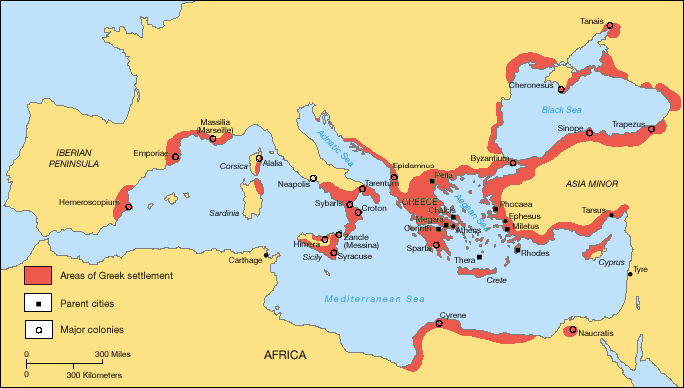
Pre-Socratic philosophy refers to the body of thought produced in the Greek world before the historical figure Socrates. These thinkers, active from roughly the late sixth to the early fifth centuries BCE, shifted explanation of the cosmos away from mythological accounts and toward investigation of natural causes, principles, and processes. Scholarship has long organized these authors under the label "Pre-Socratic," a usage popularized by the collection of fragments assembled in works such as Hermann Diels' Die Fragmente der Vorsokratiker.
Image gallery
10 Images





Characteristics and central themes
Several features unite much Pre-Socratic thought. Most authors sought an archê or primary principle that underlies change in the world — proposals included water, air, the boundless (apeiron), or number. Their methods varied from poetic cosmologies to terse aphorisms and early logical argument, but a common motive was naturalism: the attempt to explain phenomena without recourse to divine caprice or myth. This turn toward explanation also marked a broader commitment to rational thought and a proto-scientific curiosity about observation, classification, and the causes of change, anticipatory of later scientific reasoning.
Major figures and surviving material
- Milesian school (Thales, Anaximander, Anaximenes) — earliest cosmological proposals about a single underlying substance.
- Heraclitus — emphasis on flux and the unity of opposites; famed for the claim that one cannot step into the same river twice.
- Parmenides and the Eleatics — argument for the unchanging nature of being and critiques of change and plurality.
- Pythagoreans — mathematical and metaphysical insights linking number, harmony, and reality.
- Atomists (Leucippus, Democritus) and natural philosophers (Empedocles, Anaxagoras) — early theories of matter, composition, and perception.
Almost none of the original writings survive intact. What we possess consists mainly of brief quotations, paraphrases, and summaries preserved by later authors such as Plato, Aristotle, Diogenes Laërtius, and commentators in antiquity; Diels' anthology remains a standard reference for these fragments.
Importance and legacy
The Pre-Socratics laid groundwork for later metaphysics, natural philosophy, and scientific inquiry by reframing foundational questions: What is the basic stuff of the world? How and why does change occur? Their diverse answers influenced classical philosophy and helped create intellectual conditions in which systematic ethics, epistemology, and political thought could emerge in the classical period. For introductions and further study see standard histories and fragment collections (classical overviews), modern treatments (scholarship on Socratic context) and thematic studies of naturalism, reason and early science.
Questions and answers
Q: Who were the Pre-Socratic Greek philosophers?
A: The Pre-Socratic Greek philosophers were thinkers who were active before Socrates.
Q: Why is the term "Pre-Socratics" popular?
A: The term "Pre-Socratics" is popular because of Hermann Diels' work, Die Fragmente der Vorsokratiker (The Fragments of the Pre-Socratics, 1903).
Q: How much do we know about the pre-Socratic philosophers?
A: Most of what we know about the pre-Socratic philosophers come from quotations by later philosophers and historians.
Q: Have any texts written by pre-Socratic philosophers survived in complete form?
A: No, none of the texts written by pre-Socratic philosophers have survived in complete form.
Q: What are some standard reference works in English for pre-Socratic philosophy?
A: Some standard reference works in English for pre-Socratic philosophy are Gompertz's The Greek Thinkers: A History of Ancient Philosophy, Volume 1: The Beginnings, and Guthrie's A History of Greek Philosophy, Volume 1: The Earlier Presocratics and the Pythagoreans.
Q: What idea motivated most of the presocratics?
A: The fundamental idea which motivated most of the presocratics is naturalism.
Q: What is naturalism?
A: Naturalism is the idea that questions about life and the world can be answered without using myths, and that "the natural world is the whole of reality".
Related articles
Author
AlegsaOnline.com Pre-Socratic Philosophy Leandro Alegsa
URL: https://en.alegsaonline.com/art/78659