
Aristarchus of Samos: Ancient Proponent of a Sun‑Centered Cosmos
Aristarchus of Samos (c.310–c.230 BC) was an ancient Greek astronomer and mathematician who proposed an early heliocentric model and estimated relative sizes and distances of the Sun and Moon.
Aristarchus of Samos was an ancient Greek thinker active in the third century BC. A skilled astronomer and mathematician, he is best known for proposing that the Sun, not the Earth, occupies the central position of the system of known planets. This idea — an early form of the heliocentric model — was revolutionary for its time and survives only through later authors who mentioned his work.
Image gallery
7 Images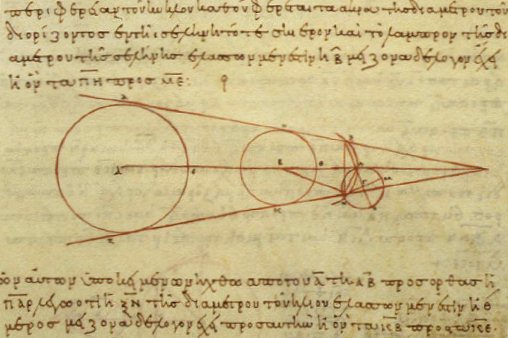



Contributions and methods
Aristarchus applied geometric reasoning to observational problems. In his surviving treatise On the Sizes and Distances of the Sun and Moon he used the geometry of lunar phases and eclipses to estimate relative sizes and distances, and concluded that the Sun is much larger than the Earth. Although his numerical estimates were inaccurate by modern standards, his approach combined measurement with rigorous geometry.
Historical context and influences
He seems to have built on earlier Greek cosmological ideas such as those attributed to Philolaus, but he went further by identifying the central fire some philosophers postulated with the Sun itself, and by ordering the planets by distance from it. Ancient authorities recorded his hypothesis, and it was later contrasted with the dominant geocentric accounts of Aristotle and Ptolemy.
Reception and legacy
Aristarchus's heliocentric suggestion gained little traction in antiquity and was largely overshadowed by geocentric models. Knowledge of his work persisted through references by writers such as Archimedes and Plutarch. Centuries later, Renaissance astronomers recognized Aristarchus as a forerunner of Copernicus and the modern shift to a Sun-centered solar system.
Why he matters
Aristarchus is notable for introducing a bold reorientation of cosmic order and for promoting quantitative, geometric methods in astronomy. His surviving text is a rare example of early scientific attempt to measure celestial sizes and distances, and his heliocentric suggestion stands as one of antiquity's most important scientific hypotheses about the universe.
- Key surviving work: On the Sizes and Distances of the Sun and Moon.
- Main ideas: Sun-centered arrangement; stars as distant objects; geometric measurement of celestial bodies.
- Influence: Limited in antiquity; acknowledged by later scholars and by early modern astronomers.
Questions and answers
Q: Who was Aristarchus of Samos?
A: Aristarchus was an ancient Greek astronomer and mathematician.
Q: What was Aristarchus' model of the universe?
A: Aristarchus' model of the universe put the Sun at the center with the Earth revolving around it.
Q: How was Aristarchus influenced in his work?
A: Aristarchus was influenced by another philosopher and mathematician named Philolaus of Croton.
Q: What did Aristarchus identify as the "central fire"?
A: Aristarchus identified the "central fire" with the Sun.
Q: In what order did Aristarchus place the planets around the Sun?
A: Aristarchus placed the planets in their correct order of distance around the Sun.
Q: How were Aristarchus' ideas received by others at the time?
A: Aristarchus' astronomical ideas were often rejected in favour of the geocentric theories of Aristotle and Ptolemy.
Q: What was Aristarchus' approximate lifespan?
A: Aristarchus lived from around 310 BC to about 230 BC.
Tags
Related articles
Author
AlegsaOnline.com Aristarchus of Samos: Ancient Proponent of a Sun‑Centered Cosmos Leandro Alegsa
URL: https://en.alegsaonline.com/art/5558