
Analog-to-Digital Converter (ADC): Principles, Types, and Applications
An analog-to-digital converter (ADC) converts continuous electrical signals into discrete digital values. This article explains principles, architectures, history, uses, and practical considerations.
Overview
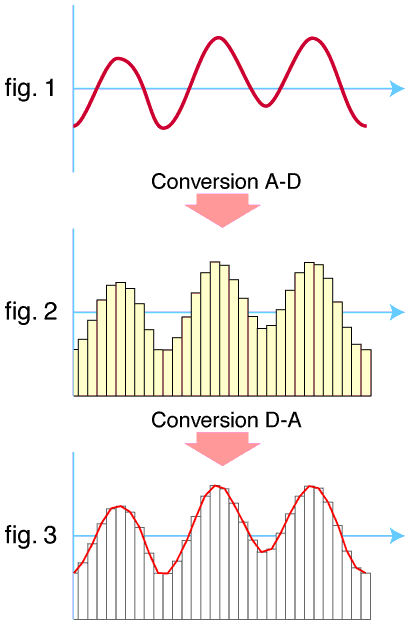
An analog-to-digital converter (ADC) is an electronic component that translates a continuous physical quantity—most commonly an electrical voltage or current—into a digital representation suitable for processing, storage or transmission. ADCs are typically implemented as semiconductor integrated circuits or modules and appear in nearly every modern measurement, control and communication system. Conceptually the inverse of a digital-to-analog converter, an ADC produces a discrete numeric value that approximates the input signal for digital systems.
Image gallery
7 Images


Basic principles
Conversion from analog to digital involves two linked processes: sampling the input waveform at discrete times, and quantizing each sample's amplitude into one of a finite set of levels. Two primary specifications describe an ADC's basic behavior: resolution (how many distinct amplitude levels, typically expressed in bits) and sampling rate (how often samples are taken). Practical performance also depends on noise, linearity, offset and gain errors, and dynamic range, which together determine how accurately and reliably the converter represents real signals.
Architectures and characteristics
Different ADC architectures trade speed, precision, complexity and power consumption to meet application needs. Common types include:
- Successive approximation (SAR): widely used for general-purpose applications where moderate speed and good resolution are required.
- Flash converters: provide very high sampling rates at the expense of complexity and power; used in high-speed communications and instrumentation.
- Sigma-delta (ΔΣ): use oversampling and noise shaping to achieve high effective resolution for audio and precision measurement.
- Dual-slope, pipeline and hybrid designs: chosen for their balance of accuracy and throughput in metrology and imaging systems.
Typical internal elements include an input sample-and-hold stage, a stable reference voltage, a quantizer and a digital encoder. Many ADCs include on-chip signal conditioning, calibration, and isolation features to simplify system design.
History and development
Early ADCs were bulky and relatively slow, implemented from discrete components. Advances in semiconductor fabrication, digital signal processing and precision timing enabled integration of ADCs onto compact chips with much higher speed and accuracy. Techniques such as oversampling, dithering and calibration have significantly improved effective resolution and linearity, making modern ADCs suitable for high-fidelity audio, digital imaging, scientific instruments and communications equipment. Integration trends continue, with ADCs commonly included in microcontrollers, sensors and system-on-chip devices.
Applications and examples
ADCs are indispensable in fields where real-world analog signals must be digitized. Typical applications include audio recording, digital photography, medical imaging, industrial control, sensor interfaces, and wireless communications. For example, microphones, thermocouples and accelerometers all produce analog signals that ADCs convert so software can filter, analyze or compress the data. Some electromechanical position devices, such as a rotary encoder, perform a similar mapping from a continuous variable to discrete outputs and can be regarded as specialized ADCs in a broader sense.
Limitations, design considerations and related material
Selecting or designing an ADC involves trade-offs among resolution, sampling rate, power consumption and cost. Important system-level considerations include applying anti-aliasing filters before sampling, ensuring a stable and accurate reference, minimizing clock jitter, and matching input impedance. While the core concept is electronic conversion, the literature and component catalogs often refer to electronic component data sheets and digital representation primers for guidance on choosing and integrating converters. For deeper technical details, consult manufacturer application notes and educational resources that explain architecture-specific design and testing approaches.
Related articles
Author
AlegsaOnline.com Analog-to-Digital Converter (ADC): Principles, Types, and Applications Leandro Alegsa
URL: https://en.alegsaonline.com/art/3755
Sources
- analog.com : The Data Conversion Handbook
- embedded.com : "Understanding analog to digital converter specifications"
- ieeexplore.ieee.org : "Analog-to-digital converter survey and analysis"
- doi.org : 10.1109/49.761034
- worldcat.org : 0733-8716