
Rotary encoder: principles, types, and practical applications
A rotary encoder measures angular position and motion. This article explains how encoders work, compares major types, outlines typical uses in industry and robotics, and highlights installation and signal basics.
Overview
A rotary encoder is a sensor that reports the rotational position or motion of a shaft or axle. By converting mechanical rotation into an electrical signal, encoders allow controllers and software to determine how far, how fast, or in which direction something has turned. They are fundamental components in automation, motor control, measurement instruments and many consumer interfaces.
Image gallery
6 Images


How they work and main parts
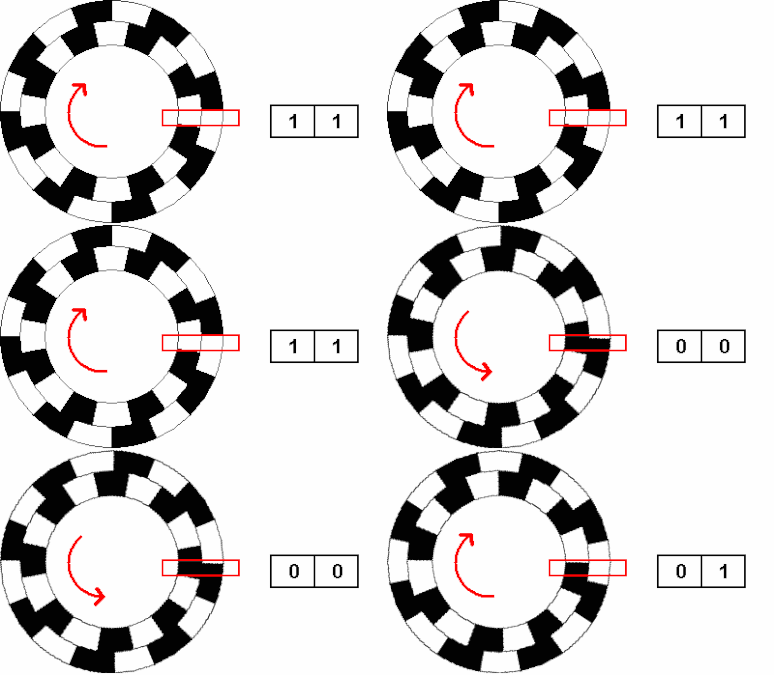
Most rotary encoders comprise a rotating element (the shaft), a scale or pattern attached to it, and a read head that senses changes. The read head produces electrical pulses or absolute codes as the shaft moves. Key characteristics include resolution (how finely rotation is measured), direction sensing, and whether the output is incremental or absolute.
- Incremental encoders emit a sequence of pulses; counting pulses reveals relative movement and speed. Many incremental models use two signals in quadrature to detect direction.
- Absolute encoders provide a unique code for each angle, so the exact position is known immediately after power-up without homing.
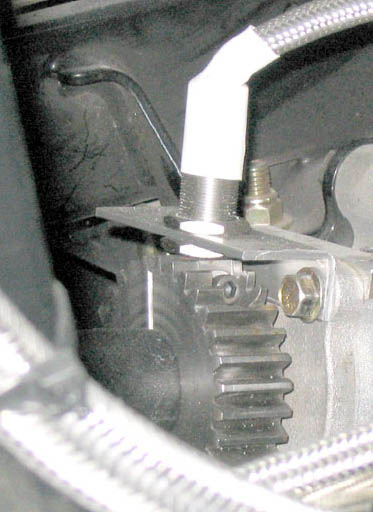
- Read technologies vary: optical (light and slotted disks), magnetic (magnetoresistive sensors), mechanical (contact-based detents), and capacitive methods. Each has trade-offs in robustness, precision, and cost.
History and development
Encoders evolved alongside electromechanical control systems. Early mechanical and optical devices were developed to improve machine positioning in industrial equipment. Over time, semiconductor sensors and digital encoding techniques enabled higher resolution, smaller packages, and better resistance to shock and contamination. Modern designs integrate electronics to produce standard digital outputs and communication interfaces used in CNC machines, robotics, and consumer electronics.
Typical uses and importance
Rotary encoders are used wherever precise rotation feedback is required. Examples include closed-loop motor control, robotic joint positioning, volume knobs and user dials on appliances, and measurement instruments. They are common in manufacturing automation systems and in robotics, where exact motion and repeatability are essential for safety and quality.
Practical considerations and distinctions
When selecting or installing an encoder, consider resolution, environmental protection (such as dust and moisture ratings), electrical interface (TTL, open-collector, SSI, or serial protocols), required indexing or zero reference, and mechanical coupling. Incremental devices are often simpler and cheaper for tasks that allow homing; absolute encoders are preferred when position must be retained after power loss. Magnetic encoders tolerate harsh environments better than optical types; optical encoders often offer higher precision in clean conditions.
Notable facts and examples
Encoders are available in panel-mount forms for human interfaces and compact modules for integration into motors. Many modern motor controllers accept standard encoder signals and use them for torque, speed and position loops. Understanding the signal type, pulse density, and wiring conventions is essential to match an encoder with its controller. Proper mounting and grounding reduce electrical noise and improve reliability.
- Common selection criteria: resolution, robustness, interface compatibility.
- Common failure modes: mechanical wear, contamination of optical paths, electrical noise.
- Maintenance: periodic inspection, cleaning of optical sensors, and checking couplings.
Related articles
Author
AlegsaOnline.com Rotary encoder: principles, types, and practical applications Leandro Alegsa
URL: https://en.alegsaonline.com/art/84255