
Gastrotrich (Gastrotricha): tiny aquatic animals called hairybacks
Gastrotricha are a phylum of microscopic aquatic animals (0.06–3 mm) found in marine, freshwater and moist terrestrial habitats. About 700 described species; noted for ciliation, adhesive tubes and eutely.
The Gastrotricha (commonly called "hairybacks") are a distinct phylum of microscopic invertebrates typically between about 0.06 and 3.0 mm in length. Roughly 700 species have been described, and members occur in large numbers in sediments, on submerged plants and in thin films of water that cling to soil particles. Their small size and habitat preference make them an important component of the meiofauna in marine and freshwater systems freshwater and marine alike.
Image gallery
7 Images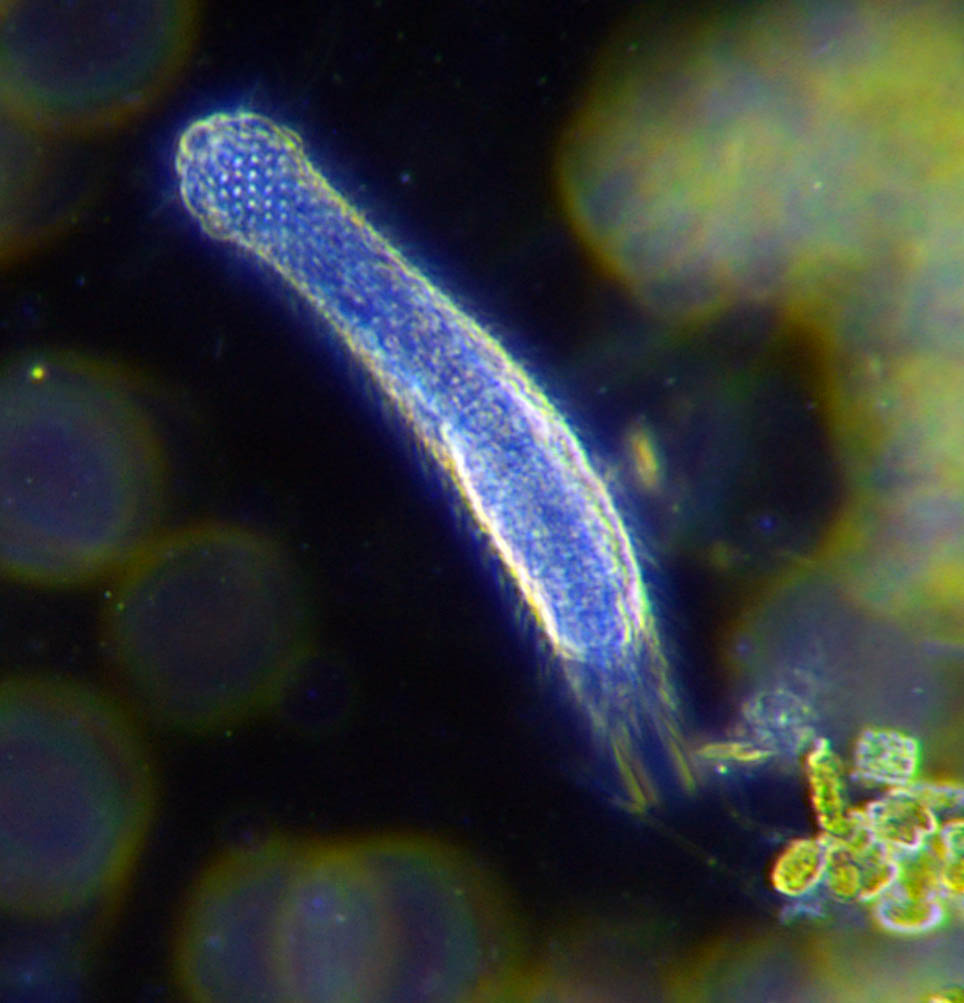


Morphology and body plan
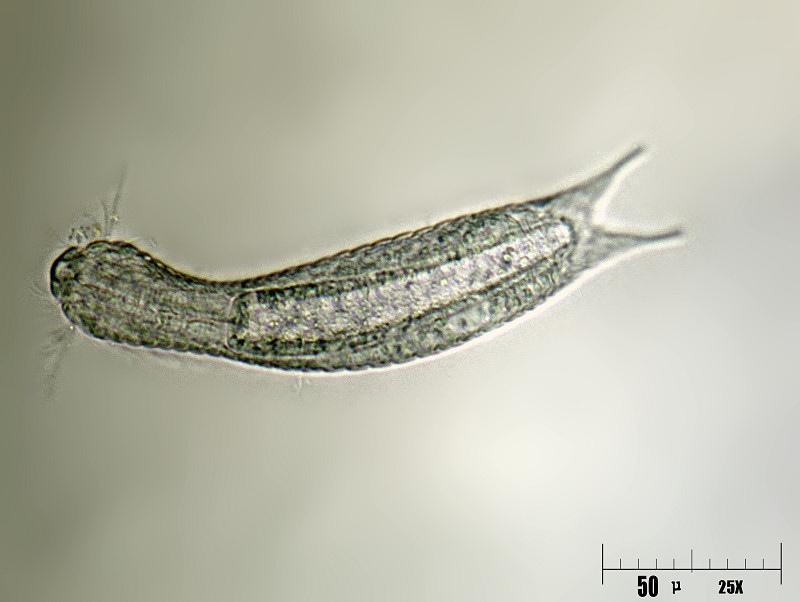
Gastrotrichs are usually flattened and bilaterally symmetrical. The body is covered by a ciliated epidermis: ventral ciliation produces locomotion in many species, while dorsal ciliation or rows of tufts give some taxa the common name "hairybacks". The cuticle is soft and may bear spines or scales in some groups. A complete digestive tract runs from mouth to anus, and paired adhesive tubes or glands along the posterior or lateral margins are used for temporary attachment to substrate. Many adults show eutely, meaning a nearly fixed number of somatic cells at maturity, a feature useful in comparative developmental studies cell-count observations.
Locomotion and feeding
Movement is typically by coordinated beating of cilia on the ventral surface, allowing gastrotrichs to glide over surfaces or through interstitial spaces. Adhesive organs enable brief attachment while feeding or resisting currents. Diets include bacteria, microalgae and detritus; gastrotrichs graze on microbial films and contribute to nutrient cycling in sediments and on submerged surfaces ecological roles.
Reproduction and life history
Reproductive modes vary across the phylum. Some populations reproduce sexually, with distinct male and female structures in certain taxa, while others reproduce by parthenogenesis. Eggs may be released or retained until hatching, and developmental patterns have attracted interest because of the combination of small body size and relatively simple organization. Reproductive anatomy and life cycles are important for species identification and ecological interpretation marine and freshwater studies.
Taxonomy and diversity
The phylum is typically divided into groups that reflect differences in habitat and body form. Marine macrodasyidan gastrotrichs tend to be elongate and adapted to interstitial life between sediment grains, while many freshwater chaetonotidan species are more compact and often found on plant surfaces or in benthic debris taxonomic keys. Despite the several hundred named species, many more likely remain undescribed because of limited sampling of microhabitats.
Habitat, distribution and sampling
Marine species are common in interstitial spaces among sand and mud particles and are usually collected by sediment sampling and extraction methods; freshwater forms are found in ponds, streams, lakes and peatlands and can be recovered from submerged plants, leaf litter and sediment sampling sediments. Terrestrial occurrences represent species living in the water films around soil grains and in moist leaf litter; such microhabitats require careful sampling to detect gastrotrichs terrestrial microhabitats.
Ecological importance and research use
As members of the meiofauna, gastrotrichs are consumers of microbes and detritus and serve as prey for larger meiofaunal predators. Their abundance and sensitivity to environmental conditions make them useful in studies of biodiversity, sediment ecology and microhabitat dynamics. Because some species show eutely and relatively simple body plans, they are also of interest in developmental biology and comparative morphology research contexts.
Identification and further reading
- Common name: hairybacks, from the appearance of dorsal ciliation or setae.
- Size: typically under a few millimetres and often overlooked without magnification.
- Sampling: sieving, decanting and extraction from sediments or plants are standard methods; regional keys and specialist literature provide identification characters and protocols field methods and reviews of meiofauna can be consulted methodological reviews.
Because many gastrotrich species live in microhabitats that are infrequently sampled, continued targeted surveys of marine and freshwater sediments and terrestrial film habitats are likely to increase the known diversity. For introductions and taxonomic keys, consult dedicated guides and specialist reviews that cover both marine and freshwater groups phylum overview and marine descriptions.
Questions and answers
Q: What are Gastrotricha?
A: Gastrotricha is a phylum of microscopic animals commonly known as hairy backs that live in both fresh water and marine environments.
Q: What is the size range of Gastrotricha?
A: The size of Gastrotricha ranges from 0.06-3.0 mm.
Q: Where can marine species of Gastrotricha be found?
A: Marine species of Gastrotricha can be found mostly in between sediment particles.
Q: Where do terrestrial species of Gastrotricha live?
A: Terrestrial species of Gastrotricha live in the water films around grains of soil.
Q: How many species of Gastrotricha have been described?
A: About 700 species of Gastrotricha have been described.
Q: Do Gastrotricha have a fixed cell number?
A: Yes, adults of Gastrotricha have a fixed cell number.
Q: What environments can Gastrotricha be found in?
A: Gastrotricha can be found in both fresh water and marine environments.
Related articles
Author
AlegsaOnline.com Gastrotrich (Gastrotricha): tiny aquatic animals called hairybacks Leandro Alegsa
URL: https://en.alegsaonline.com/art/37704