
Galvanizing: protective zinc coatings for corrosion control
Galvanizing coats steel or iron with zinc to provide barrier and sacrificial protection. This article explains methods, benefits, applications, and practical distinctions between hot-dip and electro-galvanizing.
Overview
Galvanizing is the process of applying a protective zinc layer to iron or steel to reduce corrosion. The zinc acts both as a physical barrier and as a sacrificial metal that corrodes in preference to the underlying iron. Because zinc is more reactive than iron, it provides cathodic protection even where the coating is scratched or damaged, delaying rust and extending service life.
Image gallery
1 Image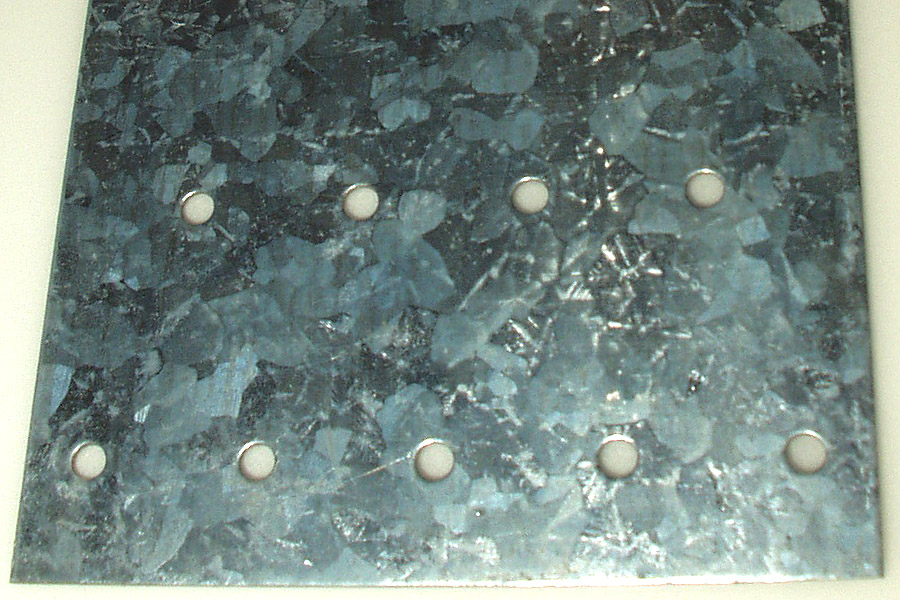
How it works
The protection offered by zinc combines two effects: barrier protection, where the coating blocks moisture and oxygen from reaching the base metal, and galvanic (sacrificial) protection, where the zinc corrodes preferentially and protects exposed steel electrically. Over time zinc forms corrosion products that create a stable outer layer, often appearing as a dull patina, which slows further decay. Maintenance, environment, and coating thickness influence how long a galvanized item remains effective.
Common methods
- Hot-dip galvanizing: Steel is cleaned, fluxed and immersed in a molten zinc bath, producing a metallurgical bond and a relatively thick, durable coating. This method is widely used for structural steel, posts, and large fabricated items.
- Electro-galvanizing: Zinc is deposited by electroplating to create a thinner, more uniform and often shinier finish. It is common for sheet products, automotive parts, and components where appearance and tight dimensional tolerances are important.
- Other techniques: Cold galvanizing sprays (zinc-rich paints), sherardizing (zinc diffusion at elevated temperature), and mechanical/peen plating are alternatives suited to specific shapes or production methods.
Process steps and quality factors
Typical stages for galvanizing include surface preparation (removing oil, rust, and scale), fluxing to prevent oxidation prior to coating, application of zinc, and final inspection. Coating thickness, adherence, and uniformity depend on preparation, process control, and the method chosen. Industry specifications and standards govern sampling and tests to verify performance; suppliers and fabricators commonly reference these when qualifying coatings.
Applications and importance
Galvanized steel is used in construction (beams, decking, roofing), infrastructure (guardrails, street furniture), utilities (poles and transmission towers), hardware (bolts, fasteners), automotive components, and household appliances. It is favored for its cost-effectiveness, long service life in many environments, and relatively low maintenance compared with uncoated steel. Selection depends on expected exposure: rural, urban, marine, and industrial atmospheres impose differing corrosion challenges.
Advantages, limitations and repair
Advantages include long-lasting protection, recyclability of zinc and steel, and straightforward inspection. Limitations arise where extremely thin coatings are specified, in some high-temperature environments, or where severe mechanical abrasion occurs. When damage is localized, touch-up with zinc-rich paints or application of sacrificial anodes can restore protection. For large repairs or specification-driven projects, complete re-galvanizing or replacement may be required.
Further information and standards
Technical guidance, material data, and practical advice are available from industry organizations, coating suppliers and standards bodies. For general overviews, procedural summaries and testing guidance see industry guides, manufacturer literature at supplier pages, standards summaries at standards portals, case studies and application examples at technical resources, and safety/environmental information at regulatory overviews.
Related articles
Author
AlegsaOnline.com Galvanizing: protective zinc coatings for corrosion control Leandro Alegsa
URL: https://en.alegsaonline.com/art/37345