
Zinc (Zn): properties, occurrence, uses, isotopes, and biological role
Zinc (Zn) is a metallic chemical element (atomic number 30) widely used for galvanizing, alloys and batteries; it is an essential trace nutrient with several stable isotopes and many industrial applications.
Overview
Zinc is a chemical element represented by the symbol Zn and atomic number 30. As a common metal it is often called spelter in older industrial contexts. Its standard atomic mass is about 65.38. Zinc atoms contain 30 protons and 30 electrons, and the element occurs naturally in crustal minerals and in trace amounts in living organisms. For a concise treatment of its chemical classification, see the entry on chemical element and related metal groups.
Image gallery
10 Images


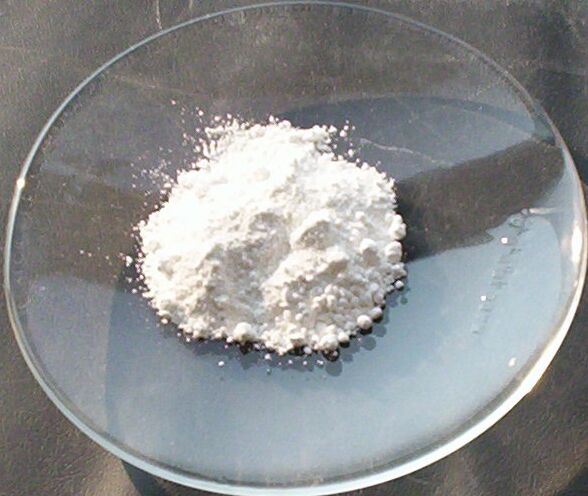


Classification and physical properties
Metallic zinc is often placed among the metals of the periodic table and traditionally discussed with the transition metals, though many sources treat it as a post-transition metal because of its filled d-subshell and characteristic properties. Zinc is a moderately reactive metal that forms a dull protective oxide coating when exposed to air. It alloys readily with other metals — most notably copper to form brass — and is used in casting, plating and corrosion-resistant coatings.
Isotopes
There are around 29 known isotopes of zinc, of which five occur naturally in appreciable amounts. Some isotopes are unstable; radioactive isotopes have measured half-lives that vary greatly. For example, the proton-rich isotope 57Zn decays rapidly, while other isotopic species are effectively stable on geological time scales. Isotopic composition is useful in geochemistry and environmental studies to trace sources and cycling of zinc in ecosystems.
Occurrence, extraction and history
Zinc is most commonly extracted from sulfide ores such as sphalerite; ores are processed by roasting, leaching and electrochemical or pyrometallurgical methods to obtain the metal. Historically, metal production and use of zinc compounds go back to antiquity; metallic zinc was produced and used in several regions long before large-scale industrial extraction developed. The familiar English name "spelter" reflects early trade terminology for refined zinc metal.
Uses and applications
Zinc has a wide range of industrial and consumer applications. Key uses include:
- Galvanizing steel to prevent corrosion — the most important single commercial use.
- Primary and secondary batteries, including zinc–carbon and alkaline cells, and emerging zinc-based rechargeable systems.
- Alloys (brass and various die-casting alloys), metal coatings, and castings.
- Chemical compounds such as zinc oxide and zinc chloride used in paints, rubber, ceramics, sunscreens and as catalysts.
Biological role, safety and notable facts
Zinc is an essential trace element for humans and many other organisms. It participates in the function of numerous enzymes and structural proteins, including zinc-finger motifs that help regulate gene expression. Dietary zinc is obtained from foods such as meat, seafood, legumes and fortified products; both deficiency and excess can have health consequences, so intake is regulated by dietary guidelines. Industrial handling of zinc and its dusts requires basic safety measures to avoid inhalation, and environmental releases are managed because of zinc's ecological effects at high concentrations.
For further technical or chemical details consult specialist references or databases using the links above and related materials on elemental chemistry and metallurgy.
Questions and answers
Q: What is zinc?
A: Zinc is a chemical element that belongs to the transition metals group.
Q: What is the symbol for zinc on the periodic table?
A: The symbol for zinc on the periodic table is "Zn".
Q: What is the mass number of zinc?
A: The mass number of zinc is 65.38.
Q: How many protons and electrons does zinc have?
A: Zinc has 30 protons and 30 electrons.
Q: How many isotopes of zinc are known and how many occur in nature?
A: There are a total of 29 isotopes of zinc, out of which five occur in nature.
Q: What are some common uses of zinc?
A: Zinc is mostly used for galvanizing and batteries, and is the fourth most commonly used metal by people.
Q: Are all isotopes of zinc radioactive?
A: No, not all isotopes of zinc are radioactive, but some of them are. Their half-lives vary from 40 milliseconds to 5x10¹⁸ years.
Related articles
Author
AlegsaOnline.com Zinc (Zn): properties, occurrence, uses, isotopes, and biological role Leandro Alegsa
URL: https://en.alegsaonline.com/art/110633
Sources
- degruyter.com : "Atomic weights of the elements 2013 (IUPAC Technical Report)"
- doi.org : 10.1515/pac-2015-0305
- encyclo.co.uk : Spelter
- galvanizeit.org : Zinc Metal Properties
- books.google.com : The Useful Metals and Their Alloys
- books.google.com : Inorganic Chemistry: With the Elements of Physical and Theoretical Chemistry
- scorecard.org : "Zinc--overview"
- nndc.bnl.gov : Chart of Nuclides
- lambda.gsfc.nasa.gov : Five-Year Wilkinson Microwave Anisotropy Probe (WMAP) Observations: Data Processing, Sky Maps, and Basic Results
- books.google.com : Zinc Handbook
- nyrstar.com : Special High Grade Zinc (SHG) 99.995%
- minerals.usgs.gov : "Zinc: World Mine Production (zinc content of concentrate) by Country"
- ulb.tu-darmstadt.de : Handbook of Battery Materials
- doi.org : 10.1016/0378-7753(95)02242-2
- info.wlu.ca : Zinc