
An Inconvenient Truth — 2006 documentary on climate change
Overview of the 2006 documentary An Inconvenient Truth: subject, structure, production, reception, awards, controversies, and its role in public discussion about climate change and environmental policy.
Overview
An Inconvenient Truth is a 2006 feature-length documentary focused on the science, risks and public policy implications of global warming. Directed by Davis Guggenheim and presented by former United States Vice President Al Gore, the film adapts a long-standing lecture-format slide presentation into a cinematic narrative. It combines scientific charts, historical context and visual evidence to make a public-facing case for recognizing human influences on climate and for taking steps to reduce greenhouse gas emissions (global warming).
Image gallery
7 Images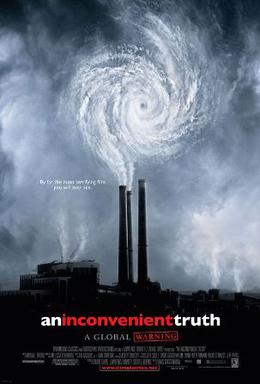




Content and structure
The film follows a talk that Gore had delivered at many venues over several years. It interleaves graphical data—such as records of atmospheric carbon dioxide and surface temperatures—with filmed examples of environmental change, archival footage and personal reflection. The presentation emphasizes links between fossil-fuel emissions and observed warming trends, and discusses potential impacts on coastlines, weather extremes, ecosystems and food production. It was deliberately structured to translate scientific findings into accessible language and images for a general audience.
Production and release
The documentary premiered at the 2006 Sundance Film Festival and opened in theaters in major U.S. cities, including New York and Los Angeles on May 24, 2006. A home-video release followed later that year on DVD. A companion book by Al Gore summarised much of the same material and reached broad circulation. The film’s production and distribution strategies helped it reach schools, community groups and international audiences beyond the usual documentary circuit.
Reception and awards
Critics and audiences gave the film substantial attention. It received major awards, including recognition at the Academy Awards, and was widely discussed in the press and on broadcast media. Supporters praised its role in raising public awareness and in presenting a cohesive case for reducing emissions; others complimented its visual presentation and the clarity of its narrative. The film’s awards and media profile amplified its reach and encouraged further discussion of climate policy and science.
Scientific response and public debate
While many scientists and communicators appreciated the film’s contribution to public engagement, some commentators questioned particular presentation choices and the degree to which complex scientific uncertainties were simplified. These critiques sparked broader conversations about how scientific evidence should be communicated, how documentaries balance persuasion and explanation, and how educational institutions should present advocacy-oriented material. The film intersected with ongoing scientific assessments of climate change and with policy debates over mitigation and adaptation.
Educational use and legacy
An Inconvenient Truth became a commonly used resource in classrooms, community workshops and advocacy campaigns. Excerpts and the companion book were adopted as introductory material to motivate further study of energy systems, carbon budgets and policy options. The film also illustrated the potential for a single high-profile documentary to influence public conversation and civic engagement on an environmental issue.
Significance and continuing relevance
More than a documentary, the film functioned as an entry point for many viewers into the scientific and policy dimensions of warming and emissions. It helped bring climate topics into mainstream media coverage and encouraged discussion among policy makers, educators and the public. Its impact is best understood as part of a sustained, evolving effort to communicate climate science and to explore practical and political pathways to reducing risk.
Key features at a glance
- Presenter: Al Gore
- Director: Davis Guggenheim
- Festival premiere: Sundance Film Festival
- Initial theatrical release locations: New York, Los Angeles
- Formats: theatrical release, educational screenings, DVD, companion book
- Awards: recognition at the Academy Awards and other ceremonies
- Subject matter: human influences on global warming and responses to climate change
- Official film information: see the film page (film page)
The film remains a reference point in discussions about science communication and environmental policy. Readers seeking further details can consult contemporary reviews, scientific summaries linked from reputable sources, and the film’s own promotional and educational materials (film page). For a fuller understanding of the underlying science and policy options, consult primary scientific assessments and current literature on global warming and climate policy.
Tags
Related articles
Author
AlegsaOnline.com An Inconvenient Truth — 2006 documentary on climate change Leandro Alegsa
URL: https://en.alegsaonline.com/art/3710
Sources
- grist.org : "On a Bender: A chat with Inconvenient Truth co-producer and Hollywood bigwig Lawrence Bender"
- oscar.com : "Winner: Documentary Feature, An Inconvenient Truth"
- nytimes.com : "New York Times Bestsellers: Paperback Nonfiction"
- movies.nytimes.com : "NY Times: An Inconvenient Truth"