
Funicular (Inclined Railway): Design, History and Uses
A funicular is a cable-driven inclined railway whose paired vehicles counterbalance each other to climb steep slopes. This article covers design, operation, history, typical uses and distinctions.
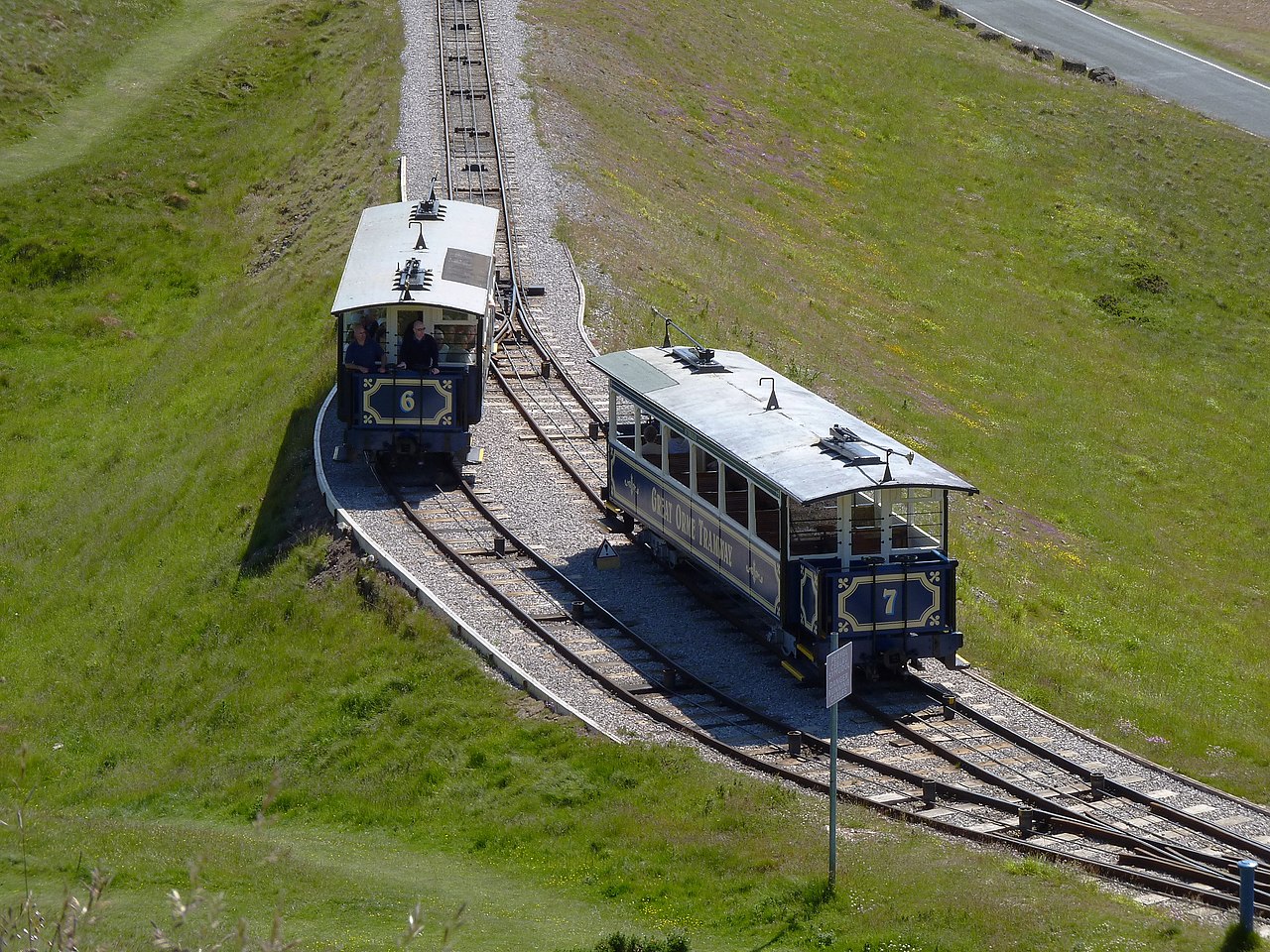
A funicular is a type of railway built on a steep incline in which two connected vehicles move in opposite directions, one ascending while the other descends. Motion is produced by a continuous cable or rope that runs over a drive pulley, often located at the upper station. This arrangement makes funiculars especially well suited to negotiating very steep slopes on urban hills, seaside cliffs, and mountain approaches.
Image gallery
10 Images


Design and main components
The basic elements are a pair of counterbalanced cars mounted on rails, the track structure, the haulage cable, a drive and braking system, and terminal stations. Many installations use a single track with a short passing loop in the middle so the cars can pass. Tracks are laid to accommodate steep gradients and frequent mechanical braking and cable-tensioning equipment maintains safe operation.
Funicular vehicles are often fitted with stepped or articulated floors so passengers ride level while the carriage follows the slope. Control systems coordinate speed, braking and the balance between the two cars; redundant brakes and catch-systems are standard safety features.
History and development
Funiculars have been built since the early 19th century. Early systems sometimes used the weight of water filled into a tank beneath the top car to provide the motive force; later designs adopted steam and then electric drives. Throughout the 20th and 21st centuries they have been adapted for urban transit, tourism, and access to mountain and hill destinations.
Uses and examples
- Urban transport: short, steep links between neighborhoods and waterfronts.
- Tourist and scenic rides: access to viewpoints, parks and resort areas.
- Practical access: connection to rail stations, ports or mountain facilities where roads would be difficult.
Funiculars are prized for their energy efficiency when vehicles are counterbalanced and for providing reliable, direct service up slopes where conventional rail or buses are impractical.
How they differ from related systems
Unlike aerial cable cars or gondolas, funiculars run on rails and are guided by track. They differ from rack (cog) railways in that propulsion is provided externally by the cable rather than a gear engaging a toothed rack. These differences affect capacity, gradeability, installation cost, and the kinds of terrain each system suits best.
Well-maintained funiculars combine simple mechanical principles with modern safety and control technology to provide efficient, often iconic links between disparate elevations in cities and mountain areas.
Related articles
Author
AlegsaOnline.com Funicular (Inclined Railway): Design, History and Uses Leandro Alegsa
URL: https://en.alegsaonline.com/art/37044