
Garbage truck (waste collection vehicle)
A garbage truck is a specialized vehicle designed to collect, compact, transport and sometimes transfer municipal solid waste to disposal or processing sites.
Overview
A garbage truck, also called a dustcart, rubbish truck, bin lorry or refuse collection vehicle, is a motorized vehicle engineered to pick up municipal solid waste and move it to a disposal, recycling or transfer facility. These vehicles are a core part of urban sanitation systems and are designed to handle a variety of container types, from curbside bins to larger commercial dumpsters. Many aspects of their design aim to make collection efficient, safe and hygienic.
Image gallery
10 Images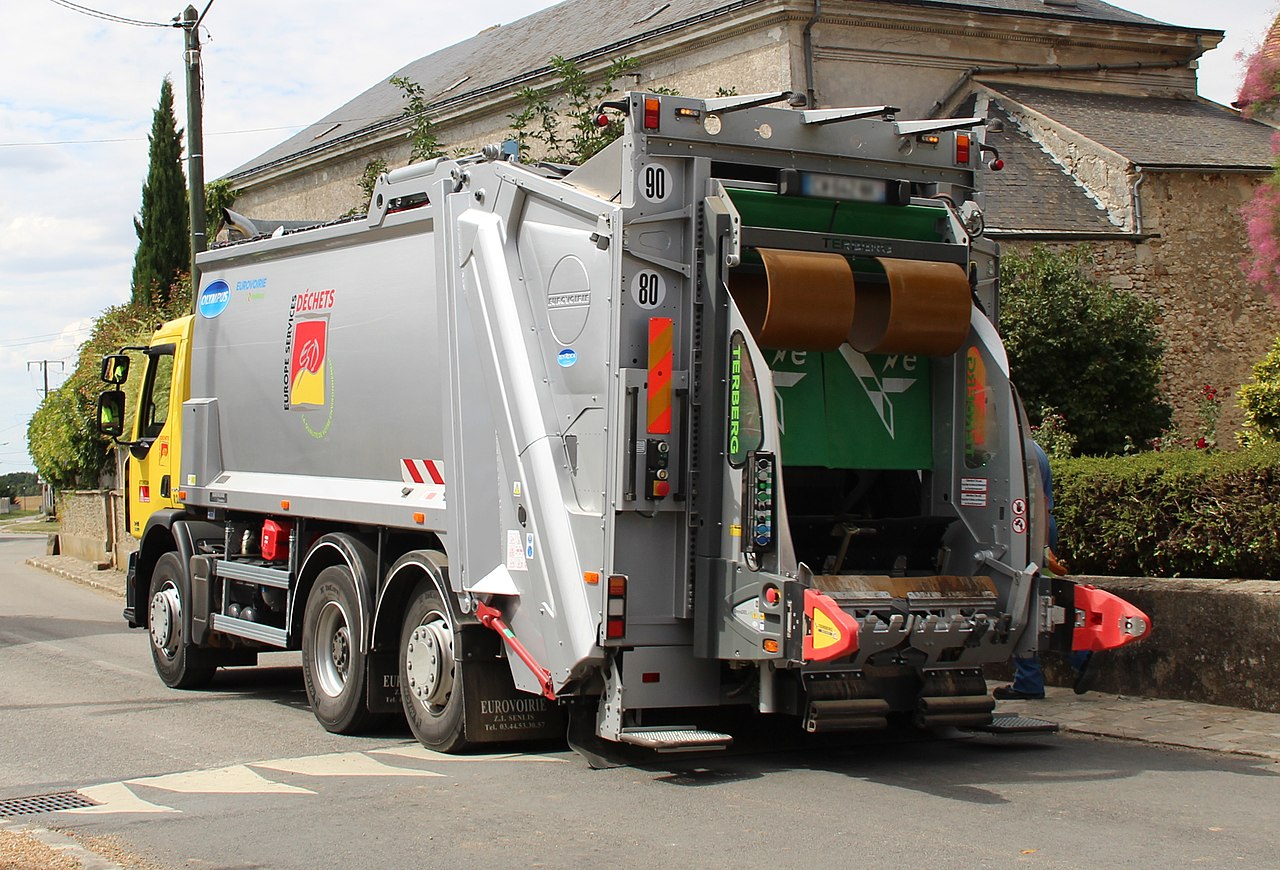


Main components and operation
Typical garbage trucks include a chassis and body, a loading mechanism, a compaction system and a storage compartment. Loading can be performed from the front, side or rear depending on the model: front loaders lift large containers over the cab, side loaders often use automated arms to empty standardized bins, and rear loaders accept hand-carried bags or smaller bins. Compactors use hydraulic rams to compress waste and maximize payload before transport.
Types and collection methods
- Front-loading trucks — used mainly for commercial bins and large containers.
- Rear-loading trucks — common for residential collection and mixed loads.
- Side-loading trucks — often automated for curbside bin pickup.
- Specialized trucks — bulk refuse, recycling collection, hook-lift or roll-off trucks for construction debris.
History and development
Early waste collection relied on horse-drawn carts and manual labor. Mechanized collection began in the late 19th and early 20th centuries with adaptations of general-purpose trucks. Over time, hydraulic systems improved compaction and safety, while automated collection arms emerged in the late 20th century to reduce labor and speed routes. Modern developments emphasize emissions controls, quieter operation and electric or alternative-fuel drivetrains.
Uses, importance and safety
Garbage trucks serve public health by removing waste that could otherwise attract pests or spread disease. They also support recycling programs by collecting sorted materials. Safety features include audible alerts, backup cameras, lighting, and protective barriers for crew. Operators follow route planning and maintenance schedules to minimize hazards and ensure reliable service.
Environmental and operational considerations
Fleet managers balance payload efficiency, fuel consumption and emissions. Many cities are adopting low-emission or electric models to reduce noise and pollution. Collected waste may be taken directly to a landfill or recycling center, or routed through a transfer station for consolidation; see local waste management guidance such as industry resources and municipal websites like public sanitation pages for regional practices. For information on disposal sites and landfill operations consult waste facility guides.
Notable distinctions include the difference between mixed-waste collection and separate-stream recycling, the choice of automated versus manual loading, and the trade-offs between larger compaction loads and maneuverability in dense neighborhoods. Despite being associated with odor and noise, modern designs aim to mitigate these issues while improving efficiency and worker safety.
Related articles
Author
AlegsaOnline.com Garbage truck (waste collection vehicle) Leandro Alegsa
URL: https://en.alegsaonline.com/art/37519