
Fuselage (aircraft main body)
The fuselage is an aircraft's central structure that houses crew, passengers, cargo, systems and sometimes engines. It defines aerodynamic shape, structural load paths, and interior layout.
Overview
The fuselage is the principal longitudinal body of an aircraft, forming the central structure to which wings, empennage and landing gear attach. The word derives from the French fuselé, meaning spindle-shaped. In civilian and military aircraft it contains the flight deck, passenger cabin or cargo bay and support systems.
Image gallery
10 Images




Primary functions
- Accommodates crew, passengers and cargo.
- Provides a structural load path linking wings, tail and landing gear.
- Houses fuel tanks, avionics and ancillary systems; sometimes carries an engine.
- Shapes the aircraft's aerodynamic profile and contributes to stability.
Structure and common layouts
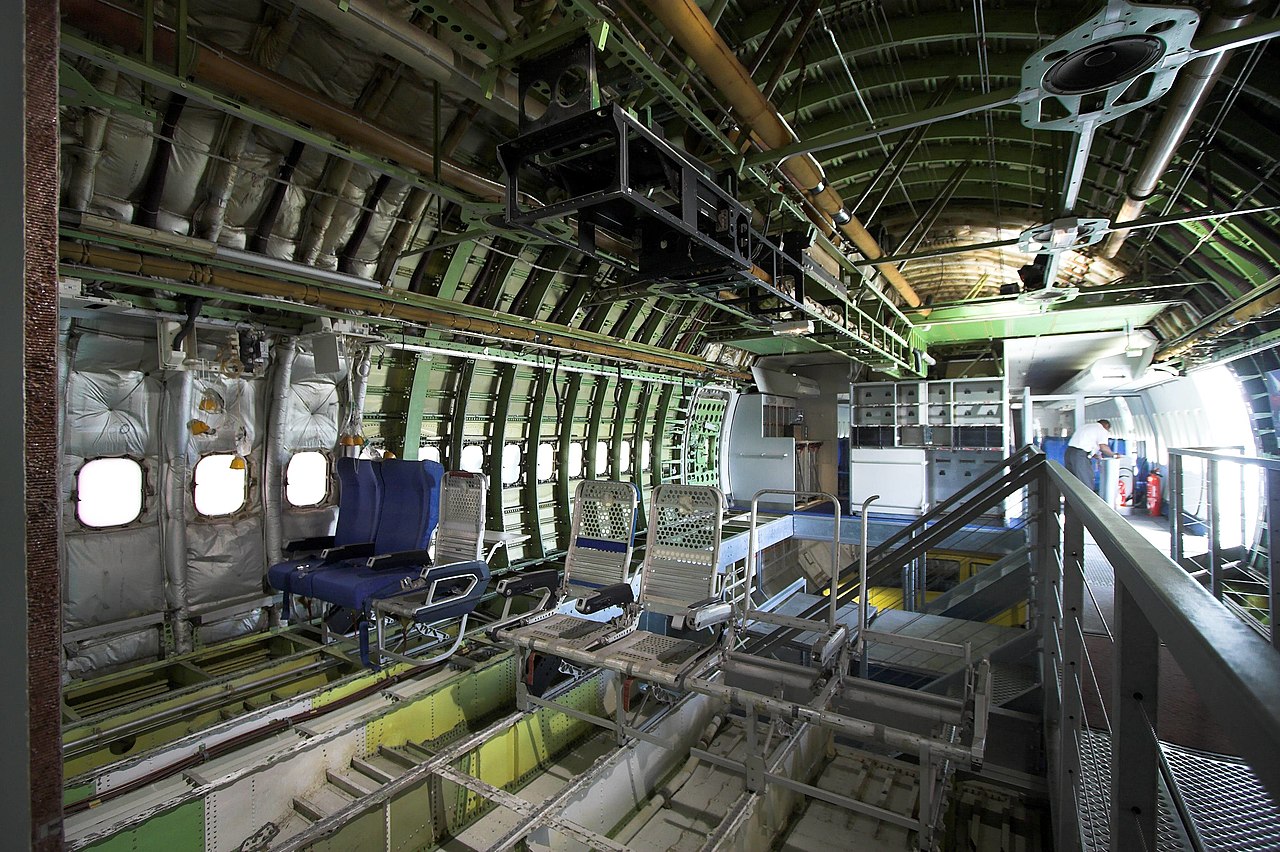
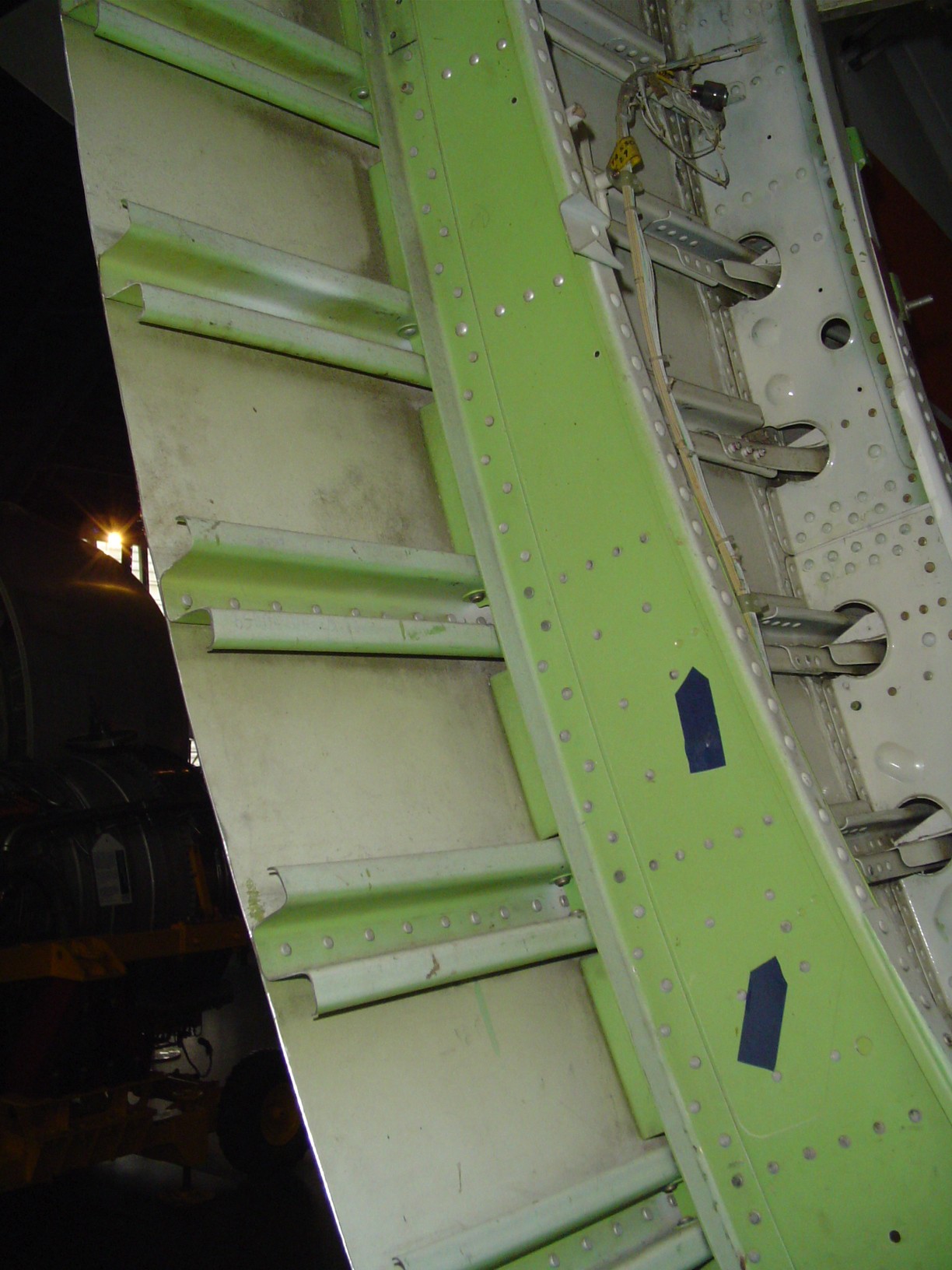
Fuselages may be built as a monocoque shell, semi-monocoque with frames and stringers, or as a truss framework. Typical cross-sections are circular or oval for pressurized cabins; slender or boatlike shapes appear on seaplanes and light aircraft. Variants include single-hull designs for most airliners and twin-boom or pod-and-boom arrangements on some military types.
Materials and construction
Historically made from wood and fabric, modern fuselages are commonly fabricated from aluminum alloys such as aluminium, as well as composites and titanium in high-performance or corrosion-sensitive applications. Manufacturing methods include riveting, bonding, and advanced automated layup for composite shells.
History and significance
Fuselage design evolved with advances in aerodynamics, pressurization and materials. Early aircraft used simple frames; by the mid-20th century semi-monocoque metal fuselages became standard. Today fuselage design balances weight, strength, cabin comfort, cargo flexibility and maintainability.
Notable distinctions
Different roles demand different fuselage solutions: airliners prioritize cabin volume and low drag, cargo planes favor large doors and reinforced floors, while fighters aim for compact, stiff structures. Designers also trade off between pressurization efficiency and window/door placement to meet mission requirements.
Related articles
Author
AlegsaOnline.com Fuselage (aircraft main body) Leandro Alegsa
URL: https://en.alegsaonline.com/art/37082