
Corinthian order: the ornate classical column style
The Corinthian order is the most decorative of the three principal classical orders of Greek and Roman architecture, noted for slender fluted columns and capitals ornamented with acanthus leaves and volutes.
The Corinthian order is one of the three canonical orders of classical architecture, alongside the Doric and Ionic systems. Originating in ancient Greece and later adopted and elaborated by Roman builders, the Corinthian is immediately recognizable for its ornate capital — the topmost part of the column — decorated with stylized acanthus leaves and scroll-like volutes. It became associated with refinement, private wealth, and civic display rather than the plain strength suggested by the Doric order. See also ancient Greek architecture and Roman architecture.
Image gallery
10 Images
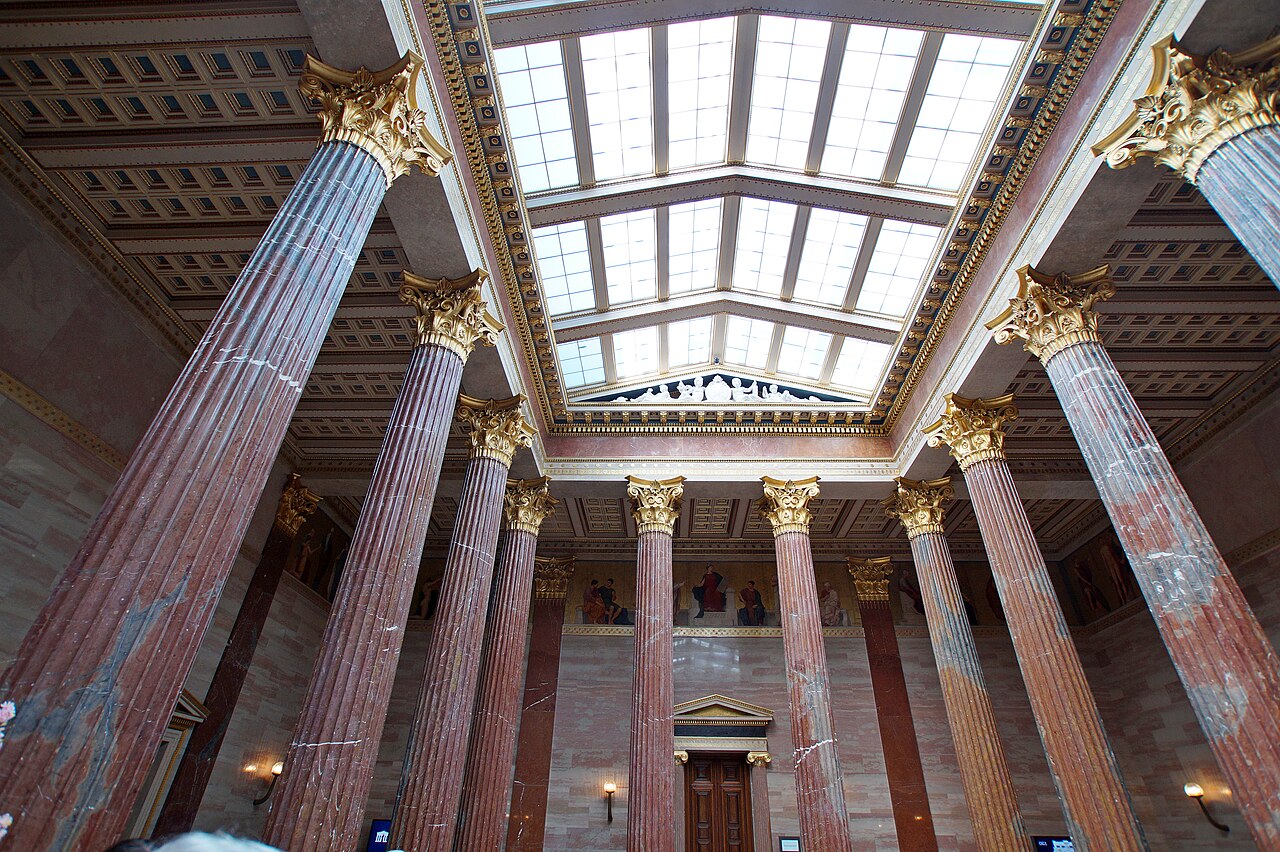


Characteristics and principal parts
The Corinthian order shares basic elements with other classical orders — base, shaft, and capital — but it emphasizes vertical slenderness and decorative richness. Its shaft is typically fluted, meaning it has vertical grooves, and its proportions are often more slender than Doric or Ionic shafts. The capital is complex: a moulded echinus supports two ranks of stylized acanthus leaves from which emerge four small spirals or volutes at the corners, creating a balanced, sculptural form.
- Base: a molded plinth and rings that separate the column from the platform.
- Shaft: usually fluted with a higher height-to-diameter ratio; see examples of thin columns here.
- Capital: the defining feature, carved with acanthus leaves and corner volutes.
- Entablature: the horizontal structure above the capital, often richly ornamented in Corinthian applications.
History and development
The Corinthian form first appears in Greek architecture in the late Classical period and was refined by Hellenistic craftsmen. Romans embraced and propagated the style in monumental civic and religious buildings, where its decorative qualities suited imperial display. Renaissance and later architects revived and adapted the order, sometimes combining Corinthian motifs with new structural systems; it became a symbol of elegance used for churches, palaces, and public monuments. For context on the other orders, compare to the Doric order and the Ionic order.
Uses, examples and significance
The Corinthian order is commonly used where a visually rich and refined statement is desired. Capitals carved with acanthus became a decorative motif applied to pilasters, doorways, and furniture as well as free-standing columns. Famous ancient examples include late Greek temples and numerous Roman structures. Later periods — especially the Renaissance, Baroque and Neoclassical eras — reused the Corinthian vocabulary for churches, state buildings, and memorials, signaling formality and prestige.
Distinctions and legacy
Compared with the Doric order's austerity and the Ionic order's restrained volume, the Corinthian is the most elaborated classical language. Its emphasis on sculptural capitals influenced decorative arts for millennia and persists today in architectural references, interior moldings and civic symbolism. For further reading and visual references, consult general surveys of classical architecture here and comparative studies here or here. Additional technical guides to proportions and carving may be found here.
Questions and answers
Q: What is the Corinthian order?
A: The Corinthian order is one of the three main classical orders (styles) of ancient Greek and Roman architecture.
Q: What are the other two orders of ancient Greek and Roman architecture?
A: The other two orders are the Doric order and Ionic order.
Q: What makes the Corinthian order different from the other two orders?
A: The most important difference with the other orders is the big capital (top part of the column), which is decorated with leaves and scrolls.
Q: How would you describe the columns of the Corinthian order?
A: The Corinthian order has thin columns that have grooves running vertically up the sides.
Q: Why is the Corinthian order considered the most decorative of the three orders?
A: The Corinthian order's capital is decorated with leaves and scrolls, making it the most decorative of the three orders.
Q: Are the Corinthian order columns thicker or thinner compared to other orders?
A: The Corinthian order columns are thinner compared to the other two orders.
Q: Are there any additional decorative elements in the Corinthian order?
A: Yes, the capital of the Corinthian order is decorated with leaves and scrolls.
Related articles
Author
AlegsaOnline.com Corinthian order: the ornate classical column style Leandro Alegsa
URL: https://en.alegsaonline.com/art/23083