
Andhrímnir — Cook of the Gods in Norse Mythology
Andhrímnir is the divine cook in Norse myth who prepares the boar Sæhrímnir in the cauldron Eldhrímnir to feed the gods and the einherjar in Valhalla, a ritual that renews each day until Ragnarök.
Overview
Andhrímnir is the traditional cook of the gods in Norse mythology, responsible for preparing the great feast that sustains the inhabitants of Valhalla. In surviving sources he appears primarily as a practical, nameless figure whose work provides food for the gods and the fallen warriors (the einherjar). His role centres on the slaughter and preparation of the boar Sæhrímnir and on using a particular cauldron called Eldhrímnir.
Image gallery
1 Image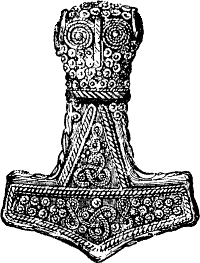
Role and daily cycle
Every day Andhrímnir kills and cooks Sæhrímnir; the meat feeds the gods and the warriors who feast in Valhalla. According to the mythic account the boar is restored each night and returns to life, enabling the feast to be repeated each day. This cyclical renewal is presented as one of the ways the table of the gods is kept plentiful until the end-times known as Ragnarök. The scene underlines hospitality, abundance, and the martial ethos of providing victuals for warriors.
The details are spare, and Andhrímnir is described with emphasis on his function rather than on personal biography. He works within Valhalla’s domestic economy alongside other named items and creatures that populate the hall. Readers often follow references to Norse myth to learn more about the setting of these daily rites: Norse mythology, the hall of Valhalla, and ritual objects like Eldhrímnir’s cauldron (the name appears in the texts themselves).
Sources, symbolism, and legacy
Andhrímnir is attested in the medieval Eddic material that preserves much Norse myth; the traces are brief, and most commentary emphasizes symbolism over biography. Scholars and popular writers interpret the figure as expressing themes of cyclical renewal, communal feasting, and the material support for heroic society. In modern culture Andhrímnir and the Sæhrímnir motif appear in retellings, art, and games as an emblem of inexhaustible provision.
- Key elements: the cook Andhrímnir, the boar Sæhrímnir, the cauldron Eldhrímnir, Valhalla, and the einherjar.
- Notable fact: surviving texts focus on his role rather than his origins or personality.
- Further reading: consult primary Eddic poems and later compilations for the original passages and fuller context (Sæhrímnir, Eldhrímnir, Valhalla).
Related articles
Author
AlegsaOnline.com Andhrímnir — Cook of the Gods in Norse Mythology Leandro Alegsa
URL: https://en.alegsaonline.com/art/3919