
Andromeda (mythology)
Andromeda, an Aethiopian princess in Greek myth, was chained as a sacrifice to a sea monster and rescued by Perseus; her story inspired art and gives its name to a constellation and galaxy.
Overview
Andromeda is a figure from Greek mythology. Described as an Aethiopian princess, she is commonly remembered as the daughter of King Cepheus and Queen Cassiopeia. Her tale centers on beauty, hubris, divine punishment and salvation: a boast by Cassiopeia led to a maritime threat, and Andromeda was offered to a monstrous sea being before being rescued by the hero Perseus.
Image gallery
10 Images


Name and origins
The name Andromeda appears in ancient Greek as Ἀνδρομέδα / Ἀνδρομέδη. Etymologically it is often interpreted to mean "ruler of men," from elements meaning "man" and "ruler." Ancient commentators and later storytellers placed her court on the coasts of the eastern Mediterranean or nearby African shores; the term Aethiopian in classical writing broadly designated peoples from across Africa and southern regions rather than matching the modern nation-state.
Myth and variations
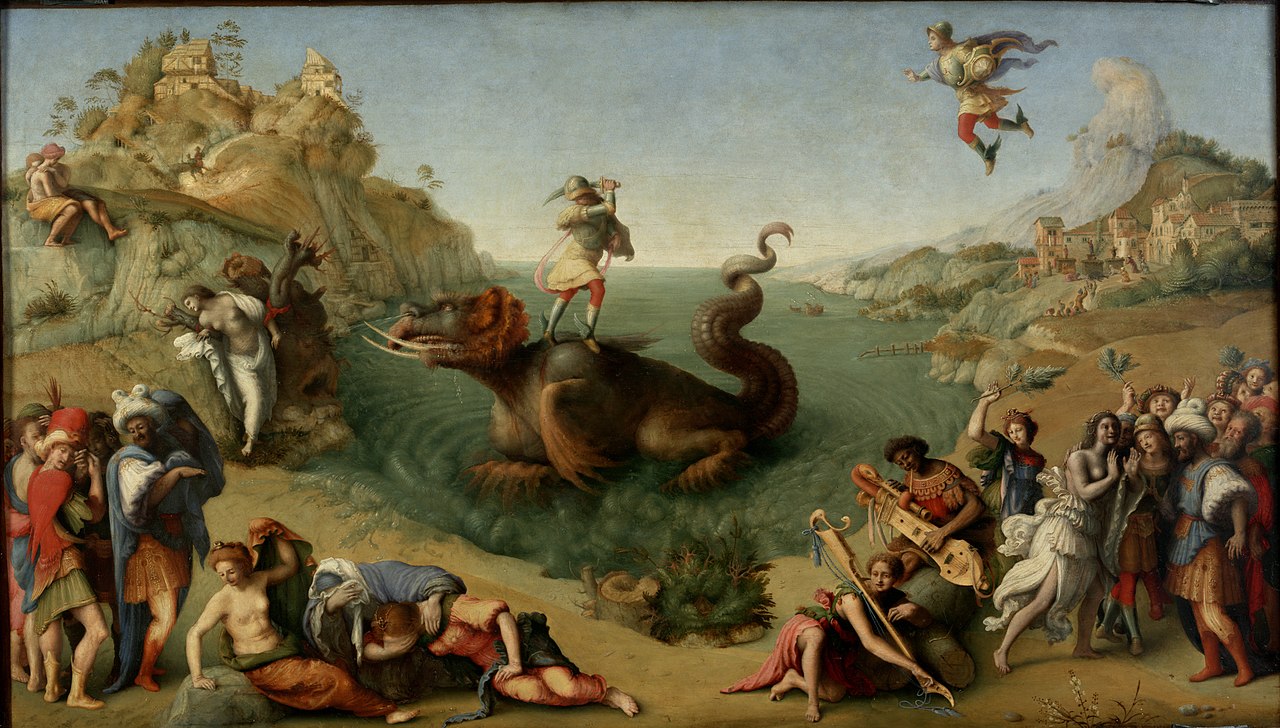
The best-known narrative begins when Cassiopeia boasts that her daughter's beauty outranks that of the Nereids, sea nymphs honored by Poseidon. Angered, the sea god Poseidon sends a destructive creature, often called Ceto or Cetus, to ravage the coastline. Consulting an oracle such as the Oracle of Delphi, Cepheus is told to sacrifice Andromeda; she is bound, usually depicted as chained, to a rock on the shore as the monster approaches.
Perseus, returning from his victory over Medusa and bearing the severed Gorgon's head, arrives in time to slay the beast and free Andromeda. Accounts differ on details: in some, Perseus first encounters rival suitors (notably Phineus) and uses Medusa's head to turn them to stone; in others, the focus remains on the rescue and marriage.
Family and descendants
After their marriage Andromeda and Perseus are said to have fathered several children, and through them she enters the genealogy of later heroes. Classical sources attribute to them sons and daughters who became founders and rulers across the Greek world. Traditions commonly list descendants who link Andromeda to dynasties and to later figures such as Herakles. Perseus himself is associated with the foundation of cities including Mycenae.
- Notable descendants (variously named): Perses, Alcaeus, Heleus, Mestor, Sthenelus, Electryon, and daughters such as Autochthe and Gorgophone.
Cultural legacy and interpretation
The Andromeda story has had a long cultural afterlife. In art and literature it became a favored subject for painters, poets and sculptors because its themes—victimhood, rescue, and heroic valor—are visually and narratively striking. The constellation Andromeda and, by extension, the Andromeda Galaxy take their names from this mythic figure, keeping her image in both astronomy and popular culture. Artists and writers across periods have emphasized different elements: the moment of peril, the act of rescue by Perseus, or Cassiopeia's pride and its consequences.
Notable points and distinctions
Several features are worth noting: depending on the source, the sea-monster is called Ceto or Cetus; the divine provocation can be framed as an insult to the Nereids or to the sea god Poseidon; and the fate of Andromeda varies from a passive victim to an active figure in different retellings. The relationship of the myth to historical geography is fluid—classical authors placed Cepheus's realm in differing coastal regions—and later retellings sometimes adapt the setting to localize the story.
For concise genealogical and literary summaries consult entries on Perseus and related myths, or see broader surveys of Hellenic myth cycles and their artistic reception in later periods. Additional details and variant traditions are discussed in primary sources and classical commentaries.
Questions and answers
Q: Who is Andromeda in Greek mythology?
A: Andromeda is an Aethiopian princess, the daughter of King Cepheus and his wife Cassiopeia.
Q: Why was Andromeda chained to a rock by the shore?
A: Andromeda was chained to a rock by the shore as a sacrifice to the sea monster Ceto, who had been sent by the sea god Poseidon to ravage the land as punishment for Cassiopeia's boast about her daughter's beauty.
Q: Who saved Andromeda from the sea monster?
A: The hero Perseus saved Andromeda from the sea monster.
Q: How did Perseus save Andromeda?
A: Perseus killed the sea monster that was menacing Andromeda after flying over from beheading Medusa.
Q: What happened after Perseus saved Andromeda?
A: Perseus and Andromeda soon got married, with Perseus going on to found the city of Mycenae.
Q: Who are Andromeda's children?
A: Andromeda has six sons - Perses, Alcaeus, Heleus, Mestor, Sthenelus, and Electryon - as well as two daughters named Autochthe and Gorgophone.
Q: What does Andromeda's name mean in Greek?
A: In Greek, Andromeda's name means "ruler of men."
Related articles
Author
AlegsaOnline.com Andromeda (mythology) Leandro Alegsa
URL: https://en.alegsaonline.com/art/4048