
Anarkali: the legendary Mughal-era dancing girl
Anarkali is a legendary courting figure associated with the Mughal court in Lahore. Her story—romance with Prince Selim (Jahangir), punishment by Emperor Akbar, and a disputed tomb—shaped South Asian literature and film.
Overview
The name Anarkali, literally "pomegranate blossom" (etymology), belongs to a semi-legendary dancer said to have lived in Lahore (Lahore) during the time of the Mughal dynasty (Mughal). Popular accounts describe her as a courtesan or palace performer who fell in love with Prince Selim, the son of Emperor Akbar (Akbar), and later identified with the future Emperor Jahangir (Jahangir). The tale exists at the intersection of folklore, court chronicle, and later artistic invention.
Image gallery
4 Images


Legend and variations
Versions of the story differ widely. Common elements include Anarkali's lowly status as a dancing girl (dancer/performer), a forbidden romance with the prince, and a severe punishment ordered by the emperor—ranging in retellings from banishment to execution or being entombed alive. Many narratives locate her death and burial in what is now Pakistan (Pakistan), and identify a mausoleum in Lahore with her memory.
Historical evidence and debate
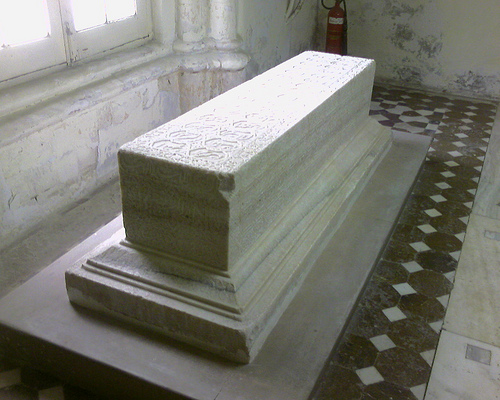
Historians treat Anarkali as a figure of uncertain historicity. The stone tomb sometimes linked to her in Lahore survives as an example of Mughal funerary architecture and has been associated in popular tradition with the name, but documentary proof that she existed as described is lacking. Scholars emphasize that the story likely combines genuine court life details with later dramatization and myth-making.
Cultural impact
- The Anarkali story inspired poems, plays and popular cinema—most famously dramatized in South Asian film and theatre—and remains a symbol of tragic romance.
- Anarkali Bazaar in Lahore (Anarkali Bazaar) is named after the legend and is a lively commercial quarter associated with her memory.
- The tale has been retold in multiple languages and media, contributing to perceptions of Mughal court life and the social role of performers.
Notable facts and caution
While the story of Anarkali is embedded in popular imagination, it should be read as a blend of folklore and historical setting rather than established biography. The link between the named mausoleum and the legendary woman is traditional rather than conclusively documented; archaeological and textual evidence has been interpreted in differing ways by researchers and local tradition alike. For further reading on Mughal architecture, artifacts, and the Lahore site, see wider resources on the period (etymology, Mughal, Akbar, Jahangir).
Additional contextual sources and tourist information often cite the Lahore tomb and market (Lahore, Anarkali Bazaar) as tangible connections to the legend, even as historians remain cautious about turning romance into verified history. For a concise introduction to the broader cultural legacy, see reviews of the tale in South Asian literature and film studies (Pakistan, performer traditions).
Tags
Related articles
Author
AlegsaOnline.com Anarkali: the legendary Mughal-era dancing girl Leandro Alegsa
URL: https://en.alegsaonline.com/art/3788