
AMOLED — Active Matrix OLED display technology
Overview of AMOLED displays: how they work, key characteristics, history, common uses, advantages and limitations compared with other display types.
AMOLED stands for Active Matrix Organic Light-Emitting Diode. It is an emissive flat-panel display technology in which each pixel produces light when driven by thin-film transistor (TFT) circuitry on a backplane. Because the pixels emit their own light, AMOLED panels do not require a separate backlight and can achieve very deep blacks, high contrast ratios, and wide viewing angles.
Image gallery
6 Images



How it works
An AMOLED panel combines an organic light-emitting diode (OLED) layer with an active matrix array of thin-film transistors and capacitors. The active matrix addresses each pixel rapidly and precisely, enabling high refresh rates and fine control of brightness. For a concise primer on the underlying physics and materials, see a technical overview.
Key characteristics
- High contrast and deep black levels because individual pixels can be turned off.
- Fast response times, useful for motion and gaming.
- Wide viewing angles and thin, flexible form factors when built on bendable substrates.
- Power efficiency that varies with displayed content — darker images consume less power.
History and development
AMOLED evolved from earlier OLED and passive-matrix OLED work. It gained traction in handheld devices and later expanded into wearables and large panels as manufacturing improved. For an industry perspective on adoption and milestones, consult an overview of mobile devices and reports on television integration at television industry summaries.
Common uses and examples
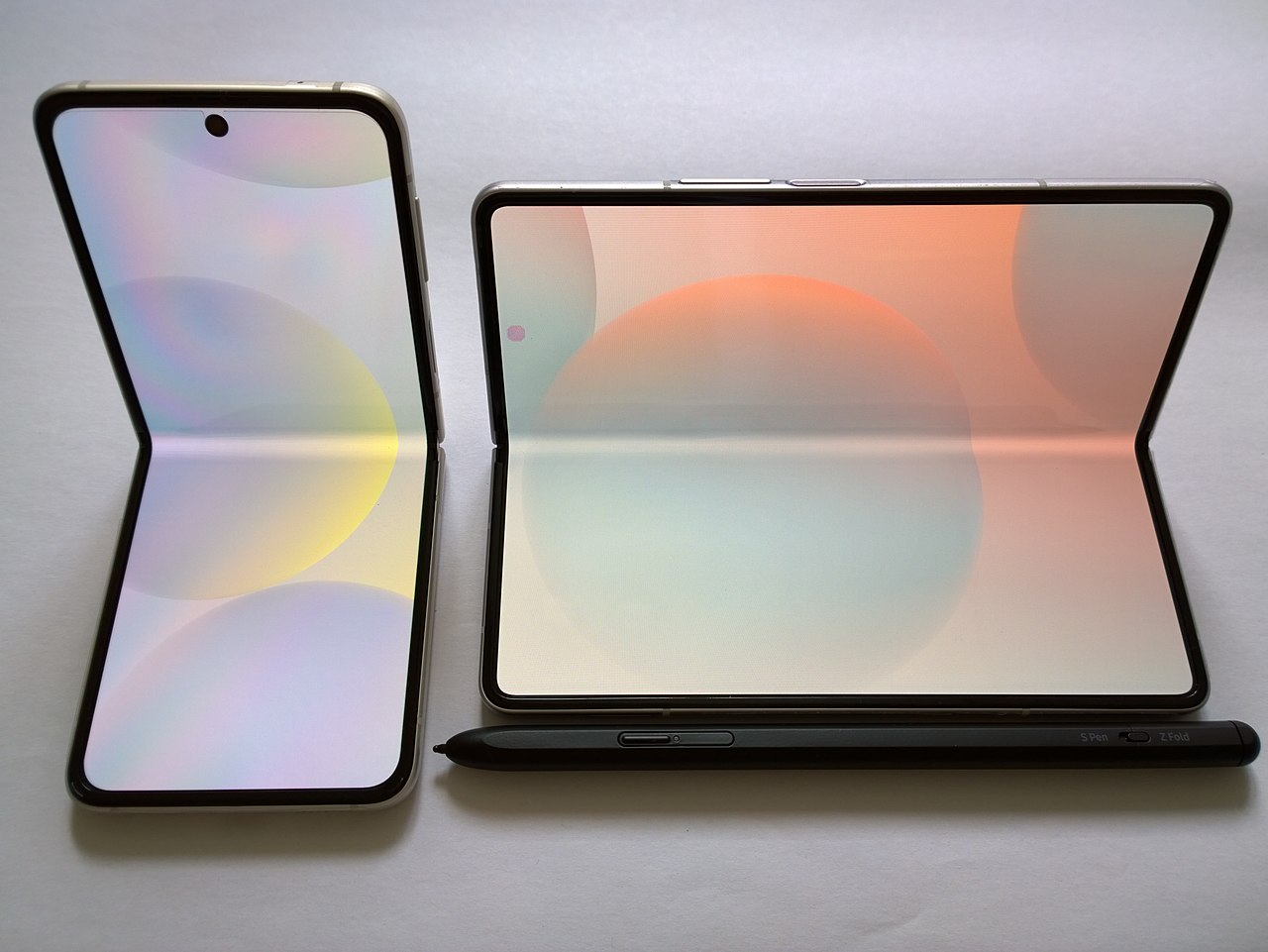
AMOLED is commonly found in smartphones, smartwatches, VR headsets, automotive displays, and some televisions. Its flexibility and thin profile make it a frequent choice for curved or foldable screens, while its contrast and color saturation appeal to media devices. For product-specific information, see device pages such as consumer electronics listings.
Advantages, limitations and care
Advantages include vivid color, low-latency response, and thin construction. Limitations include potential for image retention or burn-in over very long use and differential color aging, especially in blue emitters. Manufacturing yield and cost have historically been challenges, though these have improved. For electrical characteristics and drive considerations, see power and signal guidance at power and signal notes.
Related articles
Author
AlegsaOnline.com AMOLED — Active Matrix OLED display technology Leandro Alegsa
URL: https://en.alegsaonline.com/art/3614