
Four Great Inventions of Ancient China
Overview of China's Four Great Inventions—compass, gunpowder, papermaking and printing—their origins, development, uses and lasting global impact.
The term Four Great Inventions refers to four technologies developed in ancient China that are widely regarded as pivotal in the history of science and technology. Celebrated within Chinese culture and cited in world histories, these inventions are seen as emblematic of Chinese advances in science and technology. They influenced the internal development of Chinese society and, over centuries, helped reshape commerce, warfare, navigation and communication across Eurasia.
Image gallery
8 Images



The four inventions
- Compass — Early Chinese use of magnetized stone and needles provided a practical means for orienting buildings, geomancy and later maritime navigation. The device evolved from lodestone divination tools to the magnetic compass used by sailors (compass).
- Gunpowder — Originating from alchemical experiments, a mixture that could ignite was adapted for fireworks, mining and, eventually, military weapons. Its military application spread from China to the wider world (gunpowder).
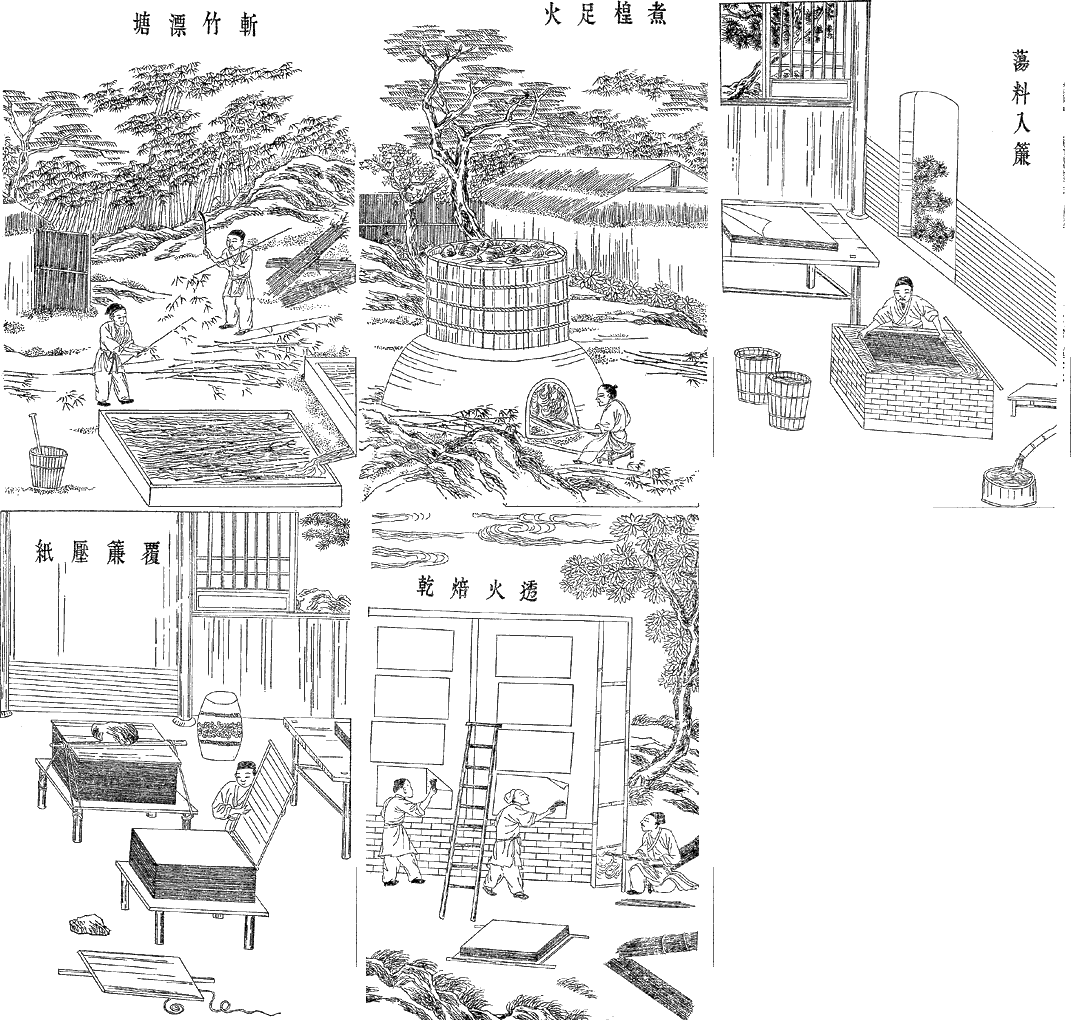
- Papermaking — The technique of producing paper from plant fibers provided a cheaper, lighter medium for writing and recordkeeping than silk or bamboo. Traditional accounts credit improvement of the process during the Han period (papermaking).
- Printing — Woodblock printing and later movable type allowed texts to be reproduced in quantity, accelerating literacy, bureaucracy and the diffusion of ideas. Innovations in printing technology had lasting cultural and educational effects (printing).
Origins and development
Each invention developed over time rather than appearing as a single moment of discovery. Papermaking techniques were refined during the Han dynasty and circulated more widely thereafter. Printing began with carved woodblocks and was later supplemented by ceramic and metal movable type. Evidence places the early use of magnetic materials for orientation in China long before their adaptation for open-sea navigation, and gunpowder emerged from chemical experiments by medics and alchemists, with practical uses expanding through the Tang and Song periods.
Uses, spread and global impact
These technologies had concrete, far-reaching applications. The compass enabled safer long-distance maritime trade and exploration; gunpowder transformed warfare and engineering; paper reduced the cost of written records and encouraged bureaucratic and literary growth; and printing made texts accessible to broader audiences. Over centuries the knowledge underpinning these inventions travelled along trade routes and through cultural contacts, influencing developments in Central Asia, the Islamic world and Europe, and contributing to global technological change (civilizational impact).
Notable distinctions and scholarly perspective
Scholars note distinctions within these categories: for example, woodblock printing versus movable type, or early lodestone compasses versus later magnetized-needle compasses. Modern historians also emphasize that China produced many other important technologies—some argue that inventions such as iron casting or agricultural tools were equally transformative. Discussions continue about timing, precise inventors, and pathways of diffusion; reputable accounts acknowledge uncertainty and rely on archaeological and documentary evidence.
Further reading
For concise introductions and deeper studies consult specialized works and reference entries that explore each invention’s archaeological record, technical details and cultural consequences. See general summaries of the Four Great Inventions (overview), regional histories of China, and thematic studies of science and technology. Individual topics—compass (details), gunpowder (details), papermaking (details) and printing (details)—have extensive bibliographies for further research.
These inventions remain important not only as historical milestones but also as examples of how practical needs, experimentation and cultural exchange combine to produce technologies with long-lasting global consequences.
Related articles
Author
AlegsaOnline.com Four Great Inventions of Ancient China Leandro Alegsa
URL: https://en.alegsaonline.com/art/35890
Sources
- china.org.cn : "The Four Great Inventions"
- chinaculture.org : "Four Great Inventions of Ancient China: Compass"
- chinaculture.org : "Four Great Inventions of Ancient China: Gunpowder"
- chinaculture.org : "Four Great Inventions of Ancient China: Paper"
- chinaculture.org : "Four Great Inventions of Ancient China: Printing"
- en.wikisource.org : Novum Organum, Book I, CXXIX
- bjreview.com.cn : "Do We Need to Redefine the Top Four Inventions?"