
FreeDOS — a free, MS‑DOS–compatible operating system
FreeDOS is a free, open-source operating system compatible with MS‑DOS. It provides a DOS-compatible command environment, utilities and drivers for running legacy software, rescue tasks, and embedded uses.
Overview
FreeDOS is a free and open-source operating system designed to be compatible with MS‑DOS programs and utilities. It provides a DOS-style command interpreter, disk and file utilities, and device drivers so that many programs written for MS‑DOS can run unchanged. The project is distributed under an open-source license and is maintained by a volunteer community; see the project site for official information.
Image gallery
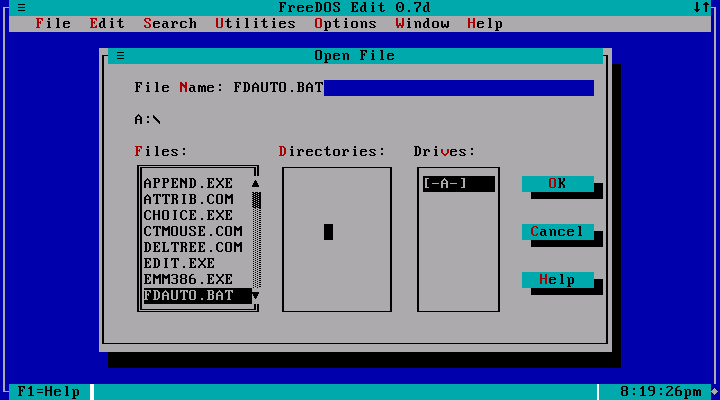
2 Images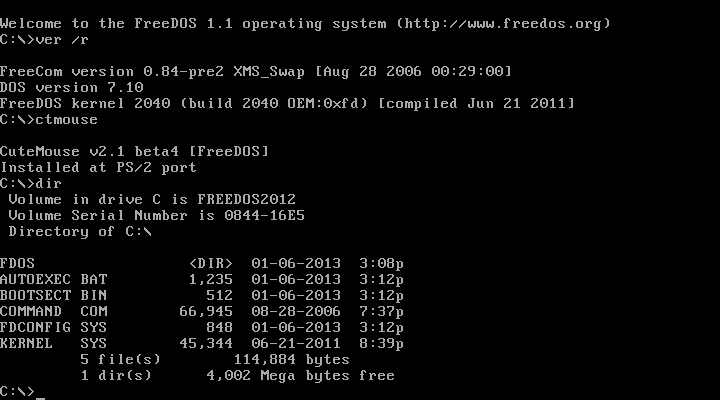
Design and components
The system includes a DOS-compatible kernel, a command shell that behaves like COMMAND.COM, and a collection of standard utilities that replace or replicate classic MS‑DOS tools. Optional packages add networking, disk management tools, and more modern utilities. Source code and development resources are available through community repositories; documentation and code browsing are typically found via developer resources.
FreeDOS aims for compatibility rather than modern multitasking: programs that expect direct BIOS, DOS interrupts, or FAT filesystem access will generally work. The project supports common DOS filesystems and includes drivers to interact with hardware in a legacy-friendly way.
History and motivation
The FreeDOS effort began in the mid‑1990s after Microsoft moved away from MS‑DOS as a standalone product. Volunteers set out to create a freely redistributable DOS-compatible system so that users could continue to run important legacy applications. For context, MS‑DOS remains the historical reference for compatibility and behavior; see material about MS‑DOS for comparisons.
Installation and use
FreeDOS can be installed from removable media or run inside virtual machines and emulators. Traditional installers support floppy and CD images, while modern distributions also provide USB and ISO images for easier installation and testing; download options are commonly listed on the project's download page. It also runs comfortably under virtualization and DOS emulators used for legacy applications.
Typical applications and importance
- Running legacy business software and classic DOS games.
- Creating rescue and recovery media for older hardware.
- Embedded systems or appliances that require a simple, low‑resource OS.
- Educational and hobbyist use for learning about low-level DOS-era programming.
FreeDOS fills a niche left by the commercial shift away from DOS: while modern operating systems offer advanced features and security, FreeDOS remains useful when compatibility, simplicity, or minimal system requirements matter. The project retains an active community and ongoing maintenance; community discussions and historical notes often mention Microsoft only as the original commercial developer of MS‑DOS, see background on Microsoft.
Notable facts and limitations
FreeDOS emphasizes compatibility rather than modern security features: it lacks built-in multitasking and many protections present in contemporary systems. Users should consider these limits when deploying FreeDOS in production. For developers and users seeking source code or packaged utilities, community archives and repositories linked from the main site provide up-to-date packages and installation instructions, often referenced via development links.
More installation help, downloads, and community resources are available from the project's resources and mirrors; for official images and instructions, consult the download and install information or the primary project pages.
Related articles
Author
AlegsaOnline.com FreeDOS — a free, MS‑DOS–compatible operating system Leandro Alegsa
URL: https://en.alegsaonline.com/art/36507