
FreeOTFE — open-source on-the-fly disk encryption software
FreeOTFE is a free, open-source on-the-fly disk encryption tool for Windows and Windows Mobile that creates encrypted volumes and supports many cipher algorithms.
Overview
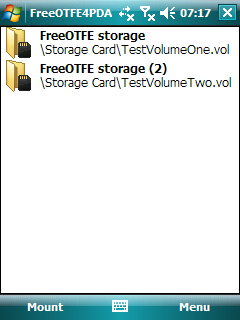
FreeOTFE (Free On The Fly Encryption) is a free, open-source program designed to encrypt and decrypt data automatically as it is written to or read from storage. The software implements on-the-fly encryption (OTFE), meaning encryption and decryption occur transparently to applications and users, without requiring manual conversion of files. It was originally developed for Microsoft Windows and later adapted for Windows Mobile as FreeOTFE4PDA. The project is associated with developer Sarah Dean.
Image gallery
3 Images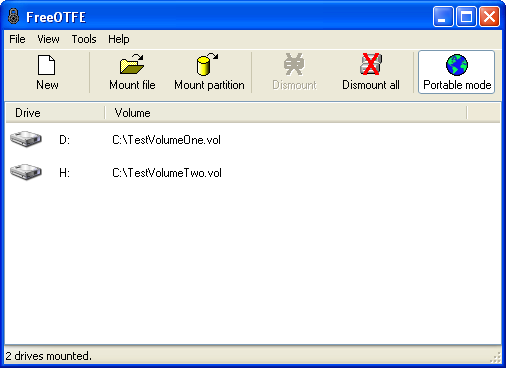

Key characteristics
FreeOTFE can create encrypted containers that behave like virtual disks once mounted, and it can also be used with removable media. Its user interface and driver components allow a mounted encrypted volume to appear as a normal filesystem drive under the operating system. Because it performs encryption in real time, latency and throughput depend on hardware and selected ciphers.
Notable technical points include support for many symmetric ciphers and combinations of ciphers (cascades), flexible volume formats, and support for passwords and keying options. Unlike some full-disk solutions that require pre-boot authentication to protect an operating system partition, OTFE tools such as FreeOTFE are typically used for container files, removable drives, or additional partitions rather than encrypting the system boot volume.
Algorithms and cryptography
FreeOTFE supports a broad set of encryption algorithms. Implementations include widely used block ciphers and alternatives, allowing users to select based on performance, compatibility, and perceived security. Examples of algorithms supported by FreeOTFE include AES (Rijndael), Blowfish, CAST6, MARS, RC6, Serpent and Twofish. The ability to combine algorithms in cascades enables additional flexibility for users seeking layered protection.
History and development
The program originated as a community-driven open-source project, focusing on providing an accessible OTFE solution for Windows users. A mobile edition (FreeOTFE4PDA) extended the concept to devices running Windows Mobile. As with many volunteer-led encryption projects, maintenance and updates depend on active developer involvement and community contributions; users should consult current project resources for the latest status and builds.
Uses, limitations and best practices
Typical uses for FreeOTFE include protecting sensitive files on laptops, securing removable media, and creating encrypted archives that can be mounted like drives. Users should follow standard practices: choose strong, unique passphrases, keep backups of key material where supported, stay informed about vulnerabilities in chosen ciphers, and prefer currently recommended algorithms for new volumes. Because OTFE tools operate at the file or volume level, they may not provide the same pre-boot protection as dedicated full-disk encryption solutions.
Further information and resources
- Official project page and overview
- Source code repository and licensing details
- Download and installation instructions
- Technical documentation on OTFE concepts
- User guide for creating and mounting volumes
- Information specific to Microsoft Windows builds
- FreeOTFE4PDA — Windows Mobile edition
- Cryptographic algorithms supported
- Details on AES (Rijndael) support
- Blowfish implementation notes
- RC6 and related cipher options
- Serpent, Twofish and alternative ciphers
For anyone considering FreeOTFE or similar OTFE tools, review up-to-date project documentation and community discussion to verify current compatibility, support, and security recommendations before entrusting sensitive data to any encryption software.
Related articles
Author
AlegsaOnline.com FreeOTFE — open-source on-the-fly disk encryption software Leandro Alegsa
URL: https://en.alegsaonline.com/art/36522