
Foie gras: production, culinary uses and controversies
Foie gras is a rich liver delicacy from ducks or geese, produced by specialized feeding. This article covers methods, culinary forms, history, cultural importance, and animal welfare and legal debates.
Overview
Foie gras (French for "fat liver") is the enlarged liver of a duck or goose that has been specially fattened for human consumption. Celebrated in French and international gastronomy, it is prized for a smooth, rich taste and a buttery, delicate texture that differs from ordinary poultry liver. Foie gras is supplied in whole lobe form or processed into preparations such as mousse, parfait and pâté, and it can be served cold, seared, or incorporated into sauces and terrines.
Image gallery
10 Images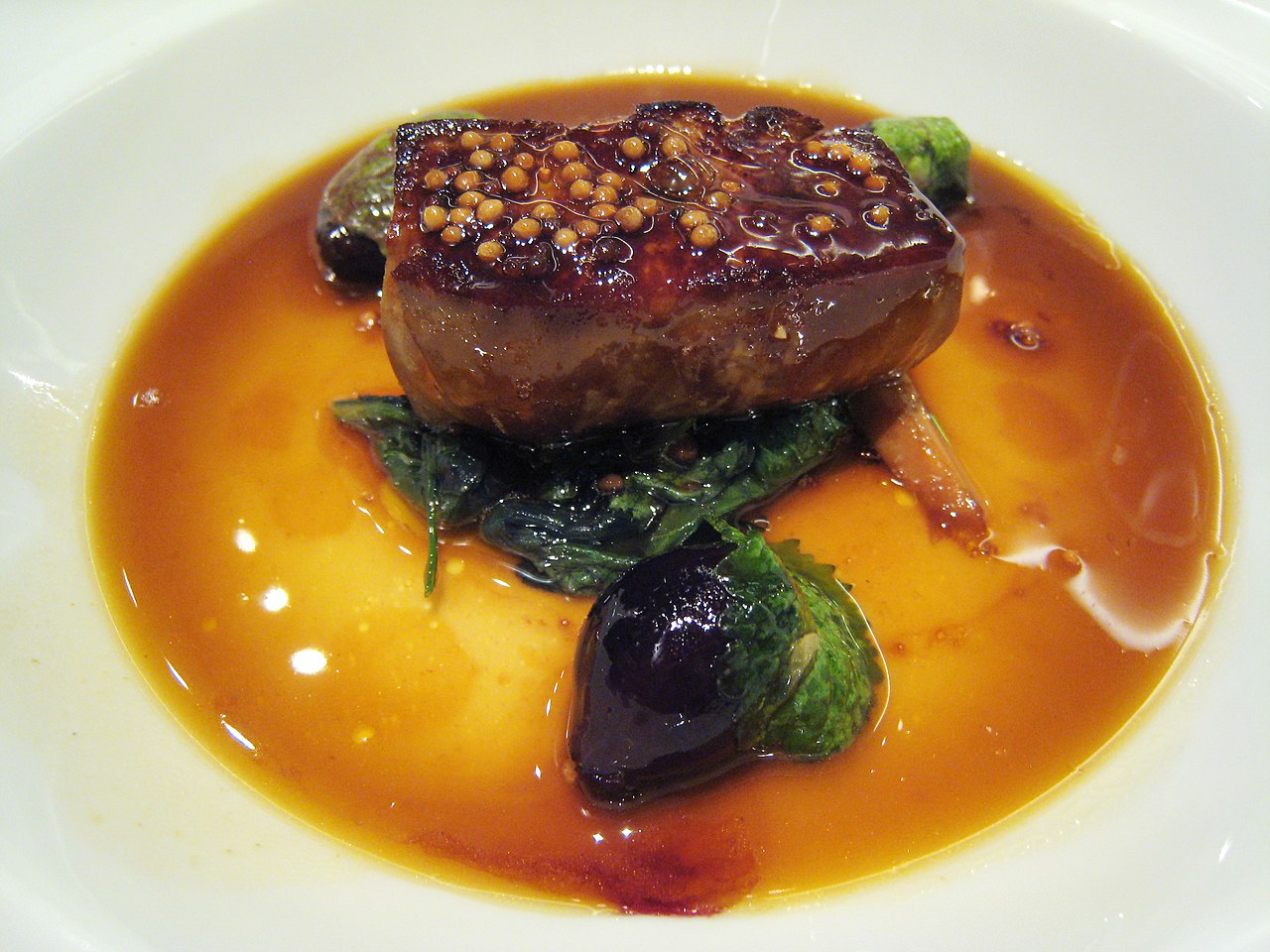


Production methods and biology
The traditional production technique is gavage, a feeding method in which birds receive additional grain in order to enlarge and fatten the liver. This process increases fat accumulation within the organ, producing the characteristic texture and flavor. Alternative approaches exist that rely on natural, free-range feeding or selective breeding to encourage liver enlargement without force-feeding; such methods are less common and typically produce different organ sizes and flavors. Producers also vary by species: foie gras may come from ducks (often smaller and more common) or geese (sometimes larger and used for particular regional specialties).
Culinary forms and uses
Chefs and home cooks use foie gras in several forms. Whole lobe foie gras can be seared briefly and served with sweet or acidic accompaniments; terrines and pâtés use blended or layered liver with fat and seasonings; and mousse or parfait provide smoother, spreadable textures. Common pairings include fruit preserves, brioche, roasted meats, and fortified wines. Quality grading and storage practices influence how foie gras is prepared and presented.
History and cultural importance
Birds with enlarged livers have been produced and consumed since ancient times; references to force-feeding waterfowl appear in Mediterranean antiquity. Over centuries foie gras became associated with French regional cuisines and festive dining, evolving into a product with both artisanal and industrial production chains. It remains a symbol of certain culinary traditions and regional identity, while also being the subject of international export and specialty markets.
Controversies, regulation and alternatives
The production of foie gras has generated debate around animal welfare. Critics argue that some force-feeding practices cause stress or harm, while defenders point to regulated systems, welfare standards, and cultural context. Several countries and jurisdictions have enacted restrictions, labeling rules, or bans; others permit production under regulated conditions. Because of these concerns, research and commercial interest in alternative methods, plant-based imitations, and higher-welfare practices have increased.
Characteristics, grades and buying tips
When selecting foie gras, consumers encounter variations in species (duck vs. goose), preparation (whole, block, pâté, mousse), and treatment (gavage-produced vs. naturally reared). Labels and certifications can indicate origin, production method, and storage instructions. Proper handling—cool storage, minimal cooking time for seared preparations, and pairing with complementary flavors—helps preserve the food's delicate texture and taste.
Further resources
- Term pronunciation and etymology
- Culinary uses and recipes
- Biology of avian livers
- Duck breeds and production
- Goose breeds and production
- International production practices
- Tasting notes and flavor profile
- Preparations: parfait, terrine, pâté
- Serving suggestions and pairings
- Animal welfare perspectives and regulation
Related articles
Author
AlegsaOnline.com Foie gras: production, culinary uses and controversies Leandro Alegsa
URL: https://en.alegsaonline.com/art/35339