
Fondue: history, varieties, and serving traditions
Fondue is a communal cooking tradition centered on a shared pot of melted cheese, hot oil, broth, or chocolate. This article explains its origins, typical ingredients, equipment, varieties, etiquette and safety.
Fondue is a style of communal eating in which small pieces of food are cooked or dipped in a shared heated vessel. The word comes from French and literally refers to something that has been melted. Originating in the mountain regions of Europe, fondue became a popular way to transform simple ingredients into a warming, sociable meal.
Image gallery
7 Images


Characteristics and equipment
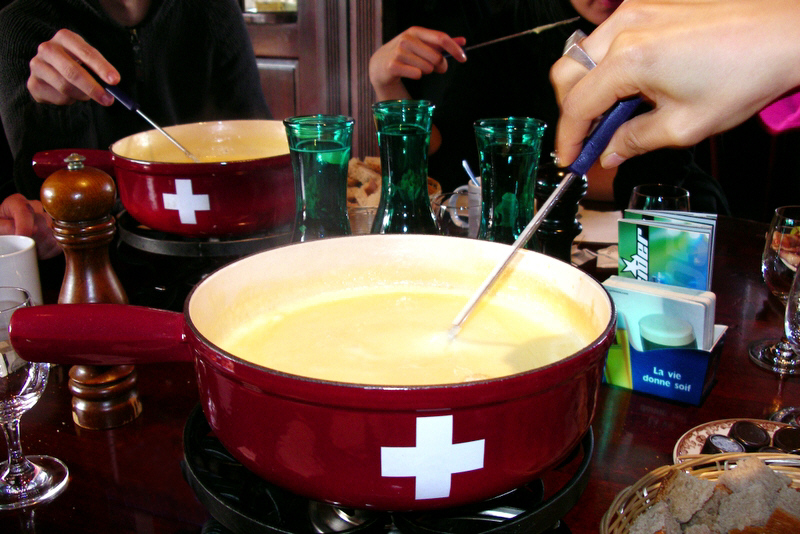
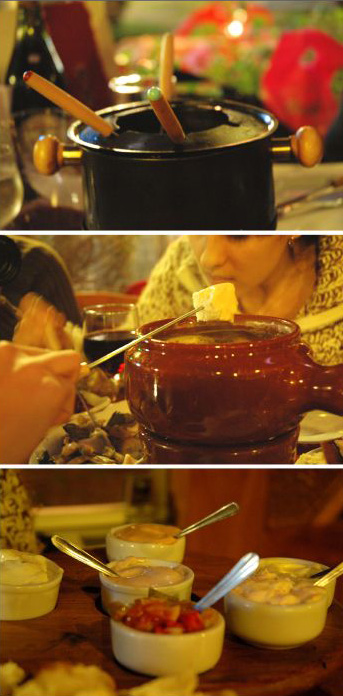
At the center of any fondue is a pot, often called a caquelon, kept warm over a low flame or an electric heater. Typical gear includes long-handled forks or skewers and small plates for individual condiments. Cheese fondue blends melted cheese with white wine and a little starch to stabilize the mixture. For dipping, cooks commonly offer cubes of bread, boiled potatoes, and blanched vegetables.
Varieties and regional notes
There are several well known forms of fondue. The classic melted-cheese version is strongly associated with Switzerland and neighboring Alpine areas such as Piedmont and Savoie. In fondue bourguignonne diners cook pieces of meat—often beef—by dipping them into a communal pot of hot oil (oil). Fondue chinoise uses thin strips of meat or poultry cooked briefly in hot broth rather than oil, and dessert versions employ melted chocolate for fruit and cake.
- Typical cheeses: mild to medium alpine varieties blended for flavor and stretch.
- Stabilizers: a small amount of starch or similar agent prevents separation.
- Accompaniments: pickles, onions, cured meats and seasonal vegetables.
Fondue has a strong social element: everyone gathers around the pot, cooks or dips their bite, and shares sauces and side dishes. Because the pot is communal, certain etiquette practices have evolved: use the provided forks, avoid double-dipping, and respect cooking times so meat and other items are safe to eat.
Safety considerations differ by type. Oil-based fondues require careful temperature control to reduce splatter and fire risk; broth-based versions are gentler. Cheese fondues can be reheated slowly and often include a splash of wine or spirit for flavor. Across regions the meal remains a convivial ritual that transforms modest ingredients into an interactive dining experience enjoyed in homes and restaurants alike.
For practical recipes and modern adaptations consult introductory resources and recipe collections: bread pairings, potato accompaniments, vegetable options, cheese selections, Swiss traditions, Piedmont styles, Savoie customs, meat choices, oil handling, and starch techniques.
Questions and answers
Q: What is Fondue?
A: Fondue is a dish where pieces of bread, potatoes, or other vegetables are dipped into hot, molten cheese.
Q: Where is Fondue common?
A: Fondue is common in Switzerland, Piedmont, and Savoie.
Q: How has the meaning of Fondue been extended?
A: With time, the meaning of Fondue was extended to include different varieties such as Fondue bourguinonne and Fondue chinoise.
Q: What is Fondue bourginonne?
A: Fondue bourginonne is a variety of Fondue where pieces of meat, usually beef, are dipped into hot oil.
Q: What is Fondue chinoise?
A: Fondue chinoise is a variety of Fondue that uses strips of meat which are cooked.
Q: What are Fondue bourginonne and Fondue chinoise served with?
A: Fondue bourginonne and Fondue chinoise are served with different sauces or dips.
Q: What ingredients are used to prepare the molten cheese in the cheese-based Fondue?
A: The cheese-based Fondue uses a mixture of cheese, white wine, and starch to prepare the molten cheese.
Related articles
Author
AlegsaOnline.com Fondue: history, varieties, and serving traditions Leandro Alegsa
URL: https://en.alegsaonline.com/art/35395
Sources
- meltwaterchocolatefondue.com : The History of Chocolate Fondue
- gofondue.com : Fondue 101 Guide
- digsmagazine.com : DigsMagazine.com: "How to have a fondue party"