
Focus city (airline operations)
A focus city is an airport where an airline concentrates flights without operating a full connecting hub; used by low-cost and network carriers for point-to-point service, crew bases, or maintenance.
Overview
A focus city is an airport important to a particular airline within the wider air transport industry, yet it does not function as a major connecting hub. The term refers specifically to an airport facility rather than the urban area itself, i.e., the city's airport airport is a focus city for scheduling and operations rather than the municipality city in an abstract sense. Airlines assign a high frequency of point-to-point services to these airports to serve demand or to establish a local presence without the full investment of a hub.
Image gallery
5 Images


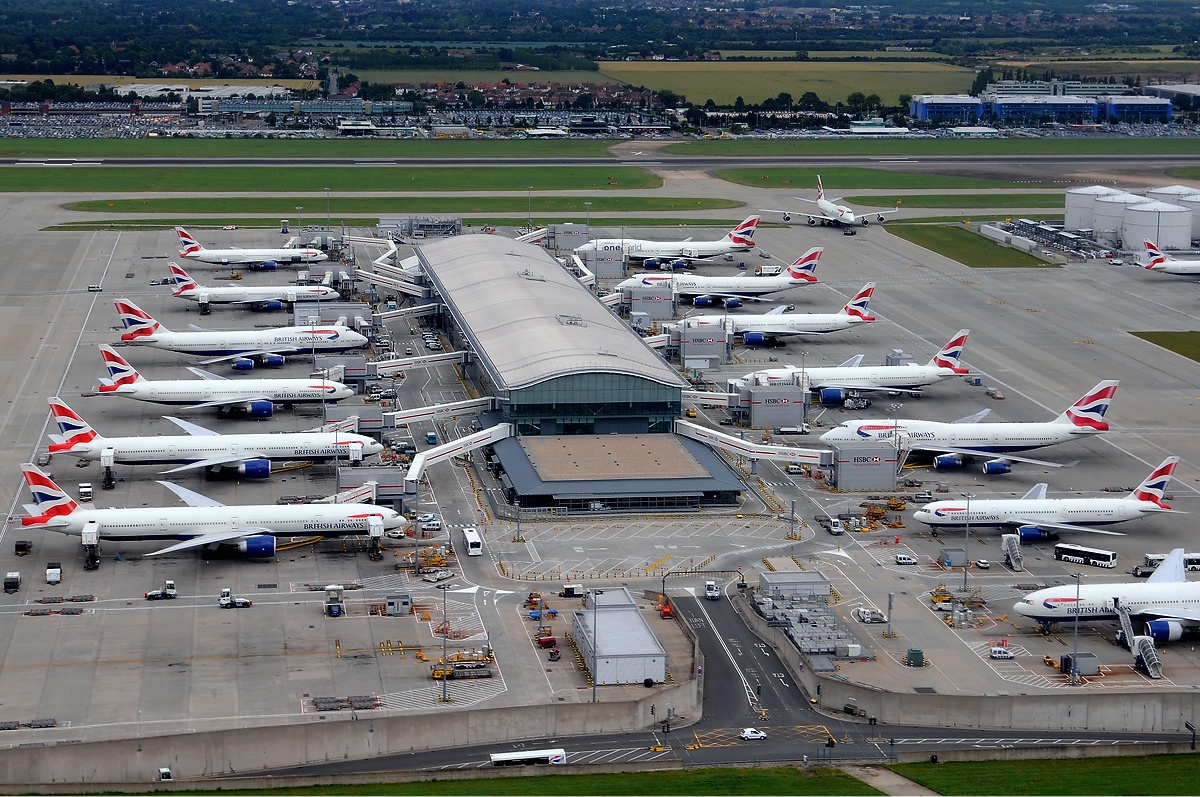
Characteristics and typical activities
At a focus city an airline will often schedule many nonstop flights to a variety of destinations, maintain aircraft overnight rotations, and sometimes station staff. Operational activities at a focus city can include line maintenance and light servicing of aircraft, and facilities for handling cargo or specialized ground operations. A focus city does not usually have the same scale of connecting facilities, transfer desks, or banked schedules that characterize a true hub, but it can still host ticketing, cleaning, and limited technical support.
History and development
The concept grew clearer as airlines refined network strategies. Legacy carriers have used focus cities selectively — for example, US Airways once treated Reagan National, often called Washington National, as a high-frequency base before its merger into American Airlines. Meanwhile, the rise of low-cost and hybrid carriers encouraged use of focus cities as an economical way to capture local markets without full hub investments. Over time the distinction between a small hub and a large focus city can blur depending on schedule density and on-site facilities.
Use by low-cost and regional carriers
Many low-cost carriers (LCCs) prefer a point-to-point model and rely on focus cities to disperse operations. Examples in the Americas include Southwest Airlines, Spirit Airlines, JetBlue Airways, Allegiant Air, and WestJet, which use focus airports to reach niche demand within the Americas. In Europe a similar pattern is seen with carriers such as Ryanair, EasyJet, Norwegian Air Shuttle and Wizz Air.
Operational importance and examples
For an airline, designating a focus city can lower costs by avoiding expensive hub congestion while still achieving high utilization of aircraft and crews. A focus city may host crew bases, be the site for marketing concentration, or provide maintenance that is cheaper than at larger hubs. Passengers benefit from more nonstop options, although they may see fewer coordinated connections compared with hub-and-spoke networks.
Distinctions and notable facts
- Difference from a hub: a hub is optimized for connections and schedule banking; a focus city emphasizes origin–destination traffic.
- Flexible strategy: an airport's role can evolve—focus cities can grow into hubs or be scaled back based on demand and route economics.
- Infrastructure needs: even without full hub status, focus cities may require dedicated gates, ground equipment, and maintenance arrangements.
Understanding focus cities helps explain how airlines balance network reach, cost control, and local market penetration. For further technical or regulatory details consult specialized resources or the operating airline’s published information.
Related articles
Author
AlegsaOnline.com Focus city (airline operations) Leandro Alegsa
URL: https://en.alegsaonline.com/art/35329
Sources
- usairways.com : About US Airways
- charlotteobserver.com : Southwest Airlines to land in Charlotte
- azcentral.com : Allegiant Air CEO rings NASDAQ bell